


Expedition Arctic Ocean 2026, blog post 5: Life on Oden
Today we publish a collection of stories written by our researchers on Oden, August 15, 2026. Hanna Winge becomes stranded on an ice floe as the mist rolls in, Irene Bellagente has to repair a broken aerosol research instrument, Linnea Huusko explores the on-board gym and Matthew Shupe shares his thoughts on the mood of the crew.
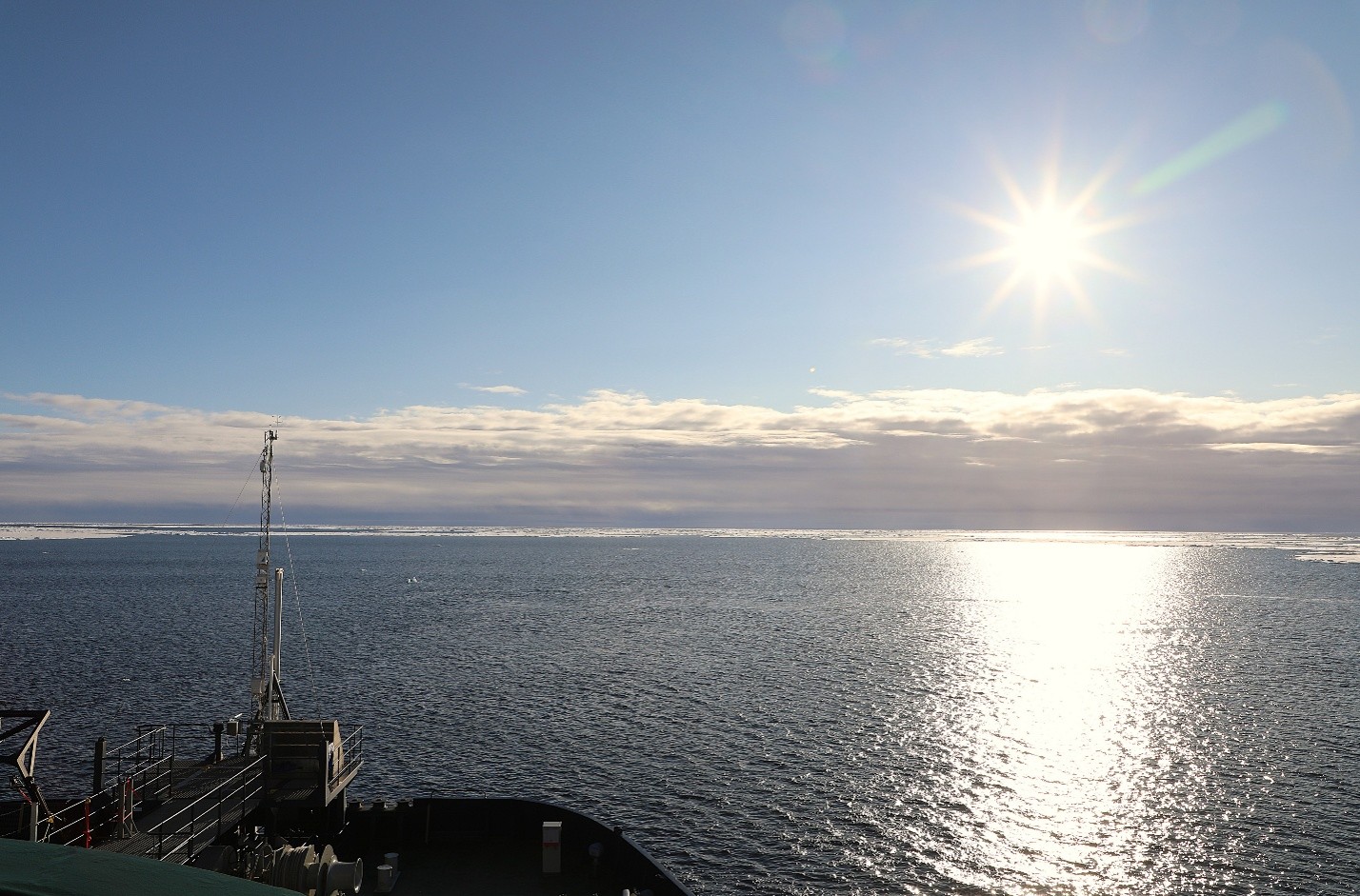
Caption: Brilliant sun and a bright blue sky as the clouds clear for a few moments.
Vitamin D
In the Fram Strait region during summer it is usually cloudy. Low clouds spread across the sky, blocking out the sun and casting everything in a dull gray.
So far, our expedition has been gray nearly the whole time, with only a few occasions where a slice of blue has been visible on the horizon, or maybe the disk of the sun becomes slightly apparent through thinning clouds. But it’s mostly just dark gray. The starkest color contrast is the Louis St. Laurent steaming ahead of us, with its red hull adding a new color to the Arctic pallet.
But even the Louis is often hard to discern through the fogs. Today is different. The clouds have lifted, showering us with sunlight. It is brilliant really, and great for the collective human state of mind! Everyone is happy and smiling, outside on the decks soaking in the warmth of the sun and snapping photos of an environment that seems to have more personality under this light.
At least it has more contrast: the dark open ocean, the bright blue of the sea ice, the clean white of the fresh snow, the yellow of sun reflecting off water. These times are rare, but so exciting…. And they are fleeting, as dark clouds again lurch on the horizon.
/Matthew Shupe August 15, 2026
Waiting on an Ice Floe for Oden to Appear in the Fog
Five days into our expedition, just south of the North Pole, I found myself sitting in a helicopter on a drifting ice floe, drinking coffee and waiting for an icebreaker to appear through the fog.
But the day had started very differently.
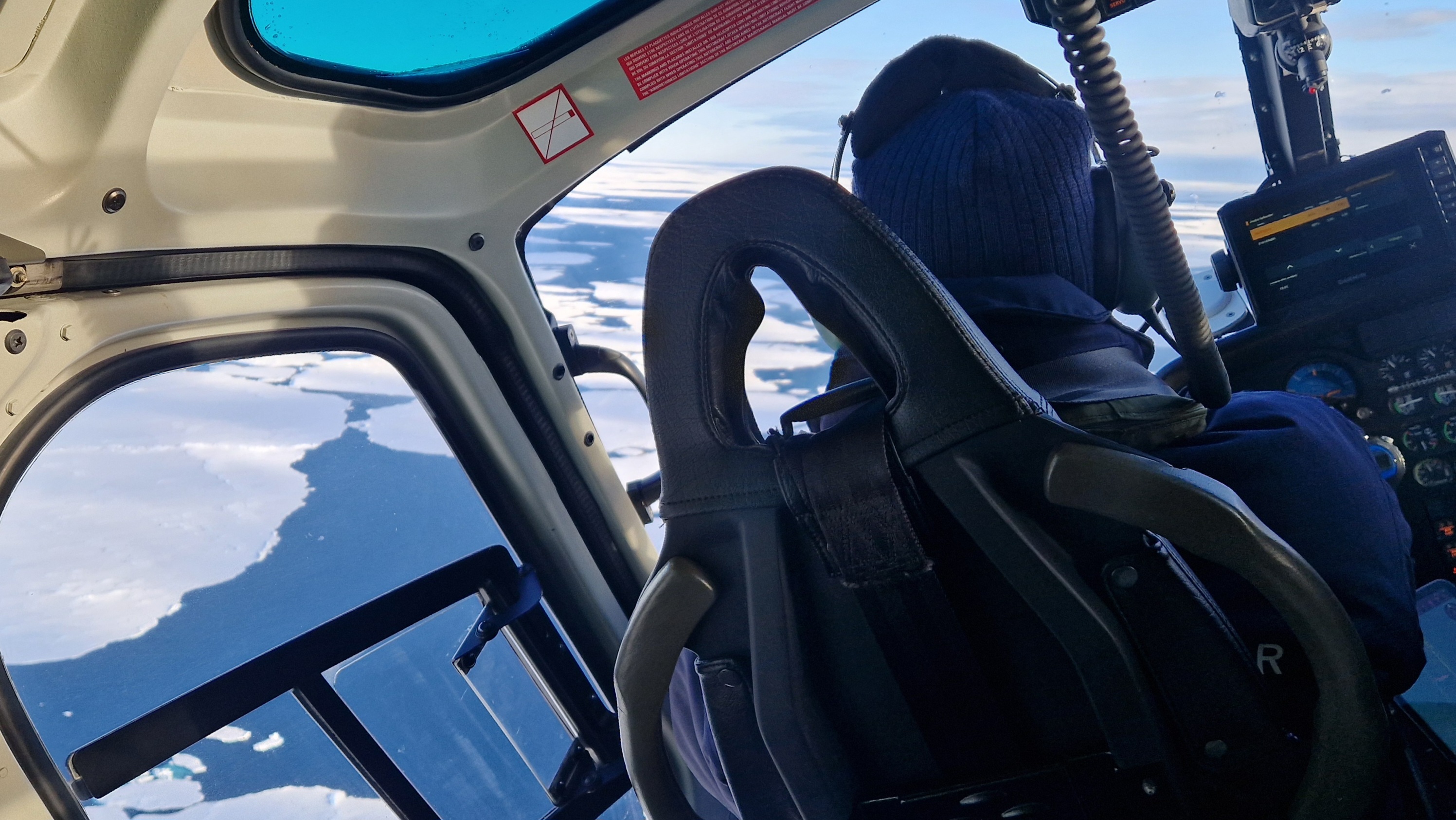
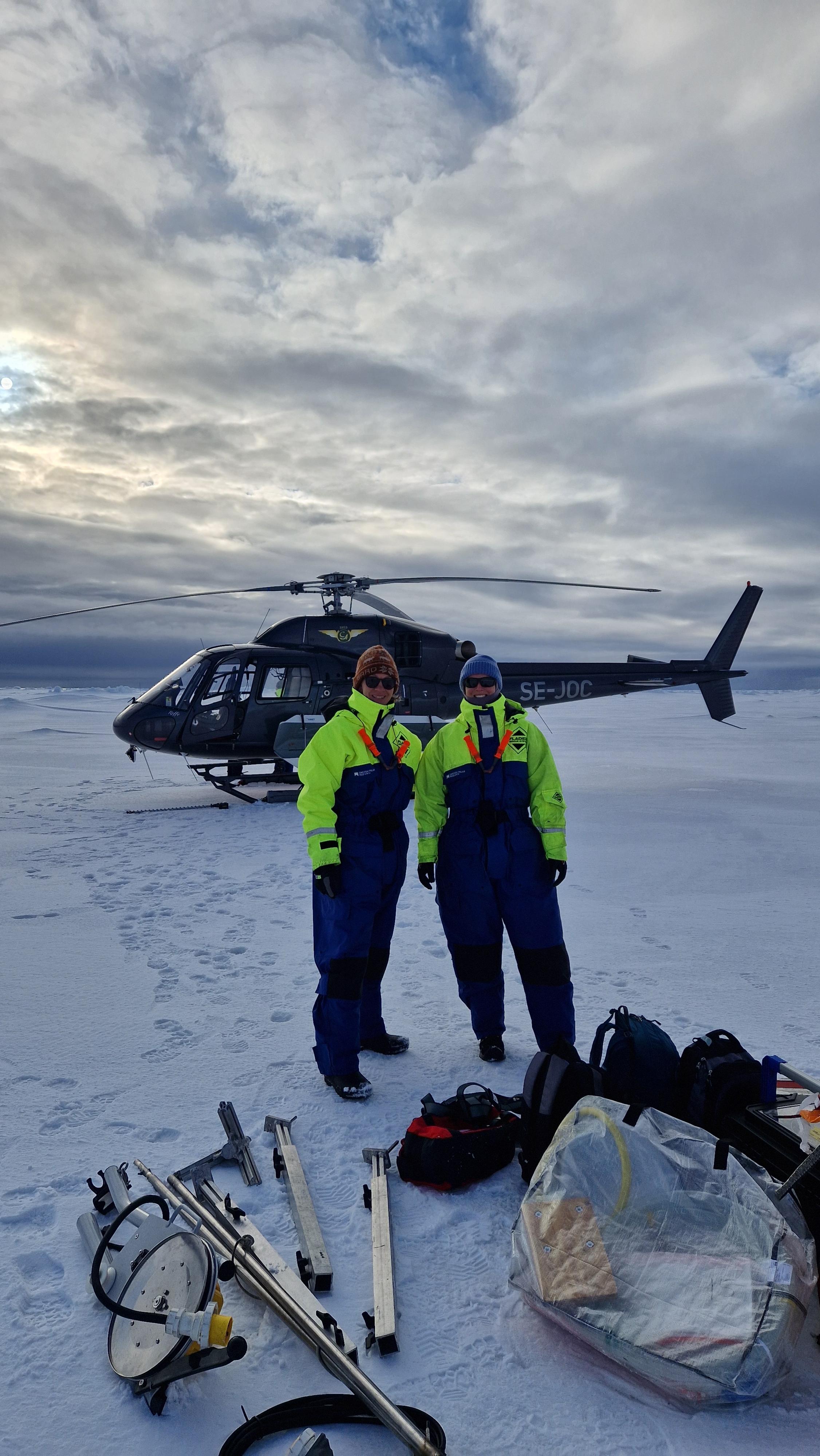
That morning, we were heading out from Oden by helicopter to make oceanographic observations at the edge of an ice floe. After packing our equipment and pulling on our flotation suits, we climbed into the helicopter on the aft deck. The rotors started turning, and a few moments later Oden disappeared beneath us.
It was my first time in a helicopter, and there could hardly have been a more spectacular place for it. Leaving what had quickly become our new home onboard Oden, we flew out over a seemingly endless Arctic landscape.
The sun was shining, and below us, brilliant white sheets of ice were broken by dark cracks and stretches of open water. From the air, the ice seemed to stretch forever.
When we reached the floe where we planned to work, the pilot circled a few times, checking the area for polar bears before landing.
Stepping out of the helicopter felt like arriving on another planet. Everything was white. Everything was quiet. There was no land, no buildings, no other people—only ice, ocean and sky.
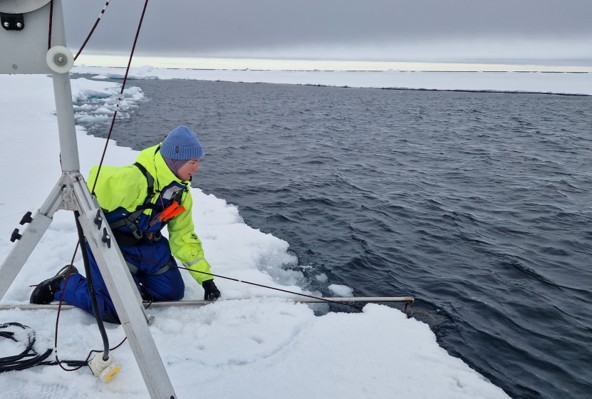
We unloaded our equipment and carefully made our way towards the edge of the floe, constantly checking the ice for weak spots.
Working next to the open ocean requires care, and we secured ourselves with safety harnesses anchored into the ice before setting up the instruments.
Soon, we were completely absorbed in the measurements. There was equipment to prepare, observations to make and procedures to follow. But every now and then, I had to stop, look up and remind myself where I was.
Standing on a piece of floating ice in the middle of the Arctic Ocean.
Eventually, our work was finished. We packed everything up and returned to the helicopter. But just as we were preparing to leave, the weather began to change. Fog was rolling in.
Conditions can change remarkably quickly in the Arctic. We took off, but as the fog thickened, continuing back to Oden was no longer possible. Instead, we landed on another nearby ice floe to wait.
And so there we were.
Sitting in a helicopter, surrounded by white in every direction, somewhere in the Arctic Ocean.
There was not much we could do except wait. We had coffee, chocolate and plenty of laughs while hoping the fog would lift. It didn't.
Eventually, a new plan was made: instead of us flying back to Oden, Oden would change course and come to us.
There was something wonderfully surreal about that moment. We sat there on the ice, looking out into a wall of white, waiting for a massive icebreaker to emerge from the mist and pick us up.
And then, suddenly, there she was.
At first just a shape in the fog, Oden slowly appeared through the white. After waiting alone on the ice, seeing the ship emerge from the mist was an incredible sight. We took off once more, flew the short distance towards her, and landed safely back on deck.
It had been a day of many firsts: my first helicopter flight, my first time standing on an ice floe, and definitely my first time waiting in the middle of the Arctic Ocean for an icebreaker to come and pick me up.
Not a bad day at the office.
/ Hanna, 2026.08.15
Modelers in the Arctic – The instruments
When I applied to participate in this expedition, I did not realize how wonderfully intense this experience would have been. I was thinking about breathtaking frozen landscapes and many polar bears. But then reality hit. First, in the many preparatory meetings, the organizers were focused on not-so-exciting things, like “protocols” and “safety”. Sure, but what about polar bear watching?
Then, the real preparation of the expedition began. One of our goals is to measure the properties of aerosols, which are tiny particles suspended in the air that are essential for cloud formation. This data is used in numerical models to investigate physical processes occurring in the clouds.
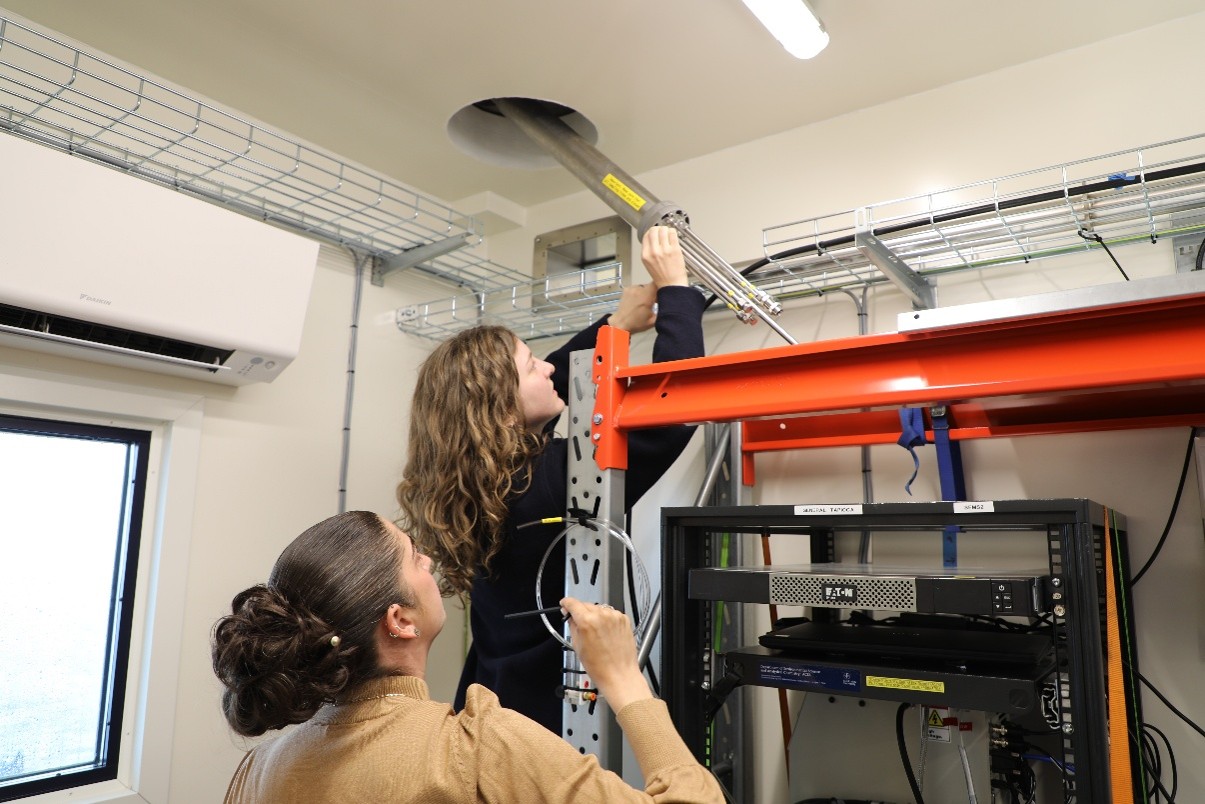
Caption: Irene and Faustine working on the instrument.
When I got trained on how to use the instruments, some colleagues were optimistic and were telling me “Don’t worry, even when you are up there, if something goes wrong you can fix it”. Some other were more fatalistic and said things like “It’s not a matter of if the instrument breaks, it is a matter of when the instrument breaks”.
Well, I now have the answer. Two days. One of the instruments broke down on day two of work. Alright, so what should I do? I have some vague ideas of what I could try. Thankfully, this expedition is also a research school, so we have great mentors and team members always willing to help.
We proceed to take the instrument apart, meticulously clean it and put it back together. We run a test and it returns positive, such a relief! The instrument is operational again and we can continue to collect valuable data for our research.
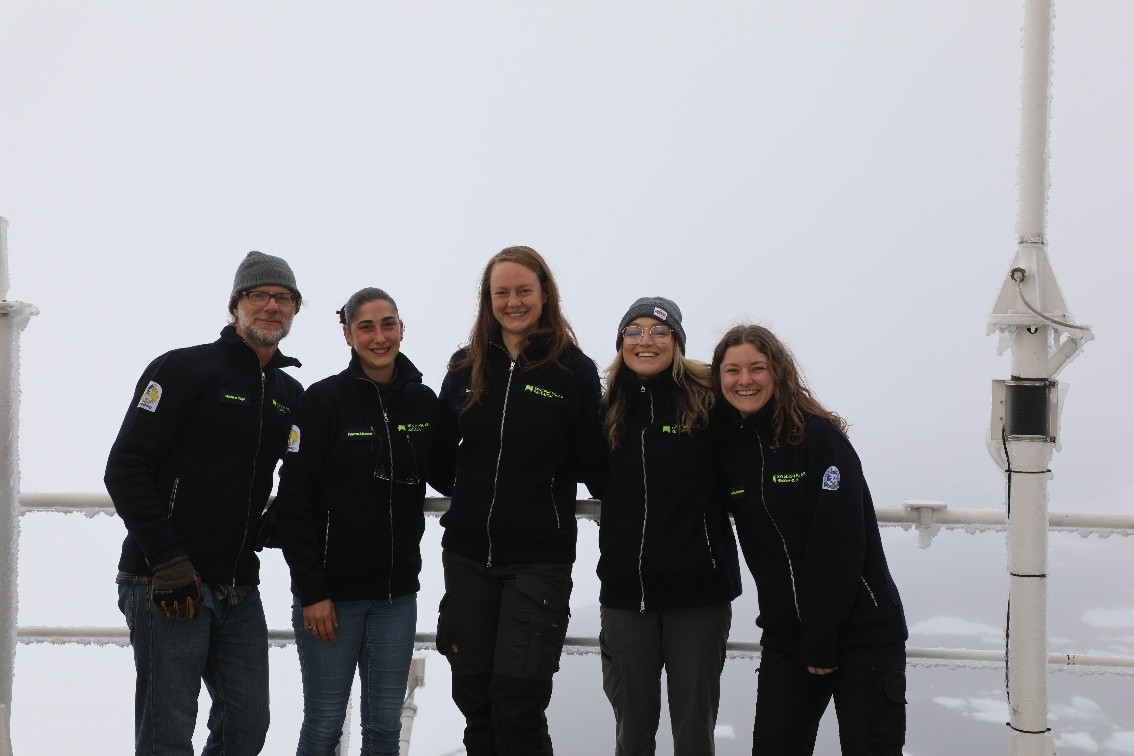
Caption: Meteorology and aerosol team: Matthew, Faustine, Linnea, Melissa and Irene.
After a stressful few hours, the emergency is solved and we can go to sleep. On my way to the cabin, I go out on the bridge to take a deep breath of crispy Arctic air. I look at the beautiful patterns of the broken ice, the foamy whirls in the water around the ship and a hint of sun appearing behind a thick layer of clouds.
I soak in the view in front of me, fully aware that few humans have had the chance to see it. I have a persistent thought in my head that I can’t shake away: “It was absolutely worth it”. Our adventure on icebreaker Oden might be challenging at times, but these vivid moments are the true heart of the experience. We get to help one another and find solutions to problems we did not know we had!
/Irene Bellagente
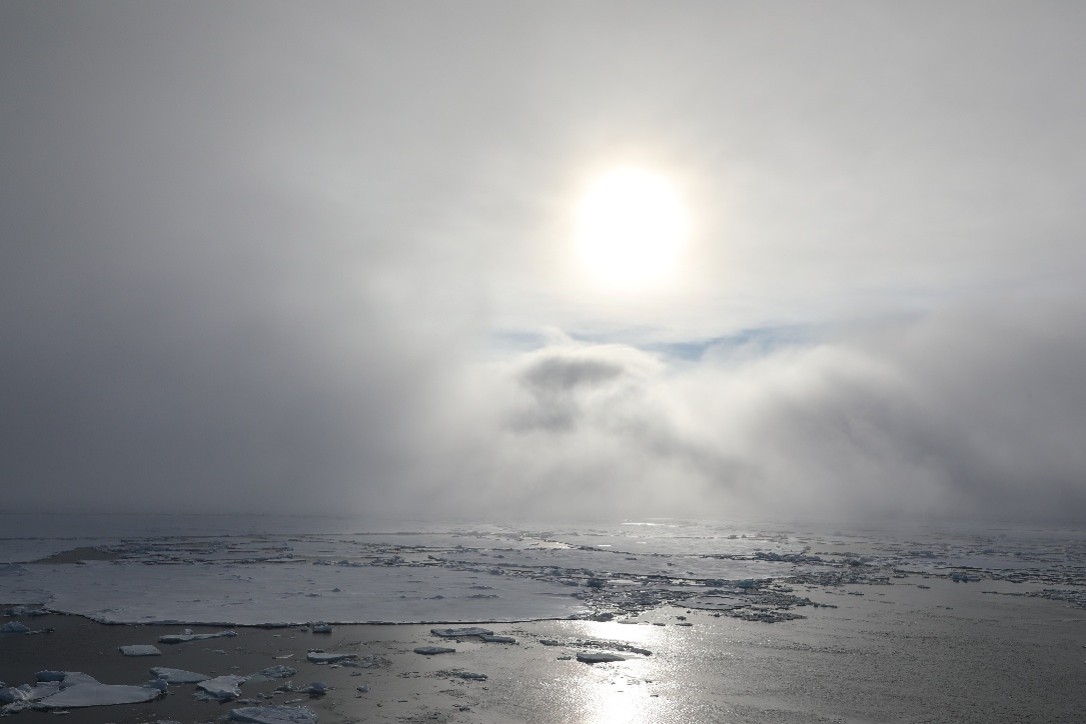
Caption: Sun appearing behind thick clouds.
Exercise onboard
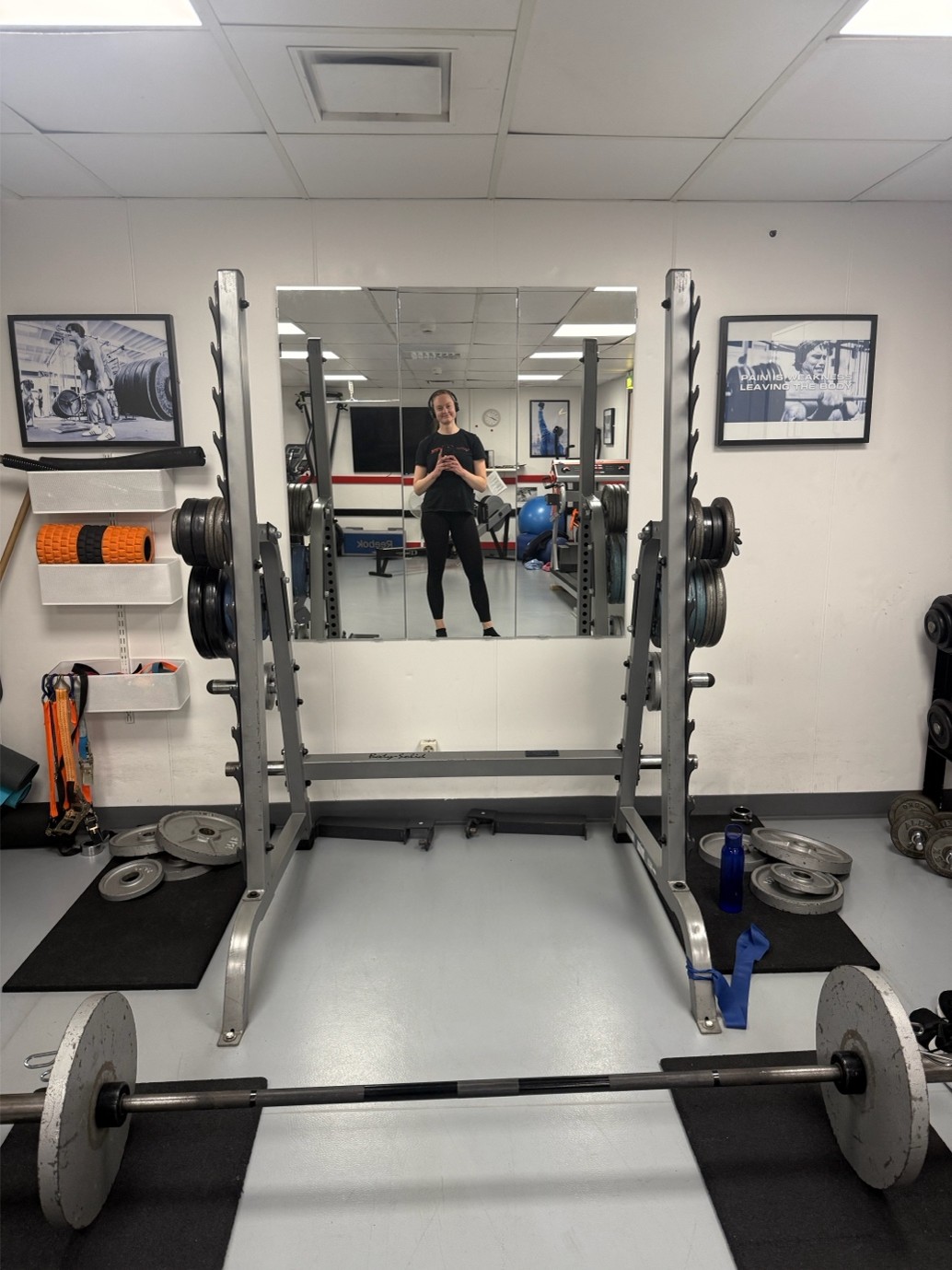
Caption: In the morning the gym is usually crowded, but in the evenings I have been able to find some alone time in there.
Oden is around 100x30 m large so life onboard must be pretty sedentary, right? Wrong! Depending on what your duties are, working onboard can be really active. The work for us in the meteorology work package does not involve any heavy manual labour, but our instruments are mounted at three different locations around the ship and we need to check them a couple of times every day to make sure there’s not too much ice buildup on the sensor, so we do a lot of walking around the ship.
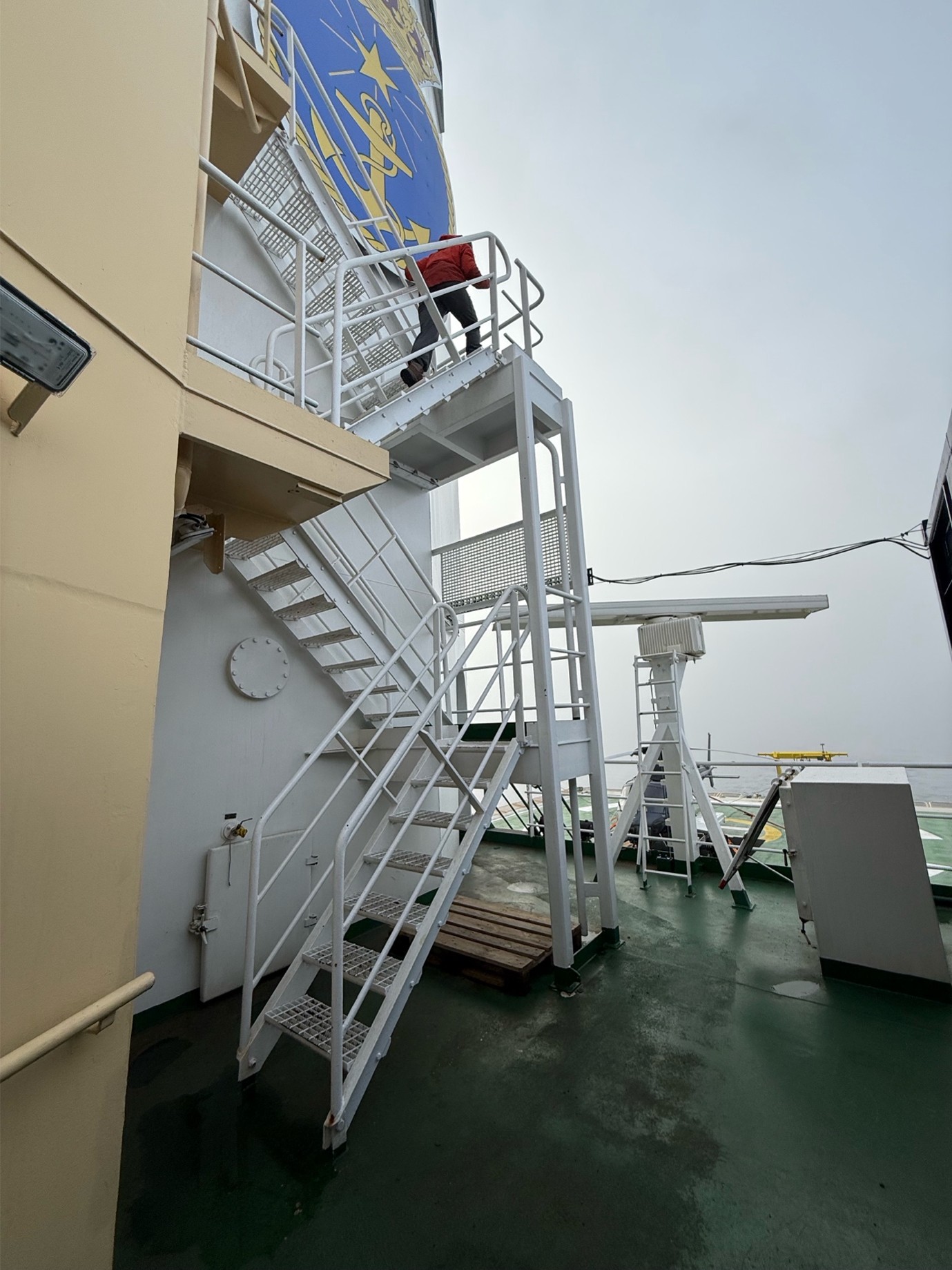
Caption: Missy Westland (University of British Columbia) heading up the stairs to the meteorology lab on the 7th deck.
So far, I’ve taken around 7000 steps every day, which is very close to how much I usually walk on a normal work day at home. To add to that, some of our instruments are on the very top of the ship, 7 flights of stairs up from the main deck, so we do a lot of walking up and down.
But if you still feel like you need some exercise at the end of the day the ship also had a gym. It is bigger and better equipped than I expected for a gym on a ship, with a treadmill, bike, elliptical, squat rack, dumbbells and kettlebells, among other things. There is also a ping pong table and two(!) saunas. So staying active and taking care of your body is actually maybe easier onboard than at home!
/Linnea (2026-08-15)
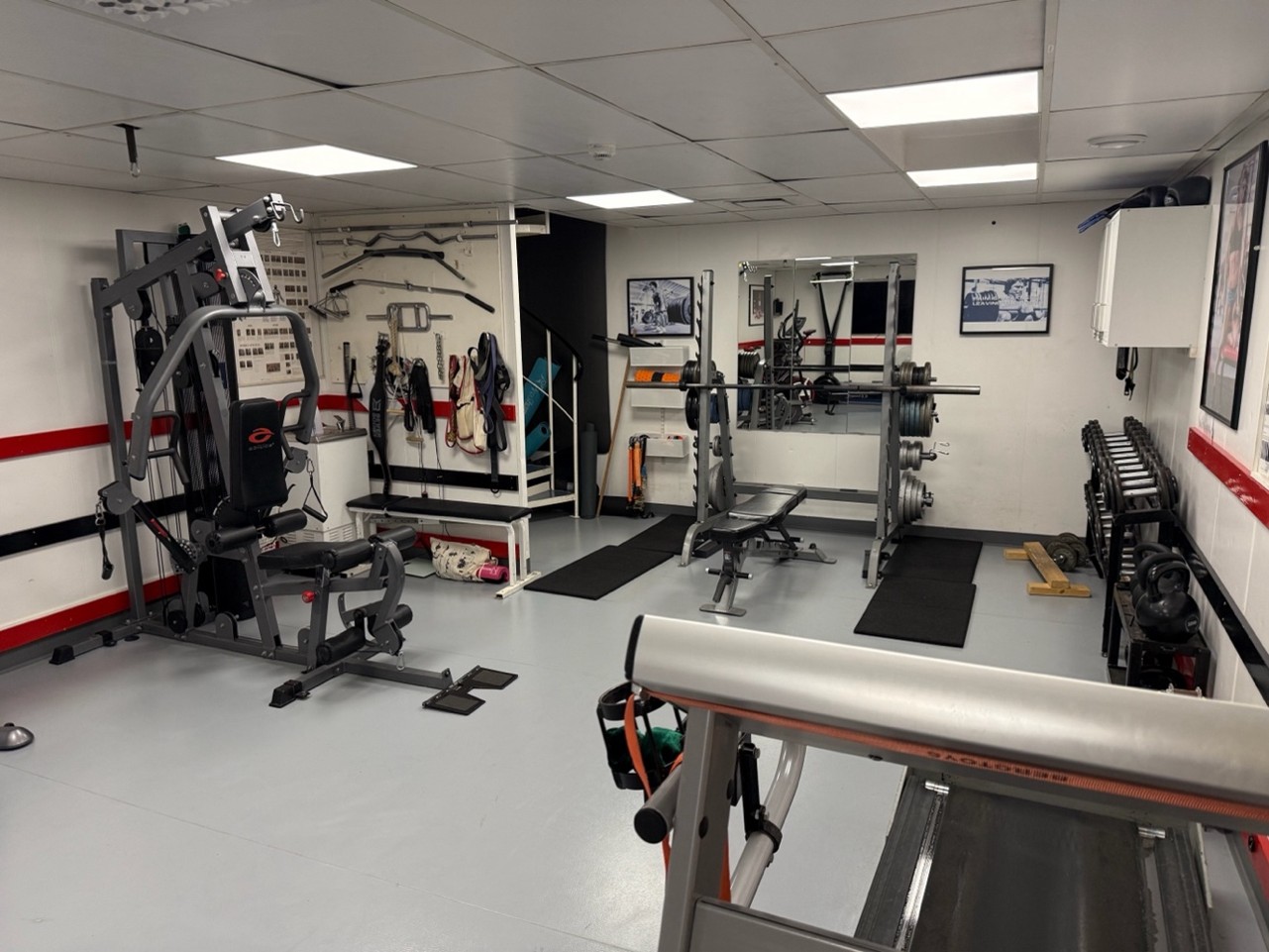
Caption: The gym has equipment for strength and endurance training.
Last updated: 2026-09-01
Source: MISU