


Expedition Arctic Ocean 2026, blog post 8: A (somewhat) more typical Arctic
I’ve felt increasingly uneasy about the state of the Arctic system as we’ve travelled north, and then south after passing the North Pole. So much open water. Large stretches, and one after another. It made for smooth sailing, but it’s not a good sign for the ice. At the same time, apart from our first day in the ice, we’ve seen almost no open melt ponds (perhaps a better sign for the ice!).
Additionally, the ice has been very blue, with little sign of biology. No areas of green or brown ice bottoms. Has there not been an algae bloom driven by summer light? I’ve given my impressions of two of these aspects in past posts, but they’ve continued, pushing well beyond my comfort level. What is this Arctic?
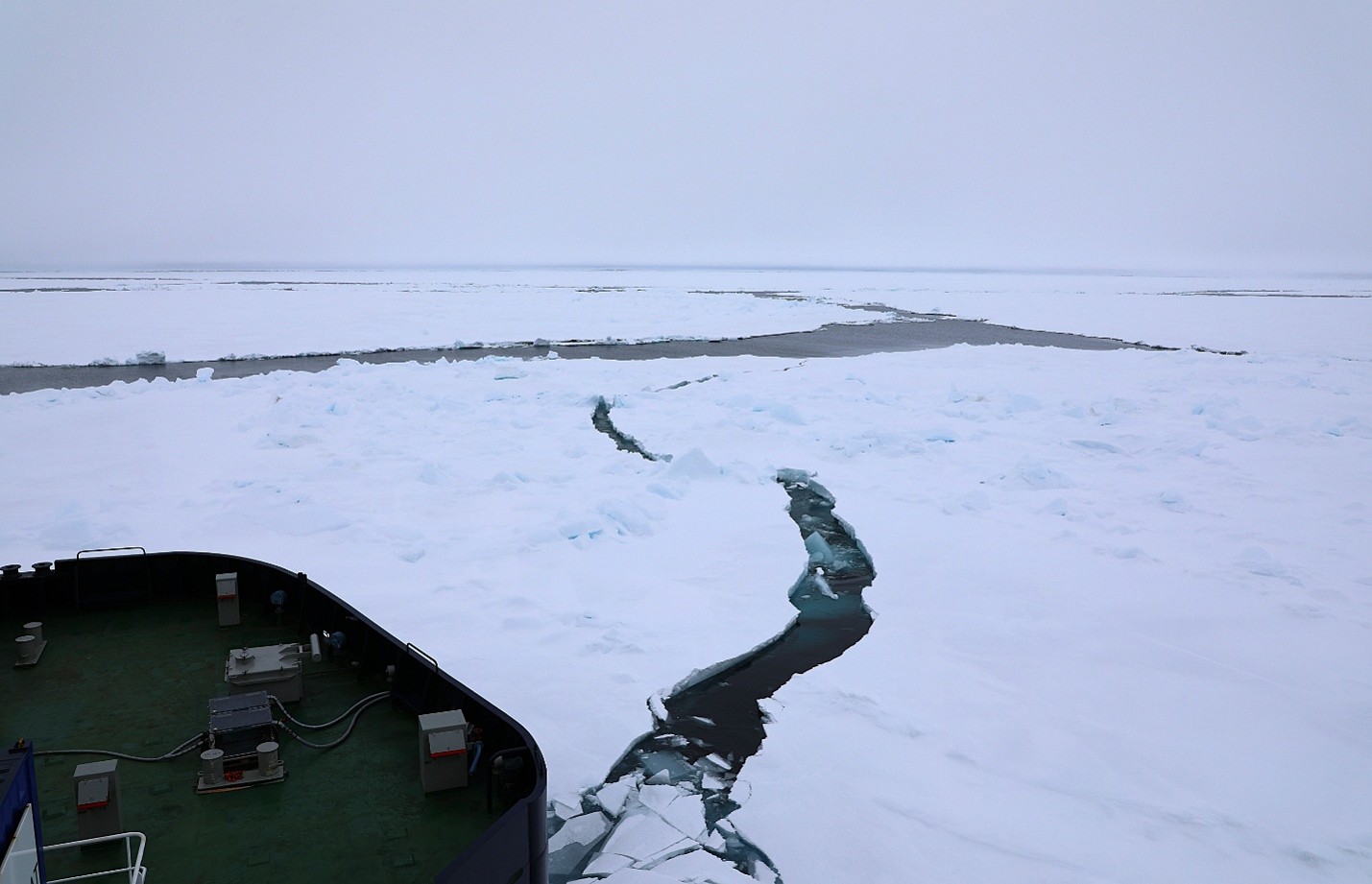
Caption: Oden pushes through an area of heavy ridging in the sea ice.
But finally, in the last two days, there’s been a transition: Much more consistent ice as we slipped into the eastern hemisphere. Some vast floes that are many kilometers across. Areas full of big ice ridges. And even some small signs of algae here and there. Still no melt ponds on top of the ice…. But a system that seems a bit more typical in these times of rapid transition.
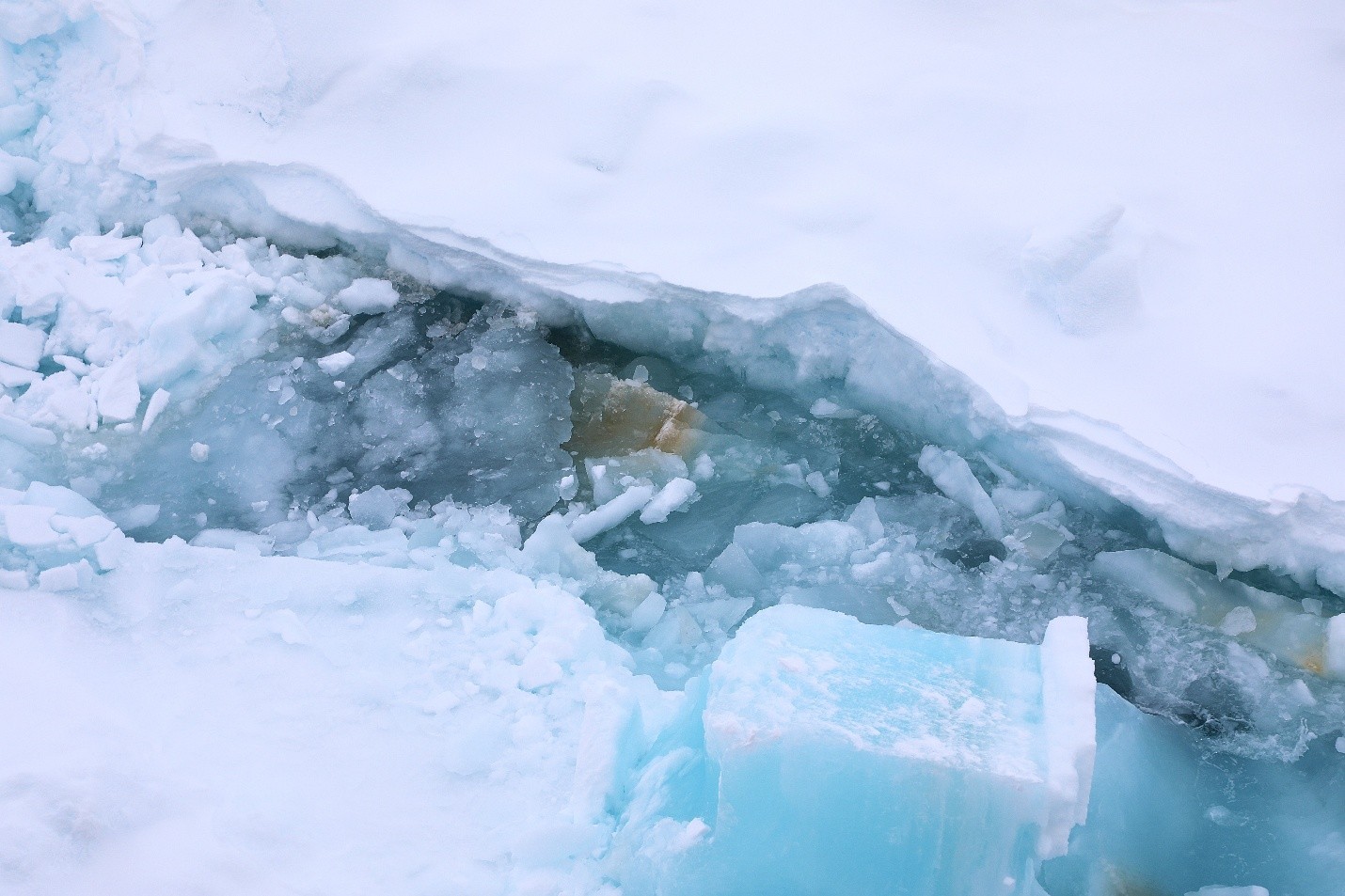
Caption: Some hints of algae on the bottom of overturned ice chunks.
My one area of comfort has been the clouds. Dark and gray. Most people don’t seem to like them, but they are the norm in these parts. And they have been the norm on our expedition so far. Below the freezing point, they still consist of liquid water, which is very effective at blocking the incoming sunlight. At the same time, they serve as a blanket, trapping heat near the surface. What role have they played in limiting surface melt around us? This is a question we hope to address using our measurements from Oden.
\\Matthew Shupe, August 21
Frustration…
11 days into the expedition, we have set up our instruments and settled into some sort of routine. It is nice that things have calmed down a bit, but as the excitement of the first few days fades it leaves space for less pleasant emotions.
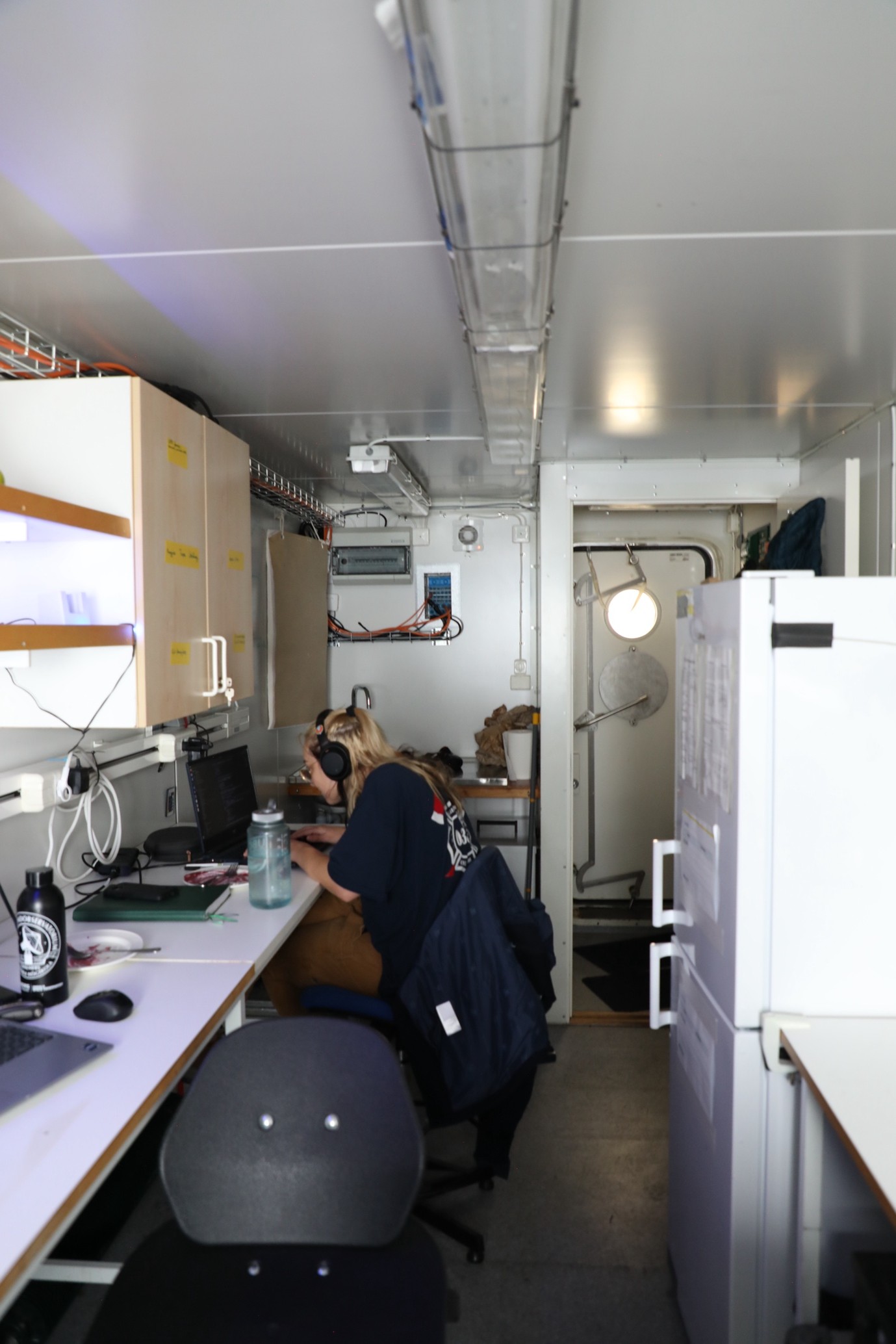
Caption: Missy Westland (University of British Columbia) analyses the data from the meteorological instruments.
I am currently trying to process the raw data from some of our instruments. We have been given code that should do exactly this, but the code is in MATLAB, which I have never really worked with before. With limited internet access and no one on board who knows how the code works, it has been a frustrating experience trying to get things to work. So far I have not succeeded… For my PhD I mostly work with numerical modelling so I spend a lot of my time wrestling with code. I was really looking forward to being on Oden for a few weeks to get a break from that, but it seems that some issues just cannot be escaped…
/Linnea (2026-08-21)
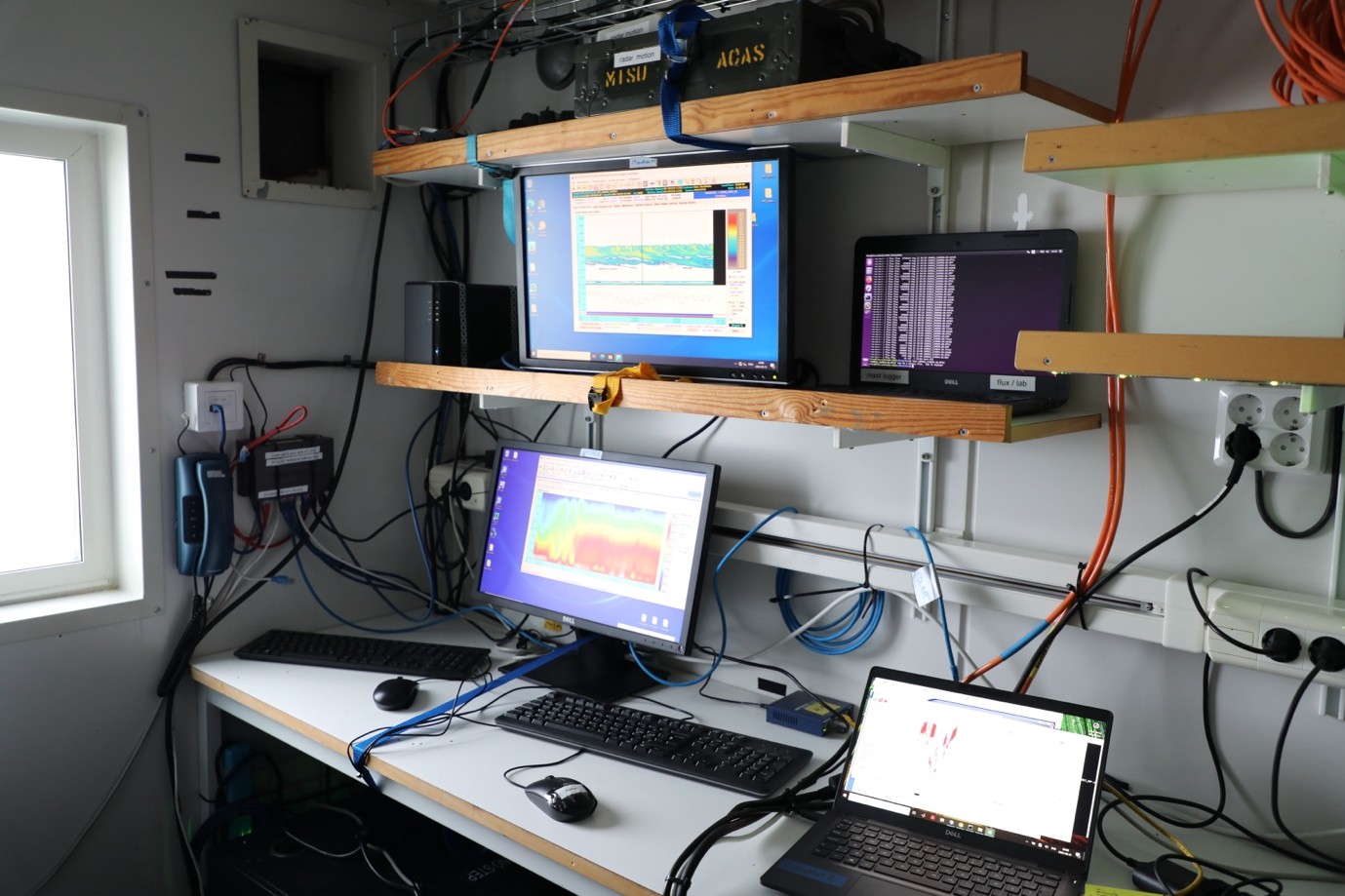
Caption: Monitors in the "radar lab", one of our office spaces onboard.
Last updated: 2026-09-01
Source: MISU