


Expedition Arctic Ocean 2026, blog post 13: Blanket
We just had an amazing blizzard, at least for Arctic standards. The snow was coming down, like one of those powder days back home in the Colorado mountains when you can’t wait to get up to the slopes to ski some light and fluffy turns.
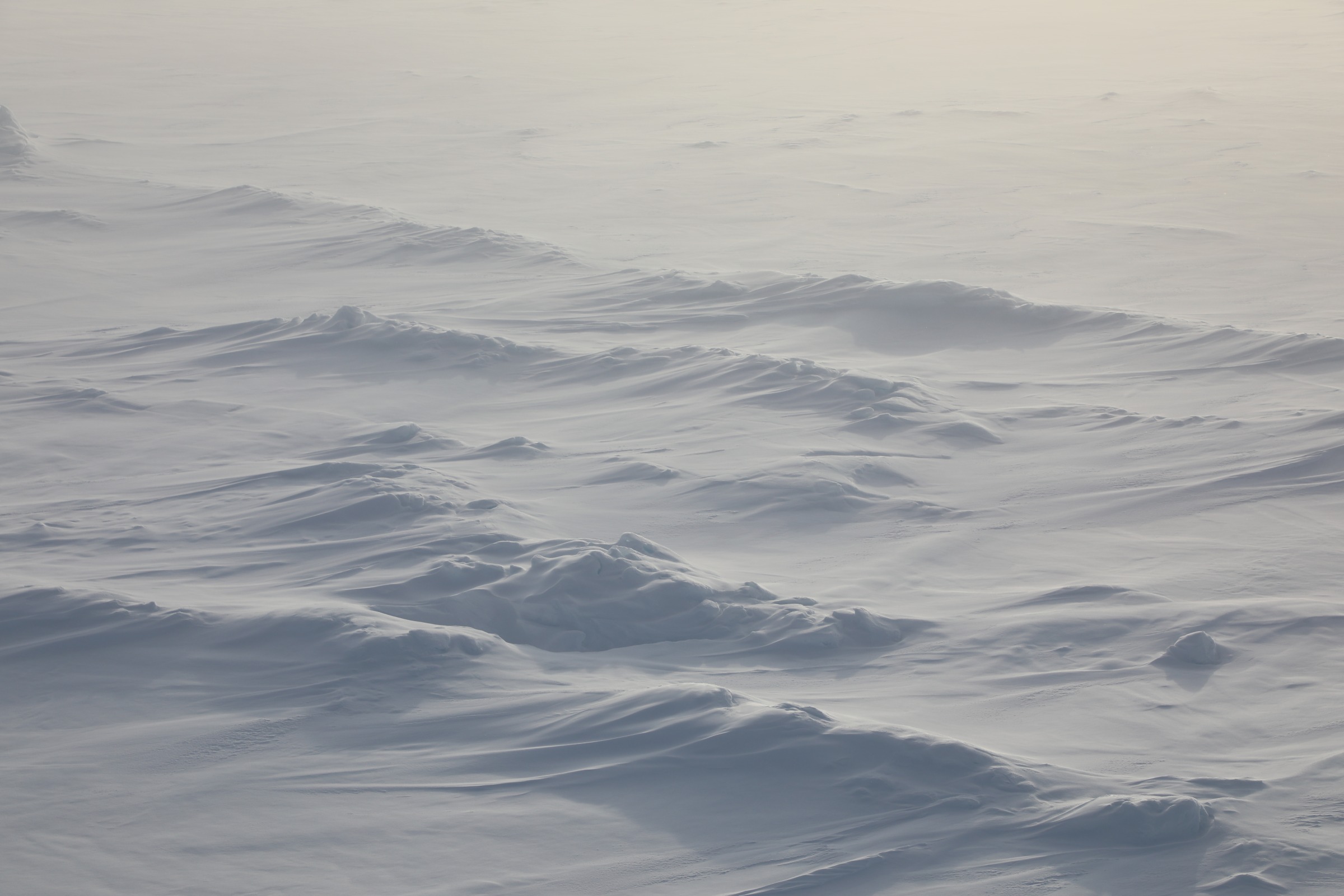
Caption: Snow accumulating around and blowing over sea ice ridges.
In the end the accumulation may have only been 5 cm, but that is a large percentage of the expected annual accumulation. And it came at a very interesting time. Thin, new sea ice has been forming on open water areas between the remnant sea ice floes.
The falling snow covered that new thin ice, effectively insulating it from the moderately cold atmospheric temperatures. Instead of the top of the ice experiencing the cold atmosphere, forcing more ice growth, now it is the snow layer experiencing that cold and buffering the ice. This likely slowed the new ice growth at this time when growth can be quite fast.
It is one of the many “feedbacks” of the Arctic system: processes that work to amplify or mitigate change on a variety of scales. Here that change is part of the standard seasonal onset of sea ice growth, and in some ways this storm is slowing that process.
At the same time, the snow has also left the older ice floes covered in stark white, enabling them to reflect most of the remaining sunlight coming into this area. In that sense, the snow is cooling the surface and promoting ice growth. There are so many different positive and negative feedbacks as the system slowly shifts towards winter.
People out on the ice have reported total seasonal snow depth accumulations of 25 cm or more in places. In my experience, that is a lot for this time of year. And it is kind of surreal to be cruising through the Arctic in a white out situation, Oden moving slowly and powerfully into the invisible unknown.
/Matthew Shupe - 2026-09-08
Last updated: 2026-09-10
Source: MISU