


Political views remain stable after regime change
Those who participated in the protest movement before the fall of the Berlin Wall are to a great extent politically active today, a doctoral thesis in sociology shows. Additionally, former supporters of the socialist party are still on the far left end of the political spectrum. None of the groups is more likely to sympatise with AfD. This sheds light on how experiences from an authoritarian regime can remain stable over time, according to Zeth Isaksson, the author of the thesis.
The differences between East and West in Germany emerge every time the country heads to elections. For example, most of the people who vote for the extreme-right party AfD live in the former East Germany.
”In the public debate, this is usually explained by them having experienced socialism. That’s where the analysis usually stops”, says Zeth Isaksson, new PhD in sociology at Stockholm University.
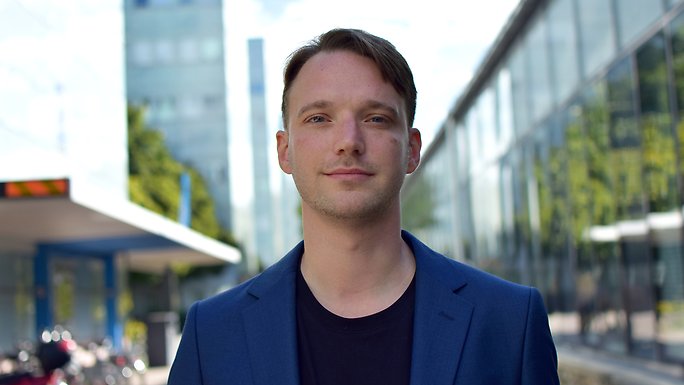
Zeth Isaksson.
The emergence of AfD evoked interest in German politics
Zeth Isaksson had long been interested in Eastern Europe, but it was during his master’s studies in München that he became curios about the impact of socialism on German politics today. At the time of his studies, he saw AfD growing dramatically in the former DDR, but he often found the explanations inadequate.
”And then I started to search. What is it that makes this region so different? What is it that makes people vote for extreme parties, in a country like Germany, with all its history?”
Answers were not to be found in existing research. Again, the analyses stopped by claiming that the two regions are different because one of them has been under socialist rule. What particularly caught Zeth Isaksson’s attention was that no one had asked the people who have lived through socialism how they behave politically today.
”I wanted to understand what socialism is for people, and not as a political system. This is lived experience and is therefore important to remember and analyse.”
Found information that no one had studied
Zeth Isaksson started to look into the German Socio-economic Panel, an important source of information for scientific studies, and he discovered a certain piece of data that all researchers had overlooked.
”It was a special survey from 2018, where people were asked directly about their experience of the DDR. The answers from that year can be used to follow the same respondents, both backwards and forwards in time. One can also link the results to their children.”
The neglected data provided Zeth Isaksson with answers, which resulted in a thesis that turned out to be over 600 pages long. He divided the respondents into three groups according to their positions in the old regime – supporters, victims and challengers. He found that political views remained stable over time, and sometimes even over generations.
People who participated in the protest movement and those who were suppressed by the regime before the fall of the Berlin Wall have a high level of political activity today. This engagement in democracy is also observed among their children.
”Even though AfD are trying to appropriate the memory of the protest movement, there is nothing that indicates that those who participated in the protests are strong supporters of the party. On the contrary, they have a higher level of democratic satisfaction, participation in elections and social trust”, says Zeth Isaksson.
Also among the old loyalists, the ideological convictions have remained the same after the system shift. Those who were active in the socialist party are more likely to sympathise with the left-wing party Die Linke. However, these convictions have not been passed down to their children to the same extent.
The conflict lines in the East remain
According to Zeth Isaksson, the thesis’ most important result is that different experiences of the DDR are continuing to structure German politics. In other words, the conflict lines that existed in East Germany before the transition to democracy are still present. The political differences are not about a simple division between the East and the West. Instead, they are influenced by the disparities that were prevalent within the DDR before the reunification.
Since none of the groups studied by Zeth Isaksson show a particularly strong support for AfD, this means that the party’s supporters are to be found elsewhere. Zeth Isaksson believes that the thesis can give us a greater understanding of the stability of political conflicts and how they are a part of a wider historical narrative.
”We shouldn’t say that the extreme right parties that have emerged in Germany after 2010 are a consequence of socialism, without specifying what we mean by that. There are absolutely parts of the socialist heritage that can have played a role, but I think that, when we talk about it, we should really nuance and understand which historical experiences can contribute to the polarisation.”
Different experiences from the same political system
When asked about how the thesis’ results can be applied to Sweden, Zeth Isaksson explains that it is possible that people who have immigrated here can retain their political interest, although it may be latent. Additionally, different people can have different experiences of a political system, and these can affect them in different ways, even if they are from the same country.
”This study is not about migration, but I think that maybe the way that people talk about East and West Germany, resembles some of the discourse about immigrant groups. And we have many people here who have actually fought for democracy. It is possible that they have an even deeper understanding of democracy and dictatorship than those of us who were born here.”
In the future, Zeth Isaksson is planning to study how people in Eastern Germany have been affected by the economic restructuring after the regime change. He will also participate in Jens Rydgren’s project about how structural changes are affecting people in rural areas.
”I am very excited about that”, says Zeth Isaksson.
The thesis
The thesis "Political Behavior in the Shadow of Socialism" is available in DiVA.
Contact
E-maiil: zeth.isaksson@sociology.su.se
Last updated: 2025-12-17
Source: Department of Sociology