


Q&A: Understandning the ‘5% rule’ – and why fisheries ministers want to scrap it
2026.06.10 The EU Council of Ministers is once again looking to amend or remove the ’5% rule’ under Article 4(6) of the Baltic Sea Multiannual Plan. Experts at the Baltic Sea Centre explain why, and what the consequences might be.
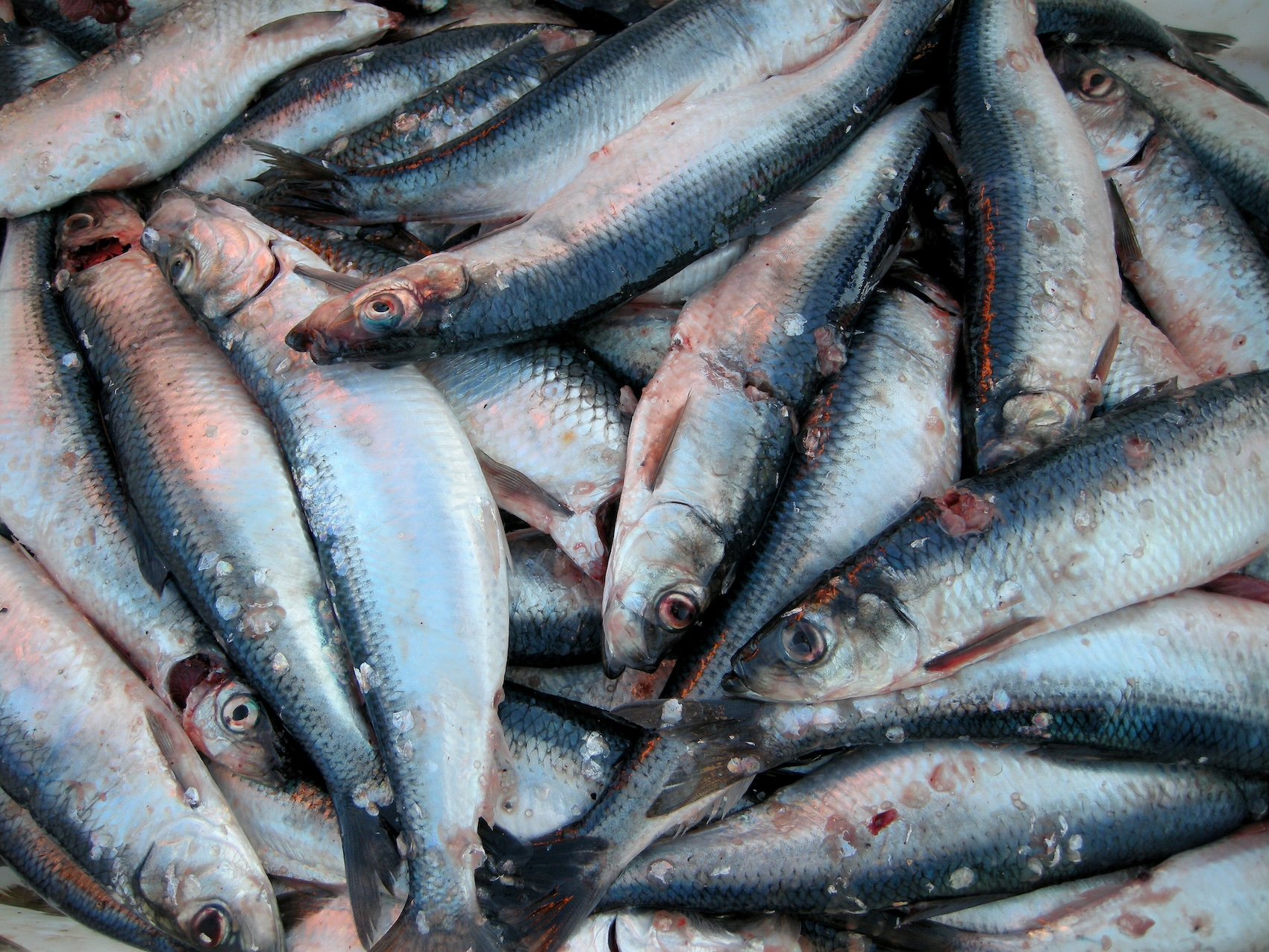
Photo: Atle Grimsby], via Wikimedia Commons, licensed under CC BY 2.0.
The 5% rule in Article 4(6) is a statutory safeguard in the Baltic Sea Multiannual Plan, designed to prevent severely depleted fish stocks from collapsing as a result of excessive fishing.
In 2023, the herring stocks in the central Baltic Sea and the Gulf of Bothnia were so low that the European Commission was forced to propose a ban on all targeted herring fishing – precisely because of Article 4(6). In December of the same year, the EU's fisheries and agriculture ministers called for Article 4(6) to be removed from the management plan. The Commission heeded the call and put forward a proposal, immediately triggering an intense debate.
A large number of scientists, experts, environmental organisations, politicians and small-scale coastal fishers – as well as the Swedish Agency for Marine and Water Management (SwAM) and the Swedish University of Agricultural Sciences (SLU Aqua) – strongly criticised the proposal. There was broad agreement that the safeguard in Article 4(6) is an important provision, arguably one of the most important in the management plan, and that it should neither be amended nor removed.
The Commission's proposal was ultimately rejected by the European Parliament.
Now, the same issue has resurfaced. In December, the Danish Presidency sent a letter to the EU Commissioner for Fisheries and the Chair of the European Parliament's Committee on Fisheries, calling for an amendment of Article 4(6). More recently, the European Commission launched a 'call for evidence’ to collect stakeholders' views on the matter. The document refers, among other things, to a joint statement by 15 Member States, including Sweden, advocating for amendments to Article 4(6). In an interview with Dagens Nyheter, Sweden's Minister for Rural Affairs, Peter Kullgren (Christian Democrats), explained why Sweden had endorsed the statement:
”We remain committed to ensuring that an emergency brake is in place. However, Article 4(6) should be clarified in relation to Article 5, which also contains an emergency brake. At present, it is unclear which article takes precedence over the other,” he said.
So, why do the EU's fisheries ministers still regard Article 4(6) as problematic, contrary to what most scientists and experts say? Is the legislation unclear? And can the safeguard in Article 4(6) really conflict with other provisions in the Baltic Sea management plan?
The Baltic Sea Centre explains:
What are the arguments for amending Article 4(6)?
The arguments are largely identical to those put forward the last time this issue arose, in late 2023. It is argued that the 5% rule may ’overlap’ with other provisions of the plan – particularly Articles 5(1) and 5(2) – and create ’legal uncertainty’, making it difficult to determine which rules apply when fishing opportunities are set. It is also argued that the 5% rule can have ’abrupt and very drastic year-to-year curtailments of fishing opportunities” or the fishing businesses.
Is there uncertainty about which article should be applied and when?
No. Article 4(6) and Articles 5(1) and 5(2) do not conflict with one another – nor do they exclude one another – for the simple reason that they are triggered by different conditions.
One important difference between them concerns their time perspective:
- Article 5 is reactive and operates in the present. It is triggered by the current status of the fish stock, before the new fishing year has begun. The assessment is based on ICES' latest estimate of spawning stock biomass. If the spawning stock biomass is below MSY Btrigger, Article 5(1) applies; if it is below Blim, Article 5(2) applies.
- Article 4(6) is proactive and operates with a future perspective. It is triggered by the stock's expected future status after the fishing year has ended. The assessment is based on ICES forecasts of how different catch limits (quotas) are expected to affect spawning stock biomass. Any quota resulting in a 5% or greater probability that the spawning stock biomass will fall below Blim by the end of the fishing year violates the 5% rule, and should therefore be regarded as incompatible with the management plan.
What else distinguishes the two articles?
Above all, their different aims and objectives:
- Article 5 is intended to rapidly restore spawning stock biomass to levels capable of producing MSY (generally interpreted as above MSY Btrigger).
- Article 4(6) is intended to reduce the probability of the stocks’ spawning stock biomass falling below the minimum biological limit, Blim, under which the risk of stock collapse is imminent.
Article 5 is therefore used to achieve and maintain the fundamental stock biomass objectives of fisheries management, whereas Article 4(6) serves as a final safeguard against stock collapse.
If both Article 5 and Article 4(6) can apply at the same time, which one should take precedence?
Such situations occur quite frequently nowadays and are in fact not as problematic as members of the Council appear to believe.
When setting fishing opportunities, ministers must first take the future into account. What will the stock status be in a year's time, once the quota they are about to set has been fully utilised? To minimise the risk of stock collapse, the quota shall, ’in any event’, be set so that the probability of the spawning stock biomass falling below Blim by the end of the fishing year is less than 5 %. Once this condition is met, the requirement in Article 4(6) has been satisfied.
Then, the ministers must also take the present into account. What is the current status of the stock? If the spawning stock biomass is currently below MSY Btrigger or Blim, they must adopt the appropriate ’remedial measures’ under Articles 5(1) and 5(2) to ensure that the spawning stock biomass increases ’rapidly’ above MSY Btrigger.
This is the crucial point: regardless of which remedial measures ministers choose under Article 5, the quota must, in any event, comply with the 5% rule set out in Article 4(6).
Article 4.6
Fishing opportunities shall in any event be fixed in such a way as to ensure that there is less than a 5 % probability of the spawning stock biomass falling below Blim.
Article 5.1
When scientific advice indicates that for a given year the spawning biomass of any of the stocks referred to in Article 1(1) is below the MSY Btrigger, all appropriate remedial measures shall be adopted to ensure rapid return of the stock concerned to levels above those capable of producing MSY. In particular, notwithstanding Article 4(3), fishing opportunities shall be set at levels consistent with a fishing mortality that is reduced below the upper range of FMSY, taking into account the decrease in biomass.
Article 5.2
When scientific advice indicates that the spawning stock biomass of any of the stocks referred to in Article 1(1) is below the Blim, further remedial measures shall be taken to ensure rapid return of the stock concerned to levels above the level capable of producing MSY. In particular, those remedial measures may include, notwithstanding Article 4(3), suspending the targeted fishery for the stock and the adequate reduction of fishing opportunities.
When did such a situation most recently arise?
A clear example is the quota negotiations in October last year, when fishing opportunities for the Baltic Sea in 2026 were agreed. At that time, the central Baltic herring was above Blim – but below MSY Btrigger. The range in the ICES headline advice (120,378–157,996 tonnes) corresponded to a 5.9 to 8.1 % probability of the spawning stock biomass falling below Blim the following year.
This situation triggered both Article 4(6) (because the probability of falling below Blim was too high) and Article 5(1) (because the spawning stock biomass was below MSY Btrigger).
According to ICES calculations, compliance with the 5% rule in Article 4(6) required that the quota be set at no more than 103,073 tonnes. In addition, further remedial measures under Article 5(1) were necessary to rapidly restore the spawning stock biomass above MSY Btrigger.
What was the outcome?
The negotiations resulted in a total quota of 123,463 tonnes (including Russia's autonomous quota), which was inconsistent with Article 4(6).
Referring to Article 5(1), the ministers also chose to introduce a three-month spawning closure for trawl fishing in coastal waters (within four nautical miles off the coast and in waters shallower than 20 metres) in various areas from mid-April until June or July. This remedial measure had little, if any, impact on the large-scale pelagic trawl fishery.
What should they have done instead?
A more legally sound (and less risky) decision would have been to:
- set a quota below 103,073 tonnes (to comply with Article 4(6)); and
- introduce spawning closures in those marine areas, and during those periods, when herring aggregate prior to spawning (to comply with Article 5(1)).
It should also be noted that ICES estimated that the quota for central Baltic herring would could be set to no more than 18,809 tonnes in order to have a 50 per cent probability of ensuring a ’rapid return’ of the spawning stock biomass to MSY Btrigger by 2027.
How ’rapidly’ must stocks be restored to levels above MSY Btrigger under Article 5?
The management plan does not specify a time limit. However, it clearly refers to the requirements of the Marine Strategy Framework Directive to achieve ’good environmental status’ for commercially exploited fish stocks, i.e. maintaining spawning stock biomasses above MSY Btrigger.
Perhaps the word ’rapid’ in the legal text should be interpreted as a signal to decision-makers of how important the EU considers it to keep fish stocks sufficiently abundant to deliver MSY.
In October the Council will decide on fishing opportunities for 2027. Will Article 4(6) come into play this time?
Article 4(6) will probably not come into play for the two largest herring stocks in this year's negotiations. According to ICES' stock assessments, both central Baltic herring and Gulf of Bothnia herring have increased. The quota ranges in ICES' advice (headline advice) have been raised substantially for both stocks. Spawning stock biomasses are estimated to be above Blim, and the probability of falling below Blim is less than 5 % – provided that next year's quotas do not exceed the ranges set out in the ICES headline advice.
What about Article 5 – will it affect the upcoming quota negotiations?
It should. Although central Baltic herring and Gulf of Bothnia herring are above Blim, both stocks remain below MSY Btrigger – which triggers Article 5(1). The question is whether, and if so which, remedial measures the EU's fisheries ministers will decide upon to ensure ’rapid return’ to biomass levels above those capable of producing MSY.
It is worth noting in this context that central Baltic herring has remained below MSY Btrigger since the 1980s, while Gulf of Bothnia herring has been below MSY Btrigger for at least a decade.
What will happen to Article 4(6) and the 5% rule going forward?
Once the European Commission has compiled and analysed all the feedback received, it will decide whether to put forward a proposal to amend the regulation in the management plan. If and when such a proposal is presented, it must subsequently be approved by both the European Parliament and the Council in order to enter into force. Ultimately, the outcome will depend on the vote in each institution.
Text: Henrik Hamrén
What do Baltic Sea Centre experts think?
The fisheries experts at Stockholm Universitys’ Baltic Sea Centre are, as before, strongly critical of the proposal to weaken or remove Article 4(6). In their response to the European Commission’s “call for evidence”, they state, among other things, that it would likely lead to reduced legal clarity.
The 5% rule provides an incentive to decision-makers to prioritise the rebuilding and revocvery of depleted stocks over short-term economic goals. Removing or weakening Article 4.6 would reduce this incentice, slow the recovery process, increase risk, and make the regulation less fit for purpose.
Regarding the claim that there is a lack of legal certainty or an overlap between Article 4(6) and other articles in the management plan suggests, accroding to the Baltic Sea Centre, that the rules have been misunderstood.
Read the Baltic Sea Centre’s full response here.
For further questions, contact:
Sara Söderström, Fisheries researcher
Tel: +46 (0)8 16 30 50
sara.soderstrom@su.se
Charles Berkow, Advocacy and analysis officer
Tel: +46 (0)8 16 31 50
charles.berkow@su.se
Henrik Hamrén, Science journalist
Tel: +46 (0)70 180 07 60
henrik.hamren@su.se
Last updated: 2026-06-11
Source: Stockholm University Baltic Sea Centre