


Monday lecture: Hong Kong Identity Conundrum
A Monday lecture by Dr. Mariusz Bogacki (European University Institute).
Lecture
Date:
Monday 7 April 2025Time:
14.00 – 16.00Location:
ZoomZoom: https://stockholmuniversity.zoom.us/j/65742406723
This lecture explores the curious case of Hong Kong identity and how its contemporary definitions present us with a conundrum. How does the ongoing socio-political transformations in the city affect the way we think of Hong Kong identity? What’s the role of Chinese heritage and British colonialism in influencing it? Is Hong Kong identity unique?
The lecture will begin with an overview of the development of Hong Kong identity since the 1960s until 2020 - the years when the National Security Law was introduced, heralding a new era of autocratisation in the city. It will then introduce a conceptual framework - the “Say-Do-See” nexus - to study and understand Hong Kong identity today. The last part of the lecture will adapt this framework to analyse contemporary Hong Kong identity at the intersection of people’s narratives (say), practices (do) and perceptions (see) - using interviews, observations, and participatory photography - based on over 12 months of ethnographic fieldwork in Hong Kong between 2021 and 2023.
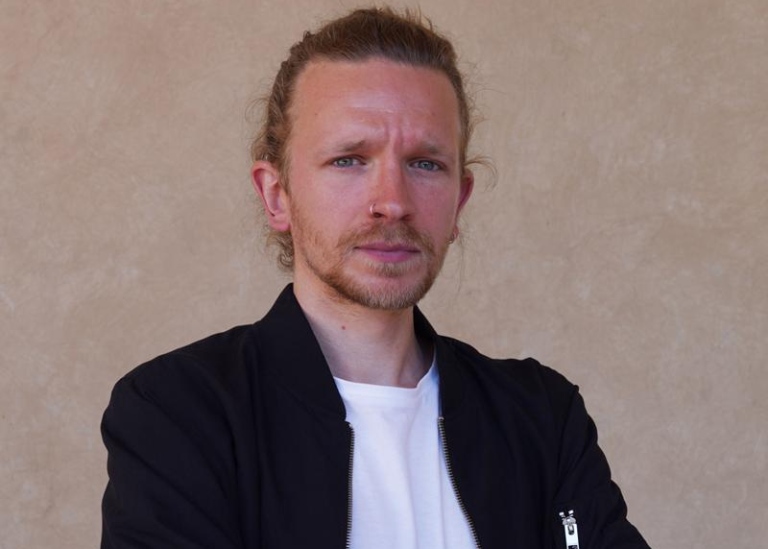
Mariusz Bogacki is a final year PhD candidate at the European University Institute’s (EUI) Department of Social and Political Sciences where he studies under the supervision of Prof. Jeff Checkel and Prof. Gordon Mathews. For his doctoral project he is investigating grassroot identity formation in Hong Kong in light of the ongoing socio-political transformations in the city. Mariusz holds academic degrees from the European University Institute (Italy), Tilburg University (The Netherlands), and Edinburgh Napier University (UK). He has held visiting researcher positions at the University of California, Berkeley, the Chinese University of Hong Kong and Goethe University, Frankfurt. Prior to his doctoral studies he has worked as a researcher at the University of Glasgow and the United Nations in Vienna.
Last updated: 2025-04-03
Source: Department of Asian and Middle Eastern Studies