


Work Package 14: Explorers on the Antarctic Ice
Leveraging research for societal relevance and impact
Within this WP, process, location, and results will jointly provide an opportunity to advance understanding and inspire action among decision-makers, the public, and future decision-makers (young people). Contribution to new knowledge: Assess the impact of novel strategies for science dissemination and impact, including a children’s book on SLR, a diary from Antarctica written by a refugee, a documentary presenting both the way science is advanced and SLR implications, and physical and digital installations for museums and schools.
Explorers on the Antarctic Ice
Updates from iQ2300’s Work Package 14 offer a behind-the-scenes look at what Antarctic research is really like. The media team, author Marit Törnqvist, photographer Kadir van Lohuizen, and journalist Bram Vermeulen documents the realities of working in one of the most extreme environments on Earth. After arriving in Antarctica, the team spent time at Neumayer Station waiting for safe weather conditions. Those early days were dedicated to logistics, safety briefings, and coordinating with international research partners. Before any scientific data can be collected, teams must adjust to the cold, plan long transport routes, and make sure both equipment and people can operate safely in such a remote setting. The WP 14 updates make it clear that polar science depends as much on preparation, patience, and teamwork as it does on research itself.
A recurring theme in the WP 14 messages is the sheer scale of Antarctica and the importance of collecting data directly in the field. Researchers travel thousands of kilometers across ice shelves and inland regions to gather measurements that satellites alone cannot provide. These on-the-ground observations help scientists study ice structure, snow accumulation, and surface features that affect how ice sheets move and melt. Photos and videos shared by the team highlight fractures in the ice, vast frozen landscapes, and changing surface conditions, all of which are closely tied to ice loss and rising sea levels. Together, these observations show why firsthand field data remains essential for improving climate models and understanding future environmental change.
The team’s updates also capture daily life on the ice, from leaving Neumayer Station and moving between research sites to documenting wildlife, such as penguins, and the demanding living conditions researchers face. Progress depends heavily on weather windows, aircraft availability, and seasonal light, meaning plans often change with little notice. By sharing these experiences publicly, WP 14 helps make complex topics like ice dynamics, climate feedback, and international scientific collaboration more accessible to a wider audience. For students and non-scientists alike, these updates provide a clear picture of how Antarctic research is conducted and why fieldwork remains critical to understanding global climate change. More updates from this media-focused project are expected, and readers can follow along through posts shared on LinkedIn by the WP 14 team.
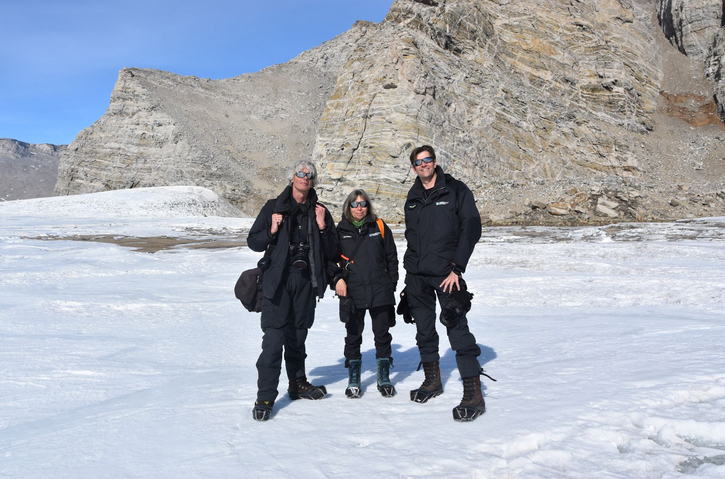
From left to right: Kadir Van Lohuizen, Marit Tornqvist, and Bram Vermeulen explore the Antarctic. Image credit: unknown
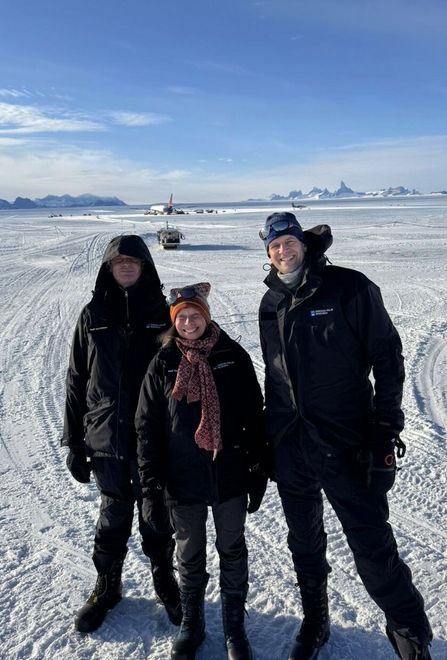
From left to right: Kadir Van Lohuizen, Marit Tornqvist, and Bram Vermeulen explore the Antarctic. Image credit: unknown
Last updated: 2026-02-19
Source: Department of Geological Sciences