Towards the Modern City: People, Spatiality and Social Change, 1850–2000

This course is offered by the Department of History as a part of the Doctoral School in the Humanities. The course is offered during the spring semester of 2027 and on campus.
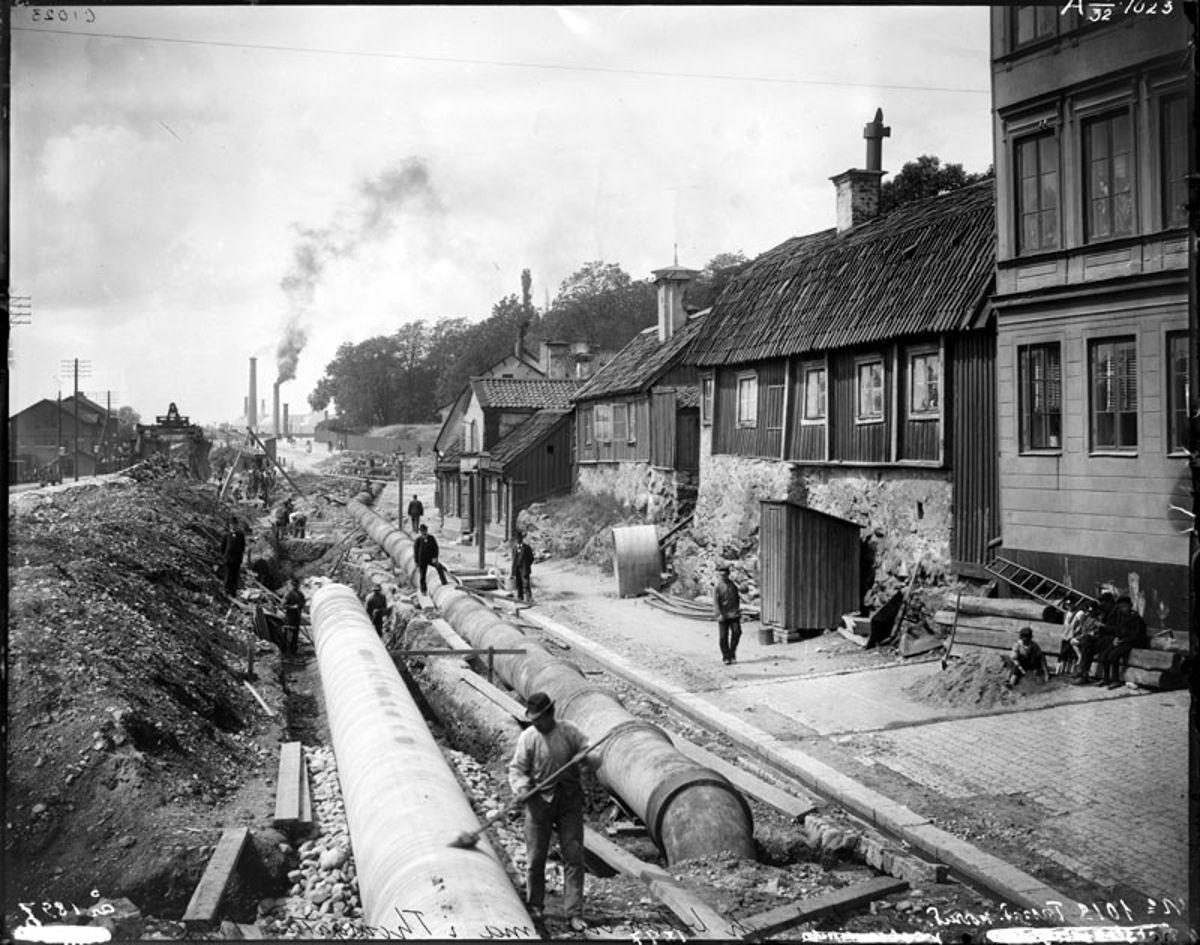
https://stockholmskallan.stockholm.se/post/1902 Hämtad 2026-09-12

Stockholmskallan.stockholm.se/post/1902

Course Content

The course explores the transformation of European cities and urban environments from the mid-nineteenth century to the turn of the twenty-first century. Its central theme is the emergence and development of the modern city as both a built structure and a lived environment. Through five seminars and two excursions in Stockholm, the course examines key processes that shaped urban change, including industrialisation, welfare reform, urban planning, municipal expansion, automobilism, deregulation, and commodification.

The course is intended for doctoral students in the humanities whose research engages with themes such as urban history, urban planning, urban studies, spatial planning, environmental history, and sustainable development. The seminars address the rise of the industrial city, the social question, the welfare city, the planned city, the city in relation to the Swedish welfare state, and the neoliberal city. The excursions connect these themes to the urban landscape of Stockholm, with particular attention to social institutions, spatial organisation, and the changing use of urban space during the twentieth century.

Teaching is based on active seminar participation, preparatory written papers, presentations, and discussion. The course concludes with a longer essay in which students develop and summarise a relevant perspective of their choice. In this way, the course provides doctoral students with historical knowledge, theoretical perspectives, and analytical tools for understanding urban development in a European context.

On completion of the course, the doctoral student will be able to:

- account for and summarise the development of European cities from 1850 to 2000, including key institutional, social, and infrastructural processes of change, and their significance for the emergence of the modern city.

- discuss and compare key theoretical perspectives and their methodological approaches in relation to the emergence of the modern city, both as a built structure and as a lived environment.

- critically discuss and independently carry out analyses of urban development processes, drawing on relevant theoretical perspectives and historical models addressed in the course.

Mandatory elements

Attendance is compulsory and constitutes a course requirement.

Examination

The course is assessed through active participation in seminars, as well as oral and written assignments.

Instruction

Teaching consists of campus-based seminars and excursions. The seminars combine lectures, seminar discussions, and presentations by participants.

The course is offered on campus.

Language of instruction

English

Course dates and period

The course will be offered in the second half of the spring semester 2027 and will comprise five seminars and two excursions. All seminars will take place in room D900 at the Department of History, Stockholm University.

Locations for the excursions will be announced later.

The planned course dates are:

7, 14, 21 and 28 April, and

12, 19 and 26 May.

Link to the timetable in TimeEdit: https://cloud.timeedit.net/su/web/stud1/riq6YQ04622Z60Qy7Q71Z0Q666Z440435Yh7Y0gQ00og763XZ7y5cnQ6xxvZqaQo.html

Course plan:


Application

Applications for courses starting in the spring semester 2027 are received between November 15 and December 15 2027. Notifications of acceptance are sent out as soon as possible after the final date.

All applications are sent by the supervisor to: doctoralschool@hum.su.se. Official transcript of records, or certificate of registration, verifying the applicant's status as doctoral student should be enclosed with the application.

All courses are free of charge, and they are open to all who are admitted to studies on PhD-level, regardless of faculty or university. Prerequisites and special admittance requirements may apply for some courses.

How do I apply?

The application form (document link below) is used to apply for a place in a course. The supervisor (or equivalent) must support the doctoral student’s application with a motivation as to why the doctoral student should participate in the course. The supervisor also submits the proposal to the following address: doctoralschool@hum.su.se.

Application form for place in a joint faculty course docx, 294.6 kB.

Who can apply?

The Faculty of Humanities’ doctoral students have priority for places, and external doctoral students (from Stockholm University or another university) can be admitted to a course subject to availability. External doctoral students will be registered in Ladok in order to enable the Board to monitor all participants in a course.

This course is offered by the Department of History and course coordinator is Magnus Linnarsson and Hannes Rolf.

Research officer: Mikael Kalm, Fil. dr

forskarskolan@hum.su.se

Mikael Kalm

Last updated: 2026-09-12

Source: Office of Human Science