


We build neurons and muscles to understand the lethal disease ALS
Will ALS be treatable in the future? Yes, I believe so – without a doubt. When I started conducting research on ALS more than 20 years ago, only a single gene had been linked to the disease. Today, more than 50 genes are known, and we are beginning to understand how these genetic changes drive disease development, says Eva Hedlund, Professor of Neurochemistry.
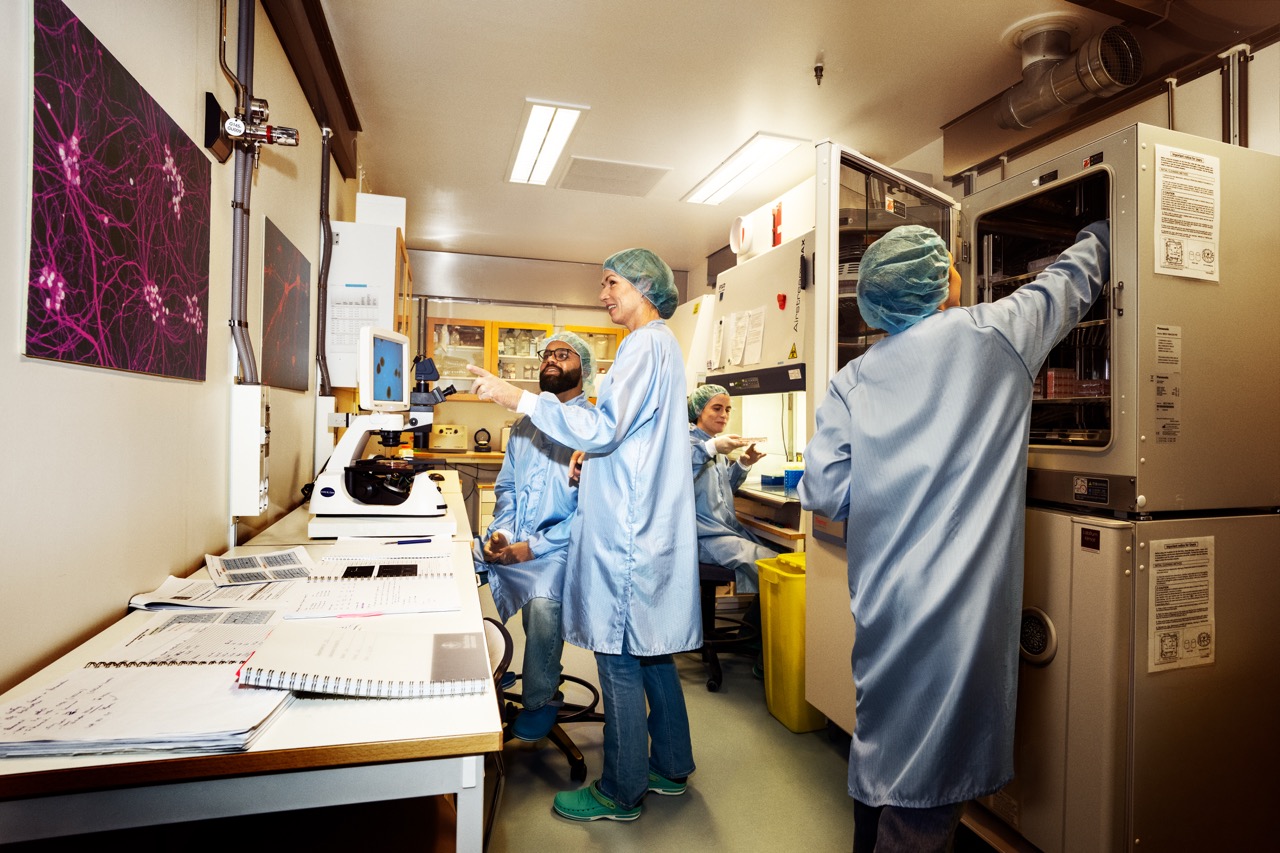
– As a former athlete and coach, I have long been fascinated by how the human body works - particularly how you can build and train fast-twitch muscles to run faster and jump higher and longer.
– Today, my research focuses on protecting the motor neurons in the spinal cord that control these powerful muscle fibers. These neurons are the first to degenerate in ALS and understanding how to preserve them is central to my work.
How does this research work in practice?
– To understand what happens in ALS, we reprogram human skin cells into stem cells and use them to grow miniature, lab-based tissues. These mini-organs allow us to model the human spinal cord and the muscles it controls. Using this approach, we study how motor neurons normally connect with muscles, why these deteriorate in ALS, and how they might be strengthened. We also investigate why certain motor neurons are resistant to ALS, as these protective mechanisms may point the way towards new treatments.
What does being a researcher mean to you?
– It’s incredibly rewarding to ask questions that no one yet can answer, and to explore them through experiments. I enjoy coming into the lab each day, exchanging ideas with colleagues, and working together to uncover new insights. I feel very fortunate to be able to do this work every day.
What does the research environment at Stockholm University mean to you?
– The research environment here is highly interdisciplinary. As a neurochemist and stem cell researcher, I get to speak with scientists from many different fields — physics, biochemistry, cell biology and materials chemistry. Together, we can achieve things that move research forward in big and sometimes unexpected ways.
– It’s also a very international environment. My team alone includes researchers from China, India, Ukraine, Spain, Italy, the Netherlands, France, Germany, Greece and Sweden. It is important for creativity that we are a dynamic group and that we think differently.
What does working with students mean to you?
– Teaching gives me a great deal of energy. In many ways, it could be the most important part of what I do. The best moments are when the students ask questions I don’t yet have the answers to, and we start looking for the answers together.
– A while ago, I was named Teacher of the Year, nominated by our students, which was truly a great honor. Perhaps it's because I integrate the latest science as well as hands-on experiments, that the students get to design on their own, into my teaching. Among other things, they get learn how to grow human stem cells and develop protocols to guide them into becoming different types of neurons.
Want to know more about Eva’s research?
- New research on ALS opens up for early treatment
- New research shows how nerve cells can be protected against ALS
- Eva Hedlund's research group
Last updated: 2026-03-05
Source: Kommunikationsavdelningen