


Joanna Lindström Researcher
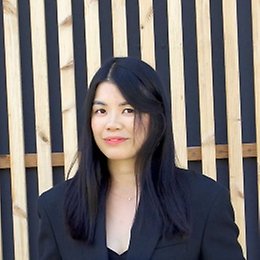
Contact
Name and title: Joanna LindströmResearcher
Workplace: Department of Psychology Länk till annan webbplats.
Visiting address Albanovägen 12
Postal address Psykologiska institutionen106 91 Stockholm
About me
I recently obtained my PhD in Psychology at the Department of Psychology, Stockholm University, Sweden, and am now a Postdoctoral Researcher at the Department of Psychology, Uppsala University (affiliated to Stockholm University), and at the Center for Research in Extremism (University of Oslo). My research is financed by a three-year grant by the Swedish Research council.
The title of my dissertation is: Susceptibility to Violent Extremism: Integrating Personality and Social Psychological Factors.
I primarily conduct research examining why individuals engage in different forms of violent group mobilization, such as right-wing extremism, Islamist extremism, violent protest, and football violence. I draw from social psychological and personality perspectives, examining how perceptions about group identity, inequality, and individual differences influence individual susceptibility to engagement in violence for one’s group. My main research interests are violent extremism, collective action, political psychology and intergroup relations.
For me information about me visit my personal website.
Publications:
Lindström, J., Bergh, R., & Akrami, N. (2023). Low modesty linked to feeling deprived among advantaged (but not disadvantaged) groups. Journal of Research in Personality, 103: 104356. https://doi.org/10.1016/j.jrp.2023.104356
Lindström, J., Bergh, R., Akrami, N., Obaidi, M., & Lindholm-Öymyr, T. (2023). Who endorses group-based violence? Group Processes & Intergroup Relations. 0(0), 1–22. https://doi.org/10.1177/13684302231154412
Lindström, J. (2021). Personality and team identification predict violent intentions among soccer supporters. Frontiers in Sport and Active Living. 3(741277), 1–8. https://doi.org/10.3389/fspor.2021.741277
Obaidi, M., Anjum, G.*, Lindström, J.*, Bergh, R., Celebi, E., & Baykal, M. (2020). The role of global Muslim identity in predicting violent intentions to defend muslims. Group Processes & Intergroup Relations, 23. https://doi.org/10.1177/1368430220920929
Lebedev, A., Nilsson, J., Lindström, J., Fredborg, W., Akenine, U., Hillila, C., Andersen, P, Spulber, G., De Lange, E, van den Berg, D-J., Kivipelto, & M., Lövdén, M. (2020). Effects of daily L-dopa administration on learning and brain structure in older adults undergoing four weeks of cognitive training: a randomised parallel-group, double-blind, placebo-controlled trial. Scientific Reports, 10, 5227. https://doi.org/10.1038/s41598-020-62172-y
Lindström, J., & Lindholm, T. (2020). Suicide Terrorism. In T. K. Shackleford & V. A. Shackleford (Eds.), Encyclopedia of Evolutionary Psychological Science, Cham, Switzerland: Springer International.
Olofsson, J. K., Ekström, I., Lindström, J., Syrjänen, E., Stigsdotter-Neely, A., Nyberg, L., & Larsson, M. (2020). Smell-based memory training: Evidence of Olfactory Learning and transfer to the visual domain. Chemical Senses. https://doi.org/10.1093/chemse/bjaa049
Gall, K., van Zutven, K., Lindström, J., Bentley, C., Gratwick-Sarll, K., Harrison, C., Lewis, V., & Mond, J. (2016). Obesity and Emotional Well-being in Adolescence: Roles of Body Dissatisfaction, Loss of Control Eating, and Self-rated Health. Obesity, 00, 1-6. https://doi.org/10.1002/oby.21428
Grants/Awards:
- Swedish Research Council - International Postdoc (2024–2026).
- Donationsstipendium, Stockholms universitet: Kock-Lindberg (2021/2022)
- Donationsstipendium, Stockholms universitet: Rhodin Stiftelse (2020/2021)
- Donationsstipendium, Stockholms universitet: Rhodin Stiftelse (2019/2020)
- Bidrag till Enskilda Forskare: Lars Hiertas Minne (2019)
- European Association of Social Psychology Seedcorn Grant (Co-applicant)
I currently supervise Bachelor's and Masters students and teach for the following courses:
- Personality Psychology (PAO program)
- Personality Psychology (Psychologist program)
- Personality theory
- Social Psychology II
I am mainly interested in understanding intergroup relations (particularly conflict), drawing from personality, social psychology, cognitive, and evolutionary perspectives. I have a particular interest in examining the factors (individual, social psychological) which lead individuals to engage in violent extremism and collective action more generally. I am also interested in group-based emotions, and whether manipulating emotions (both incidental and integral) can lead to changes in intergroup relations (characterised by conflict), whether it be collective action or helping behaviour. In my research, I draw from existing theoretical frameworks, but also develop new integrative models of understanding intergroup behaviour, which I test emprically.