


Research project Sacred Speech and Political Power: The Role of Preaching at the Councils of Constance and Basel
The reform councils of the 15th century changed European history – yet the sermons held during them are greatly understudied. This project will make sources from the councils of Constance (1414-1418) and Basel (1431–1449) available as digital editions and explore their contents, also in comparison.
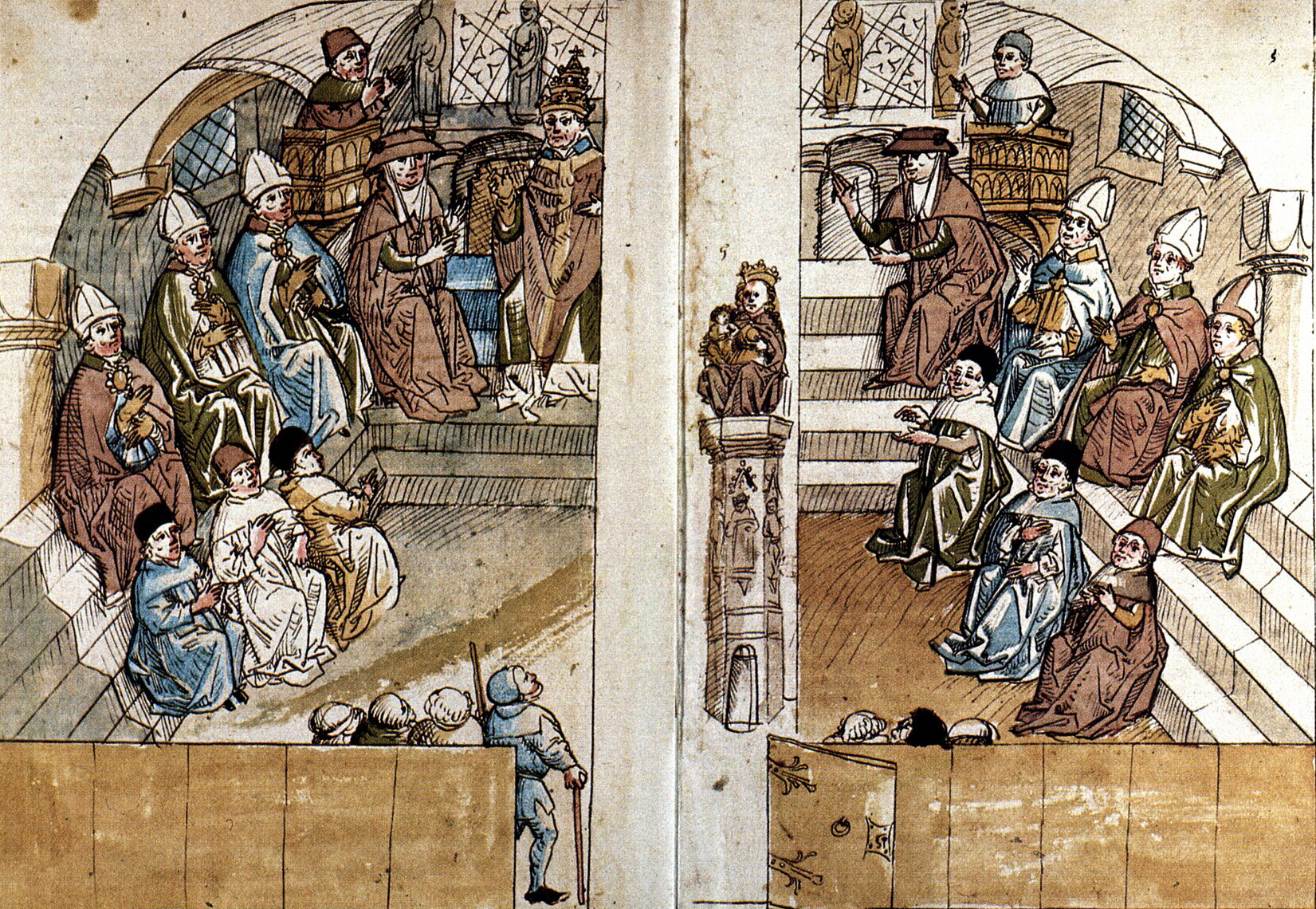
Richental Konzilssitzung Muenster, ca. 1460–1465. Rosengartenmuseum. Photo: unknown, Wikimedia Commons/public domain (the image is cropped).
At the councils of Constance (1414–18) and Basel (1431–49), secular and spiritual representatives from across Europe met to address the pressing issues of their time: peace among Christians, church reform, and the treatment of non-believers. By declaring the council superior to the pope, they set a precedent for parliamentary democracy. Many sermons were held at these councils, and their power was well known - preachers had to submit their texts in advance for a diligent review. Yet, despite their significance, the over 600 surviving sermons from these councils remain mostly unpublished and greatly understudied.
This project brings these unexplored voices to light using the latest advances in Natural Language Processing. We will make the sources accessible by editing a comprehensive corpus of council sermons (Goal 1) and facilitate interpretation by annotating key features such as biblical references and named persons (Goal 2). These will facilitate our interpretation of the sermons and how they figured in important conciliar debates (Goal 3). We explore how preachers framed political views in religious language and how they positioned themselves in the conflict between pope and council. Finally, we offer the first systematic comparison of structure, content, and purpose of the sermons from both councils.
The project makes vital sources accessible, advances computational methods, adds to conciliar history, and sheds light on how sermons could shape political discourses.