


Research project Oceanic and Atmospheric Overturning Circulation
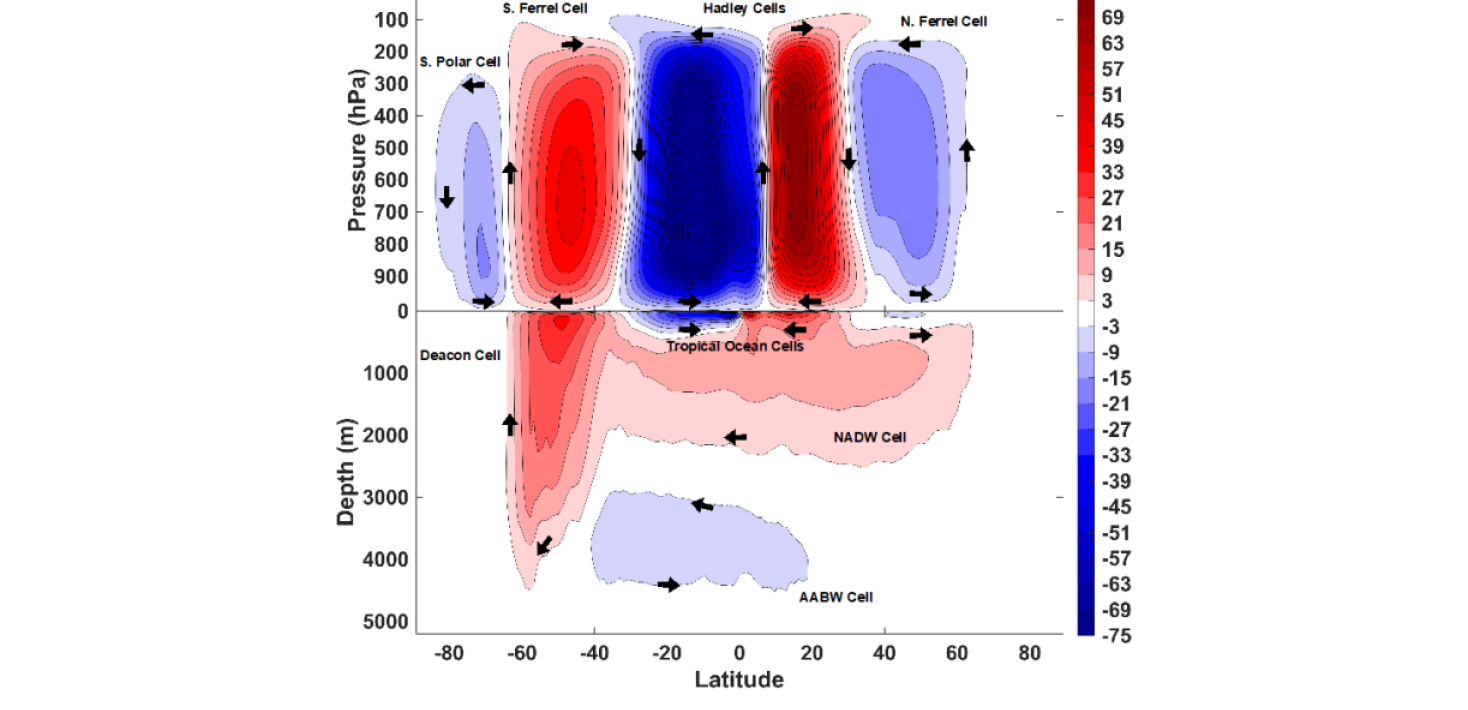
FIG. 1. The global air-mass overturning stream function for the atmosphere (top panel) and global water-mass overturning stream function for the ocean (bottom panel) simulated by an Earth System model. Arrows indicate the mass transport direction. All transports are in Sv (109kg/s).
Figure 1 shows how this is viewed by cells, which transport water and air in the coupled ocean-atmosphere system simulated with the Earth system model EC-Earth.
An alternative way to study the overturning circulation is with Lagrangian trajectories, which makes it possible to follow a given water or air mass from a given region to another. For this we have developed the trajectory model TRACMASS (www.tracmass.org) for both air masses and water masses.
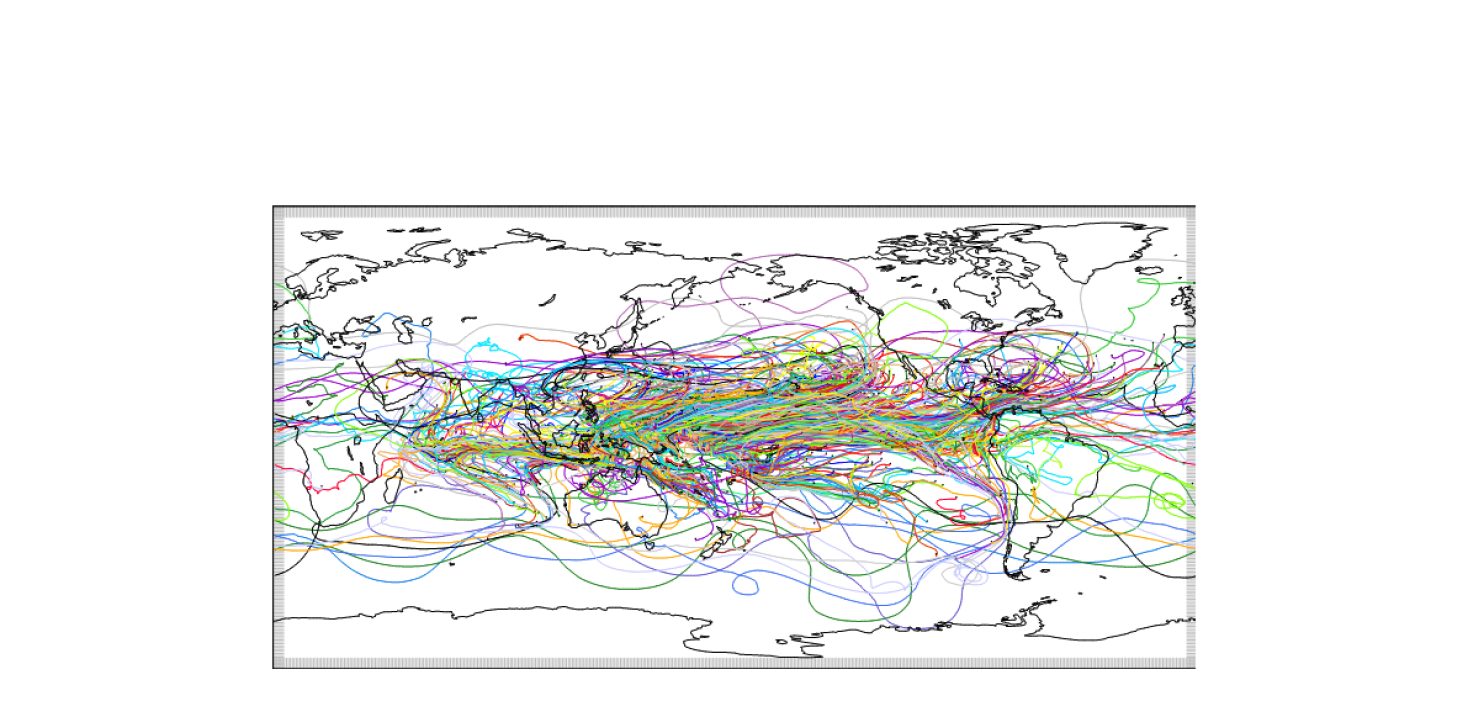
FIG. 2a. Conventional longitude-latitude map. Atmospheric water trajectories started at the sea surface at evaporation points and ended at the surface at precipitation points. Note that these are water trajectories not air trajectories simulated by TRACMASS with a new water mass conservation method.
In Figure 2a and 2b we have followed water in the atmosphere from evaporation regions in the Tropical Pacific to the precipitation points.
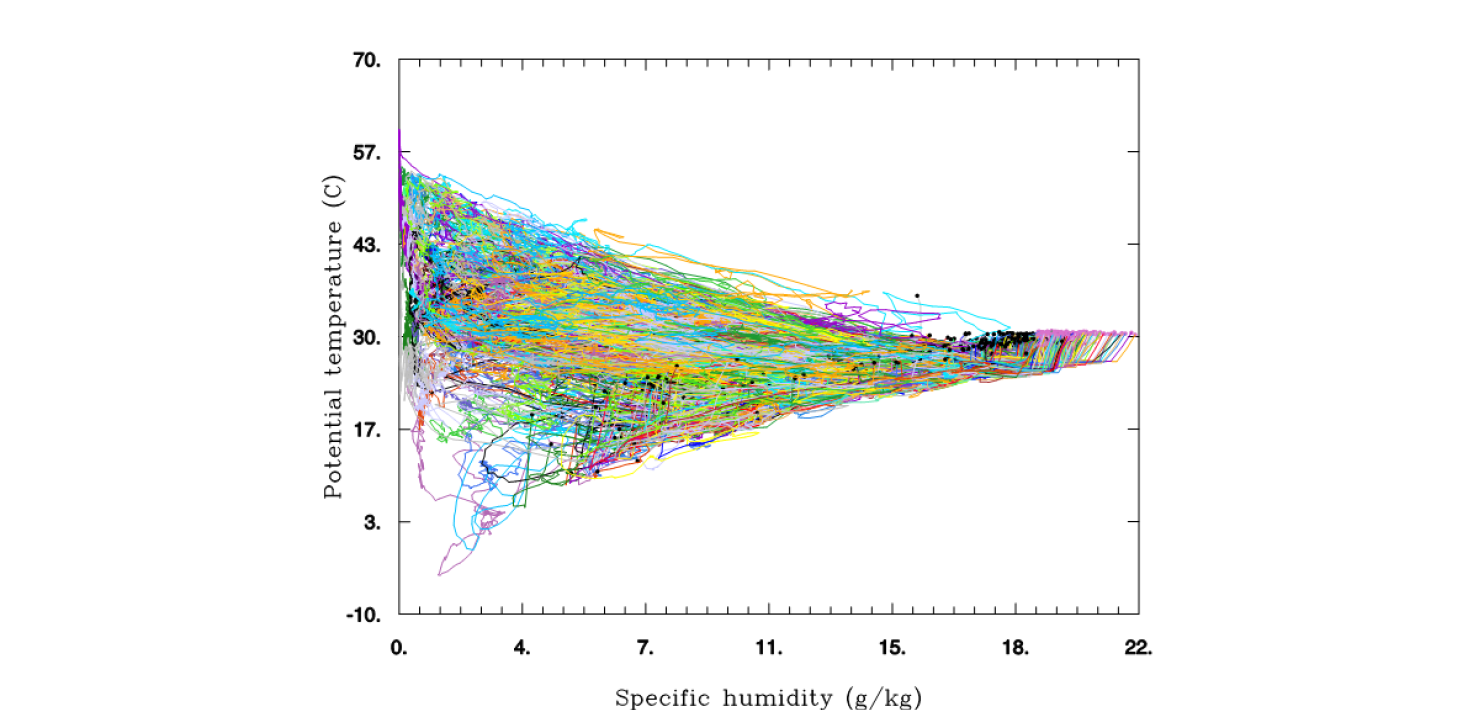
FIG. 2b. Trajectories in the temperature-humidity space, an alternative way to describe the overturning. Atmospheric water trajectories started at the sea surface at evaporation points and ended at the surface at precipitation points. Note that these are water trajectories not air trajectories simulated by TRACMASS with a new water mass conservation method.
Project title: Inter-ocean exchange of freshwater and heat through both the ocean and the atmosphere in a warmer climate.
Funded by: Swedish Research Council
Funding period: 2020-2024
Project ID: 2019-03574