


Blog Posts
Read more about recent iQ2300 work package teams, research, and outreach below.
Sep 2 | Unlocking the Secrets of Antarctic Snow
Did you know that tiny drops of melted snow can help reveal the past and predict the future of our planet? The researchers of iQ2300 are working to share this information with you! In a recent interview, graduate researchers Johanna Wallström and Vanessa Henriksson shared what it is like to work in a research laboratory at Stockholm University in Sweden and how this helps in understanding keys to our planet’s future.
Johanna is a Ph.D. candidate in physical geography at Stockholm University. Vanessa recently completed her Masters in geomatics with remote sensing and GIS and is now a research assistant in the physical geography department. Together they are analyzing snow core samples collected from the Riiser Larsen ice shelf catchment, Queen Maud Land in Antarctica by the WP8 team led by professor Ninis Rosqvist during the last iQ2300 field season expedition (Work Package 8, WP8). Wallström and Henriksson analyze melt samples taken from the 2025–2026 WP8 field team from up to 10-meter (30-feet) long cores of ancient snow. In the lab, Wallström and Henriksson place this melted snow into small vials to study its chemistry. Their goal is to measure ratios of oxygen and hydrogen isotopes to reveal when and how much snow fell at different places across the study area as this will likely change when Antarctica warms.
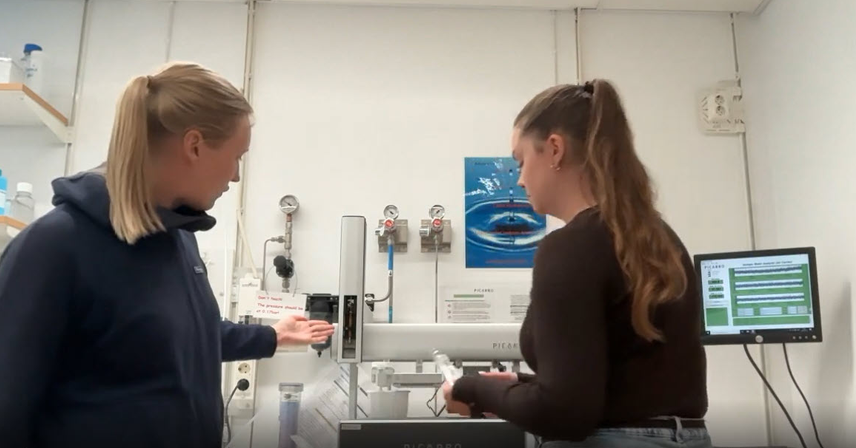
Johanna and Vanessa explaining the stable isotope analysis equipment at Stockholm University. Photo: GoogleMeet
To unlock these chemical fingerprints, Wallström and Henriksson place vials of melted snow into a machine that measures stable isotope chemistry. Wallström notes that the team must be very precise when transferring the water into the sample containers, which are very small, and have a cap with a permeable top that allows a needle to go through for water analysis. Wallström and Henriksson analyze between 100 and 300 samples per snow core. The isotope machine uses a needle to pull water from the small vials into a high-temperature chamber that measures the specific isotopic makeup of each sample. Because each sample represents a different layer of snowfall taken every 5 centimeters (2 inches) along a 10-meter (30-feet) ice core, the researchers are able to build a timeline of past snowfall. This detailed history helps scientists track changes in surface mass balance (snowfall increases and decreases from weather and melt over time). Understanding these historical snowfall patterns is crucial for computer models for past and future climate change. The snow isotope data helps scientists better forecast future Antarctic melting scenarios and calculate projected sea level rise worldwide.
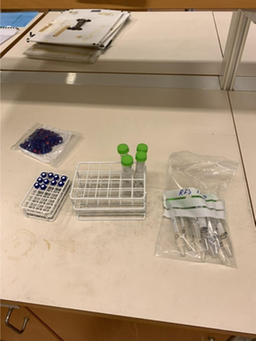
Melted snow samples ready for analysis. Photo: Johanna Wallström
Beyond the groundbreaking research, Wallström and Henriksson note the impact this project has on each of them as early career researchers. Wallström describes the iQ2300 team as a “really good group of people.” Henriksson shares that she is grateful for the opportunity and that the team is “super helpful and knowledgeable and also excited to share their knowledge.” Henriksson looks forward to her future work in the isotope lab and Wallström is looking forward to the upcoming iQ2300 expedition to Antarctica in the 2026–2027 field season, where she will venture to the continent as part of WP 11 and use cutting-edge radar to locate future sample sites for later field seasons. Early career researchers play a vital role in iQ2300.
We look forward to sharing more with you about Johanna Wallström and Vanessa Henriksson’s contributions to iQ2300 in the future - stay tuned for future words from these two dynamic researchers!
Jun 23 | Marit Törnqvist featured in Kidsweek!
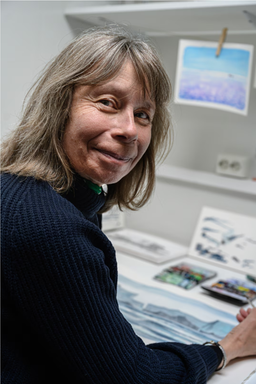
Photo credit: Kadir van Lohuizen, Kidsweek
When children's author and illustrator Marit Törnqvist traveled to Antarctica she ventured into one of the most remote places on Earth. The acclaimed author was specifically asked to make the science behind climate change more understandable to ordinary people, especially children. She joined climate change scientists from around the world as a key member of the international collaboration effort known as iQ2300. Marit observed scientists in their data collection efforts in the one place on earth that has never had human inhabitants. In a recent interview with Kidsweek, Marit shared her Antarctic experience with the magazine, highlighting the importance of bringing climate change reality to inquisitive children.
In the interview, Marit shares with Kidsweek that before leaving she met with elementary school students in the Netherlands who shared their questions and concerns about the future. During the expedition Marit kept this group of children and their questions in mind. She wrote a field diary, which “turned into about 150 pages” of cataloged experiences. Her goal is to help children learn directly from one of the world's most important climate research locations on a real expedition with global scientists as they brave Antarctic conditions to gather impactful data.
While on the expedition, Marit witnessed some of the challenges scientists face as they collect data in extreme environments. She experienced powerful storms, freezing temperatures, blinding sunlight, and the difficulties of working in a place where people “could break [their] arm” while attempting to open a door “because of the extremely strong wind.” Marit recalls that “nature was extremely impressive” and she felt as though she “was walking around in the Ice Age.” While on the expedition, Marit shared that she had a “mini studio at the research station.” She painted using glacial meltwater and captured the impressive colors of the remote continent. But, not everything was a pleasant sight to see. Marit recounts how she witnessed emperor penguins, Antarctic wildlife, struggling to stay cool by “flapping their little wings because they were too hot.”
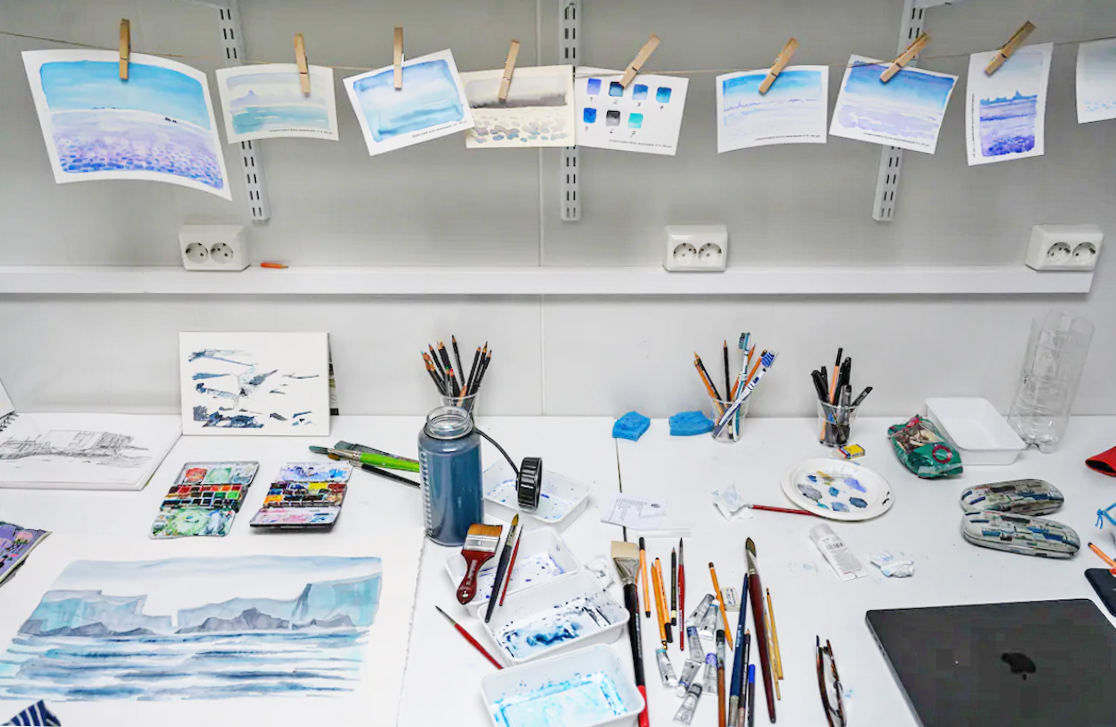
Photo credit: Kadir van Lohuizen, Kidsweek
Marit shares with Kidsweek that she “wants to write a book about” her Antarctic experiences. Her goal is to help communicate scientific experiences and climate change in a way that is “more understandable for ordinary people, especially for children.” The importance of climate change and its impact on the world is something of interest to children, and Marit wants to bring the research stories from iQ2300 “to the public in a different way.”
To read the full article, please visit Kidsweek.
Stay tuned for updates about Marit’s work!
Apr 30th | Ticket to Antarctica Episode 2: Showing
The second episode of Bram Vermeulen and Kadir van Lohuizen’s Ticket to Antarctica is coming! Together with fellow field explorer and children’s book author Marit Törnqvist, Vermeulen and van Lohuizen share the unique conditions, challenges, and changes facing Antarctica today.
Ticket to Antarctica is part of an educational and scientific campaign through iQ2300 (direct link: https://utbildning.su.se/english/research/research-catalogue/research-projects/d/iq2300-east-antarctic-sea-level-rise-contribution-in-2300), a multi-national effort aimed at understanding and predicting changes in Antarctic ice and informing people worldwide of the impacts. The Ticket to Antarctica episodes are part of VPRO’s Frontline series. They each take a deeper look at Antarctica by exploring not only science, but also big questions about tourism and climate change. Episode 2 investigates how scientists pursue their work in the field, and why they are so cautious in communicating the results of their research.
The documentary shows what it takes to reach and work in an extreme environment and why the scientific findings are so important. Viewers get to see incredible Antarctic landscapes including scenes with icebergs, penguins, and whales. But, Ticket to Antarctica isn’t just about adventure. It is about understanding our planet. By showing how scientists study ice, weather, and wildlife, the film helps us see why Antarctica is so important to Earth’s climate and future. This documentary connects science, exploration, and real-world challenges to people around the world. The documentary team highlights the scientists who live and work in these extreme conditions, studying climate change to make a global impact.
How to Watch
You can watch Ticket to Antarctica on April 30th at 9.15 pm Central European Time through Dutch broadcaster VPRO. Until then, please watch the trailer (direct link: https://drive.google.com/file/d/1NVNdIH2UsI7VBAG9kTOSP1tPEBziwYTH/view?huid=m7ejLRia4PwBSnYLu4hjXQ), and follow the links below to learn more!
- Stream episodes on NPO Start (the Netherlands’ online TV platform)
https://www.vpro.nl/frontlinie/artikelen/frontlinie-ticket-naar-antarctica-deel-2 - Check the Frontline page on the VPRO website for clips and information
https://www.vpro.nl/frontlinie?_gl=1*yfbcn*_gcl_au*MTMyODkwMzQ1LjE3NzQ4Nzc5OTg.
If you cannot access the full episode, you can still follow the journey through the official Ticket to Antarctica website (above), which includes videos, photos, and journal updates from the expedition.
Happy Streaming!
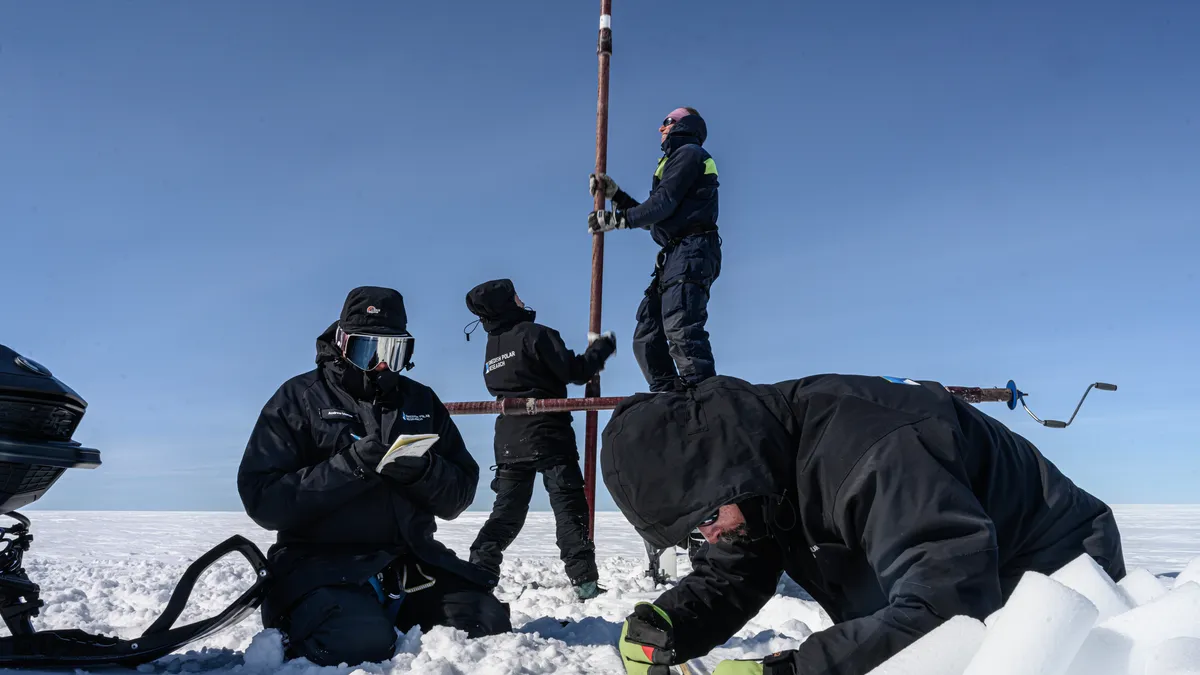
Photo: Kadir van Lohuizen (subject to copyright)
Apr 20 | iQ2300 2026 Field Training
Before the 2026–2027 field season in Antarctica, iQ2300 team members must complete field training to survive in extreme conditions. Field work in polar climates requires extensive preparation and skill development since life in Antarctica is very different from everyday life. Scientists often work in small teams, living in temporary camps and relying on each other for support. Some key challenges include extreme cold, isolation, limited supplies, long travel times with exposure to the elements, and unpredictable, turbulent weather conditions. In spite of these extreme conditions, the 2026–2027 field scientists are excited! They look forward to collaborating with other scientists and technicians, discovering the unexpected, using field equipment, and gathering data that will help scientists and the world better understand Antarctic ice changes and their global impacts.
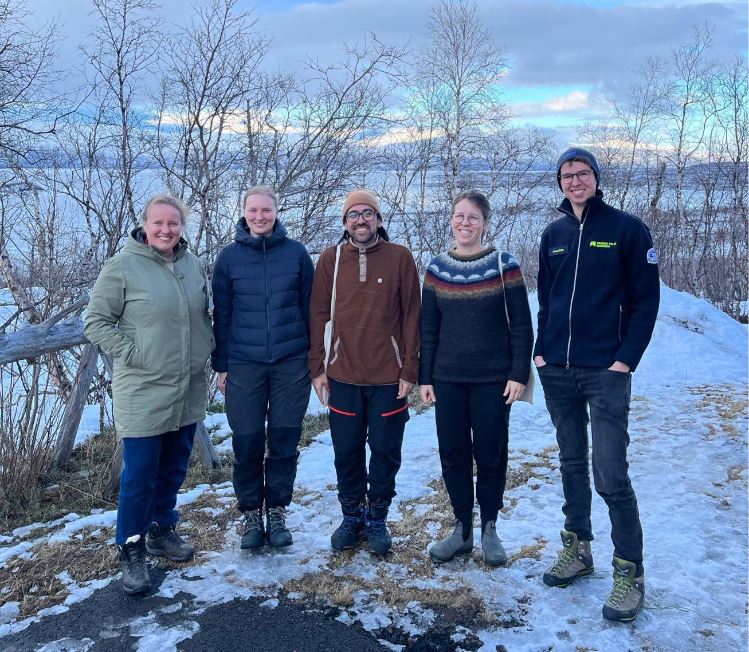
Training participants outside the research station by Lake Torneträsk. From left to right, JaneLund Andersen, Johanna Wallström, Franco Retamal Ramirez, Katrin Lindbäck, and ThomasFrank. Photo: private
The iQ2300 field scientists prepared for Antarctica's inhospitable conditions by undergoing field training on March 12th and 13th in the Swedish arctic. Experienced field technicians from the Swedish Polar Research Secretariat (SPRS), including Håkan Grudd, led the training. Scientists from the 2025–2026 field training, including Thomas Frank and Katrin Lindbäck, were also in attendance to share their experiences with incoming field scientists. Before heading out into the field scientists must complete this intensive training, which focuses on survival skill development, safety procedures, teamwork and logistics, and emergency medical responses.
Two 2026–2027 field scientists in attendance, Jane Lund Andersen and Franco Retamal Ramirez, provided insight into their training experiences and the importance of gaining practical, life-saving skills. Jane is a scientist with past Antarctic field experience during field season 2023–2024. As part of WP3 and WP11, Jane is entering the field during the 2026–2027 season to determine the age of past changes in Antarctic ice level through cosmic nuclide dating. Jane notes that “it will be interesting to go in the field with a new group of people and use different methods than during my last expedition.” Franco, a researcher within WP12, is heading to Antarctica to study how the ocean impacts ice shelves. He is excited for the adventure and the “once-in-a-lifetime experience” this Antarctic field work season brings. Franco states that “Antarctica is so remote and unique that it is worth going through the cold, wind, and harsh conditions to be there.”
Jane and Franco both remarked on the amazing experience, skills, and support the SPRS technicians offer. Jane states that these highly skilled technicians provide support “at an extremely high level.” She notes that gathering “a group of people with that much collective experience in one room and getting their perspective on how [the scientists] can achieve the research [they] would like to do is just fantastic.” Franco, too, highlights the importance and impact of the SPRS technicians, stating that they “are highly experienced and well prepared, which makes me feel confident and safe.”
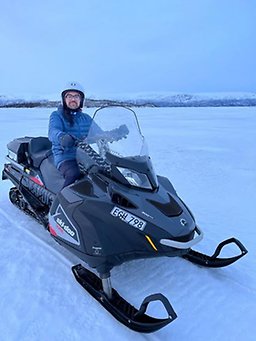
Franco learning to drive a snowmobile on Torneträsk lake. Photo: Johanna Wallström
The field training provides scientists with hands-on skill development. Franco notes that the crevasse safety training was highly rewarding, and that he particularly enjoyed the process of becoming licensed to operate a snowmobile. Jane, too, highlights how the training prepares scientists by providing them with knowledge and skills necessary to handle risky situations in the field. Both Jane and Franco remark on how important and helpful the first aid skill development training sessions were. SPRS uses dolls to simulate first-aid procedures, like applying tourniquets and completing emergency response procedures. Franco notes that this practical, hands-on skill development is "extremely valuable, as it helps build confidence and a better understanding of how to respond in real situations.”
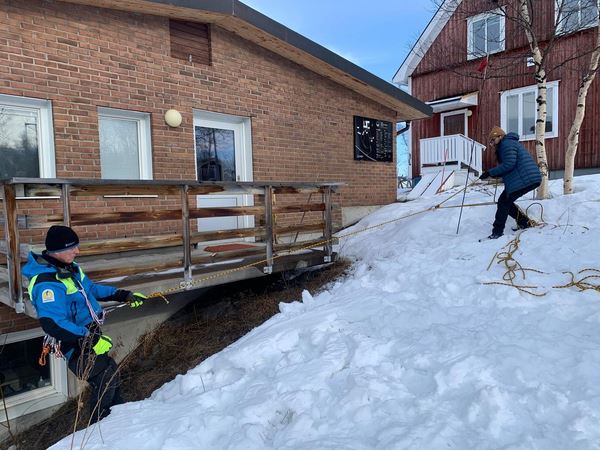
Franco pulling Håkan (SPRS technician) out from a “hypothetical” crevasse during the crevassesafety training. Photo: Johanna Wallström
Logistics and planning are also part of this field training experience. Though, as Jane notes, there are still “a lot of details to plan and prepare before we are ready to go,” but the scientists are able to begin with the framework provided to them during the training. Both Jane and Franco remark on their excitement and appreciation for working with other scientists. Both are grateful for the opportunity to get to know other scientists better, collaborate with team members, and, ultimately, build strong connections and relationships with the 2026-2027 field team.
Stay tuned for updates and information about Jane, Franco, and their fellow iQ2300 2026-2027 field scientists!
Apr 6 | iQ2300 Holds Spring Meeting
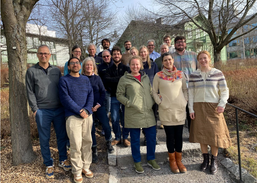
Imagine trying to understand what Earth’s sea level will look like from now to the year 2300. That is exactly what scientists in the iQ2300 project are doing. This international research effort focuses on the Riiser-Larsen Ice Shelf on Queen Maude Land, Antarctica, where scientists are studying the ice to understand how melting ice impacts global sea level. By combining fieldwork, satellite data, and climate models, researchers are working to solve one of the biggest climate puzzles of our time. To tackle this project, 15 Work Packages (WPs) have been created. Each focuses on a different piece of the puzzle.
On March 12th and 13th of this year, scientists and WP leads from iQ2300 met in Stockholm, Sweden. Arjen Stroeven, the iQ2300 project lead, directed the meeting. Together, the team discussed research updates from the first field season, summaries of the WP purposes and goals, and details of what is to come. Most of the team met in person with a few members joining remotely from around the world. This meeting enables the iQ2300 team to connect with one another, collaborate on joint initiatives, and gain a better understanding of the project along with their WP’s role within it. Why does all this matter? Each WP contributes a different piece of the puzzle, and together they help answer the big questions of how Antarctica’s ice will change and what the impacts will be on people around the world. By combining fieldwork, technology, and storytelling, the iQ2300 project is not just advancing science, it’s helping people prepare for the future.
WP1: Modelling Past and Future Conditions
Martim Mas e Braga spoke about WP1, a team composed of modelling researchers. Their goal is to create a dynamic model that effectively predicts ice sheet responses to climate changes in the Antarctic region. This complex model incorporates surface changes (like temperature), calving mechanisms (when icebergs break from shelf ice), hydrology and sub-glacial hydrology, and internal ice temperatures. WP1 will spend the coming months and years refining their models and comparing it with other predictive models to increase performance accuracy. The team plans to create a more complex model that more accurately predicts future conditions and test the results with paleo climate simulations.
WP2: What’s Below the Surface?
Marine geology is the focus of WP2. This group of researchers, led by Sarah Greenwood, are planning for an upcoming ship expedition to Antarctica. Along with Anna Wåhlin, Greenwood spoke about the 2027-2028 field season, where WP2 will board an icebreaker (a ship that can sail through sea ice). Their research will include studies of the terrain below the water surface, landforms located under the ice shelf, and radiocarbon dating of sediment cores to determine paleo conditions of the ocean. This group will work with WP3 (below) to better understand current sea floor conditions and features as well as those in the past.
WP3: Dating Past Ice Movements
Brad Goodfellow, one of the WP3 team leads, shared about the team’s research, which will employ cosmogenic nuclide dating with Beryllium isotopes to determine the ages of sediment recovered during their field work. The team will focus on analysis of offshore sediments with WP2 (described above). Goodfellow shared that the team is excited to add Yosuke Yokoyama as a co-leader. Yokoyama is a researcher with lots of expertise in this type of dating and makes a great addition. The team is ready to plan their 2027-2028 field season trip to Antarctica.
WP4: Ice Cavities
Cavities beneath ice shelves are critical for understanding ice shelf stability. Anna Wåhlin, team lead for WP4, spoke about her team of researchers that study what happens inside cavities, including how things like deep rifts (channels or canyons) are formed. These are the cavities that interest the team. Researchers in WP4 will enter the field in 2028. The team plans to use a hot water drill to access cavities from above for monitoring. The team will also employ an unmanned water vehicle below the ice shelf to determine what the sub-ice surfaces look like and monitor water conditions. Keep an eye out for updates on their travel plans.
WP5: Ice and Ocean Interactions
WP5, led by Ola Fredin, is all about exploring what lies under Antarctica’s floating ice shelves. Scientists use tools like radar and seismic sensors to map the thickness of the ice and the shape of the land below it. Why does this matter? Because what happens underneath the ice can weaken ice shelves and speed up sea level rise. Things like melting from warmer ocean water and ice strain can impact ice thickness and melt. Fredin spoke about the team’s recent field work, specifically noting Katrin Lindbäck and Coen Hofstede’s contributions, with the installation of multiple monitoring systems. Researchers installed these long-term monitoring systems to track these changes over time while also investigating the seabed with seismic sensing activities. In the 2028-2029 field season, this group will return and conduct research by drilling through the ice shelf and installing sub-shelf instruments to measure melt rates and ocean interactions with WP4.
WP6: Hidden Water and Ice Shelf Break-Up
WP6 has been focusing on something surprising: water trapped inside the ice. This team, led by Ward van Pelt and Katrin Lindbäck looks into these hidden layers, called aquifers, which can make ice shelves less stable. Researchers conducted field work this past season with Thomas Frank and Ola Fredin. The team used ice cores (Firn) along with ground penetrating radar to locate these underwater lakes. By studying how meltwater forms, moves, and refreezes, scientists can better understand how cracks develop and how entire ice shelves might eventually collapse. This research helps predict sudden, dramatic changes in Antarctica. Expect to see this team back in the field for a maintenance visit in 2026-2027 and additional research activities in 2027-2028 that Lindbäck will supervise.
WP7: What is Going On Beneath the Ice?
Ward van Pelt and Katrin Lindbäck are not done yet! These researchers lead WP7 in addition to WP6. Radar systems are the main research tool for WP7. In the 2025-2026 field season, the team used a variety of radars to calculate what happens below the ice’s surface. Low-frequency radar was used to scan the ice and determine subglacial topography, which are shapes and features below the glacial ice. Dual frequency radar was used by the team to determine ice velocity. The team also use ApRes radar, which is an echo radar sounder, as a third approach to examine basal melt. Each of these radar methods work together to create a representation of glacial melt and surfaces below the ice. The team will return to the field in the 2027-2028 season, so stay tuned for research updates.
WP8: Snowfall and the Balance of Ice
Ninis Rosqvist, just back from her field expedition, spoke about the work she and her team members, Ruth Mottram and Clément Cherblanc, did within WP8. This WP studies how much snow falls in our study area in Antarctica, patterns of snow accumulation, and how snow builds up over time. Researchers drill deep snow cores to look back several decades and track changes in snowfall and climate. This is important because sea level rise depends on a balance between snowfall that freezes into ice and snow/ice melt that removes ice. Understanding this balance helps scientists improve climate models and predict future sea levels more accurately. WP8 participated in several outreach activities during their 2025–2026 field season, including multiple television and radio interviews.
WP9: Investigating Ice from Space
WP9, led by Ian Brown and Celia Baumhoer, uses satellites to observe Antarctica from above. By measuring changes in ice height and movement over time, scientists can track how the ice sheet is evolving. Field measurements collected on the ground are used to calibrate satellite data, making the results more accurate. This combination of space and field science gives a powerful, big-picture view of how Antarctica is changing. WP9 employs remote sensing from multiple sensors from space agencies around the world, including Germany, Japan, and the United States. These different sensors have different capabilities, which, when compiled, create a more holistic representation of glacial structures. This coming year, the team expects to add 2 PhD students to their group and continue to analyze and review remote sensing data they collect.
WP10: Gravity Fields
Maaria Nordman shared how WP10 is primarily in their planning phase. The group will conduct research during the 2026-2027 field season, focusing on physical locations of different glacial features. The team uses Global Navigation Satellite Systems (GNSS) to create an accurate location of different features, such as glaciers and Antarctic mountains, and how these change, using satellite systems and earth’s gravity to increase precision. Recent updates include publications in the works and others already released. WP also has 3 new team members, each graduate students who will contribute to the geodetic research. The team is also awaiting a gravimeter (tool that calculates the local gravitational field) to help with their research. More information on this WP is to come!
WP11: What did Antarctica Look Like in the Distant Past?
Jane Lund Andersen and Arjen Stroeven shared that scientists within WP11 are working to reconstruct changes in the surface level of the Antarctic ice sheet over the past 10,000 years. The team previously visited the field area in the 2023-2024 field season and gathered data about Antarctic surface changes over long time periods. Two return trips are planned to collect samples from under the ice to add key new knowledge about ice surface changes over the past 10,000 years; one during the upcoming 2026-2027 field season and another in the 2027-2028 field season. WP11 will use the first return trip as a scouting activity, using geophysical scans and bedrock mapping to find a suitable location for drilling. On their second return trip, WP 11 will drill into sediment under the ice to collect samples for analysis. Check back for updates about each trip and to learn more about Antarctica's past.
WP12: How does the Ocean Impact Ice Sheets?
Ocean conditions around ice shelves have a large impact on ice sheets, but the details of the processes are not well understood. Anna Wåhlin spoke about this project involving team members Irina Rogozhina and Franco Retamal Ramirez. Currently in their planning and organizing phase, WP12 team members are seeking graduate student researchers. The project proposal includes analysis of subglacial discharge, tidal waters, ocean circulation and salinity, ice plume impacts, and global ocean impacts, including impacts of the southern oceans surrounding Antarctica. Team members are currently working with models and systems developed by Chilean researchers. They will apply these methods to Antarctica and determine global ocean impacts on the continent’s ice systems. Publications are in progress, so stay tuned for updates on the research plan and the published work!
WP13: Impacts on Swedish Coastal Communities
WP13 is one of two groups bringing iQ2300 research more directly to people and communities. Brad Goodfellow spoke about the WP13 initiative. Working with state officials and local, relevant parties, WP13 assists state actors in addressing the concerns and impacts of sea level rise and coastal erosion in Swedish communities. The group works with politicians, planners, housing and development groups to work through a variety of issues currently impacting communities along the Swedish coast. Sea level rise and coastal erosion have very real immediate and long-term impacts, reducing the safety and livability of different communities. As part of iQ2300, this work project predicts upcoming sea level change and erosion on Swedish coasts. The team anticipates increased involvement with iQ2300 after they are able to secure more funding for this important initiative.
WP14: Sharing Science with the World
WP14 is all about communication and impact. Jon Harbor spoke about the WP14 team composed of renowned communicators and storytellers, journalist Bram Vermeulen, photographer Kadir van Lohuizen, and illustrator and author Marit Törnqvist. WP14 spent the last field season in Antarctica with other iQ2300 researchers, documenting their work. As part of this initiative, the team will create a children’s book, video documentaries (the first aired in March of 2026), media articles, and museum and school exhibits. The team’s goal is to make complex science understandable and accessible to a wide range of people, including students and politicians. Through their projects, WP14 is helping show others the importance of caring about climate change and its impacts as well as the work iQ2300 does. Check back for updates on events that you, too, can attend to learn about this work.
WP15: What Can We Expect in the Future?
Dorothée Vallot spoke about how WP15 researchers, led by Qiong Zhang, are working with an earth system model to predict what changes we can expect in Antarctica. These projections will address freshwater release from glaciers and southern ocean salinity impacts on global oceans. Using paleoclimate models and models currently in development from research in Greenland, the team will apply a new model to predict sea level changes. This new model will include sub-ice topography impacts on melt, cavities and freshwater impacts, and temperature. WP15’s model is currently under development and revision; it is expected to be ready for application to Antarctic conditions hopefully later this year. Keep an eye out for updates about this globally-applicable model as it is developed!
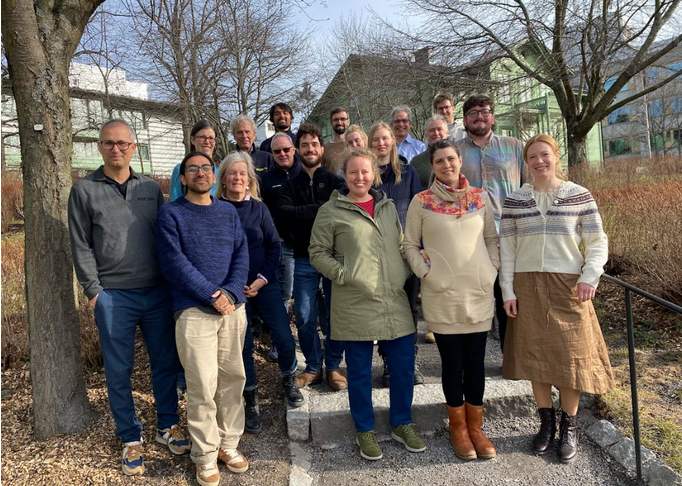
Photo: private
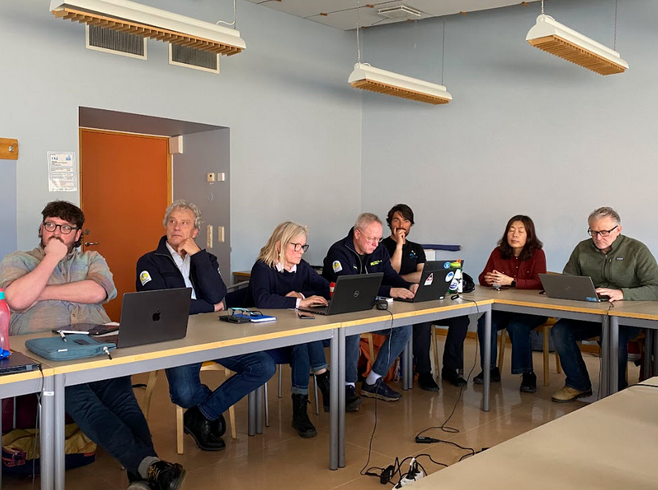
Mar 30 | Ticket to Antarctica
Bram Vermeulen and Kadir van Lohuizen embarked on an experience of a lifetime to document the research of environmental scientists in Antarctica, as part of iQ2300, a multi-national project led by Stockholm University. The project’s goal is to predict the impacts of Antarctic ice on sea level rise through the year 2300. Vermeulen and van Lohuizen, along with children’s author and illustrator Marit Törnqvist, ventured to Antarctica in their role as the social outreach part of iQ2300. The team has since written articles, shared images and videos, and painted with glacial water. A number of projects are anticipated from this group, including a documentary that premiered on March 26th of this year called Ticket to Antarctica (linked below).
Volkskrant recently published the article Champagne, penguins, and ultra-rich tourists; welcome to Antarctica (linked below) written by Vermeulen. The article includes breathtakingly powerful images and videos from van Lohuizen. Also featured are interviews with researchers and tourist hosts as well as Vermeulen’s account of his, van Lohuizen, and Törnqvist’s experiences. Vermeulen explores Antarctic research as well as how the continent is growing into a popular destination for wealthy tourists as the ice shrinks.
Previously one of the most remote and untouched places on Earth, only about 8,000 people visited each year in the 1990s. Today, over 100,000 people visit Antarctica annually, and this number is projected to increase to half a million annual visitors in the next ten years. In contrast to the past, most visitors today are not scientists, but, rather, travelers paying up to $110,000 for experiences like visiting penguins, close encounters with icebergs and marine life, views of ice shelves, and learning from experts. Vermeulen’s documentary and article describe how tourists can even fly to Antarctica for the day, climb an ice wall, have drinks at an ice bar, and fly back for $20,000. Tourists can also learn about fragile Antarctic environments and ecosystems, and ways that action around global change can influence Antarctica in the future.
Antarctica is a critical place for scientists studying climate change. Researchers travel there to collect data, such as ice core samples, rocks and sediment, and ice mass measurements, to better understand how fast the ice is melting and how it affects sea levels. Saying that the stakes are high is an understatement. If all Antarctic ice melted, sea levels could rise by more than 50 meters (approximately 165 feet). In addition to the ice shelf and its changes, scientists study wildlife like emperor penguins, which are threatened by warming temperatures and their shrinking ice habitat.
Both tourism and scientific research come with a cost. Traveling to Antarctica creates pollution, especially from planes and ships, which contributes to climate change. The irony of this is that it contributes to the very problem scientists are studying. Some researchers estimate that a single tourist’s trip can produce as much carbon as they would in a whole year at home. This has led to a big debate: is it worth visiting Antarctica at all, even to conduct research? Climate scientists believe the answer for research trips is “yes,” but with a caveat. Researchers on Antarctica must make their time and efforts count. They must have research that advances knowledge and inspires action around global change in communities and political organizations. With Antarctica as a centerpiece of climate change research, science on the continent is necessary to understand how the ice will change and how it will impact global sea level rise. Some scientists recommend that we limit the number of tourists to reduce destructive impacts on Antarctica.
In the end, Vermeulen’s article shows that Antarctica represents a difficult balance. It is a place scientists must study to understand Earth’s future, but increasing human presence on the continent through tourism is putting the fragile environment at even greater risk. Changes in Antarctic ice affect the whole planet and every person on it. Rising sea levels, endangered wildlife, and climate change are global issues, and decisions about tourism and research today will shape the future for everyone.
If you would like to read Vermeulen’s article and view van Lohuizen’s images and videos, click on the following link: Champagne, penguins, and ultra-rich tourists; welcome to Antarctica
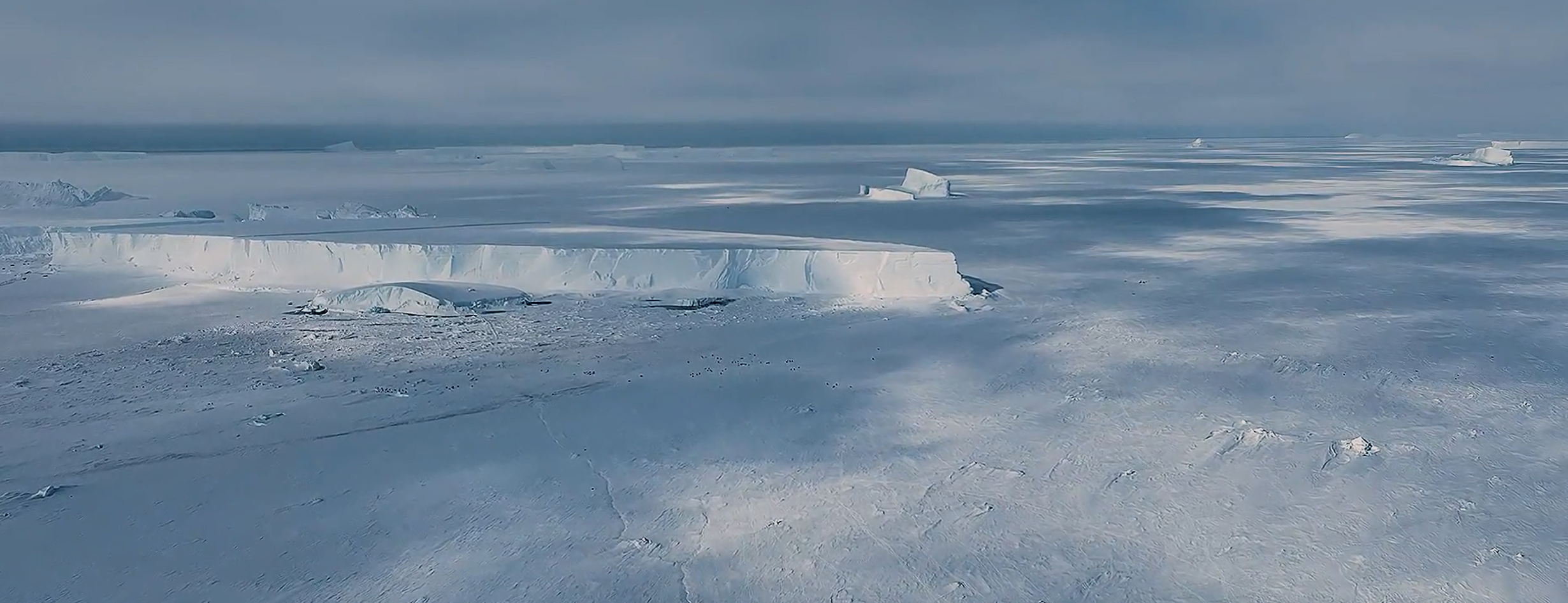
Screenshot from "Champagne, penguins, and ultra-rich tourists; welcome to Antarctica".
Mar 23 | Katrin Lindbäck – Students Learn Science in Real Time
Live from Antarctica! Students Learn Science in Real Time
Imagine sitting in your classroom when, suddenly, you’re watching real scientists, live, from one of the coldest places on Earth! This was the recent experience of Swedish students as they watched researchers from the iQ2300 team in Antarctica. This unique learning experience involved around 800 students from schools across Sweden. These students were able to watch the scientists work, and also to ask them questions about life and research on the ice. The young learners, and future scientists, participated in a rare learning experience. This was not just a video or a documentary. It was a real-time experience for students where they could see, hear, and learn from scientists directly from their icy, outdoor laboratories.
The Ambitious iQ2300 Project
These scientists were in the middle of real, genuine polar research. The iQ2300 teams spent months preparing for this crucial research project which involved living and working on the ice. Each Work Package (WP) in the iQ2300 team has a unique goal and is a special part of the effort to measure polar ice and global climate changes. The WPs use a variety of research methods, ranging from installing instruments to track changes over time, to taking radar images of what lies beneath the ice, to generating small explosions to measure ground vibrations and determine under-ice geography.
At times, these researchers face harrowing conditions. They are confronted with blizzards and extreme winds, subzero temperatures, and nearly unending daylight. Sharing these experiences with students gives young learners a glimpse into an exciting and challenging real-life research project. Students are able to see real science by real scientists, and they have a front-classroom seat at just how harsh the conditions may be and how crucial this research is.
Researchers who Bring Science to Life
The live session from Antarctica was led by glaciologist Katrin Lindbäck, a researcher at Mittuniversitetet (Mid Sweden University) in Östersund. Katrin has years of experience studying glaciers in remote regions around the world. She connected in from her role working, living, and researching in Antarctica as part of iQ2300. Katrin, part of WP 5, went to Antarctica to study sub-ice shelf systems by using radar, drilling, and seismic (vibration) measurements.
Katrin is delighted to share her experiences and research with intrigued, young learners. She explained that her goal was not only to teach the children about climate and ice, but also to show students that research does not just happen in big cities or indoor laboratories. Research can (and does!) happen anywhere, from Sweden, where the students call home, all the way to Katrin’s temporary home in Antarctica.
Student Thoughts
These interested young learners were curious about everything! Some were amazed by penguins waddling around nearby. Others asked questions about how scientists survived daily life in the extreme cold. Others expressed their desire to one day work on the frozen continent of Antarctica, just like Katrin and the iQ2300 team. At the end of one particular lesson, a student remarked: “I would also like to be a researcher in Antarctica — 100%!” Another student expressed that it was “so cool” to see animals living in such extreme conditions, especially the penguins.
For many students, this lesson was more exciting and real than simply reading about Antarctica in a textbook. One of their teachers remarked that the live lesson brought science to life for the students. The experience made research feel real and exciting. Students were not limited to sitting at their desks and just reading facts. Instead, they were able to meet a real researcher who lives in science every day. This live lesson did not just teach students about Antarctica, it connected them to real scientists and real research. It showed this group of young learners that climate science is a global project that truly spans the entire world. Anyone can be part of it, and learning can happen from classrooms to the ends of the Earth.
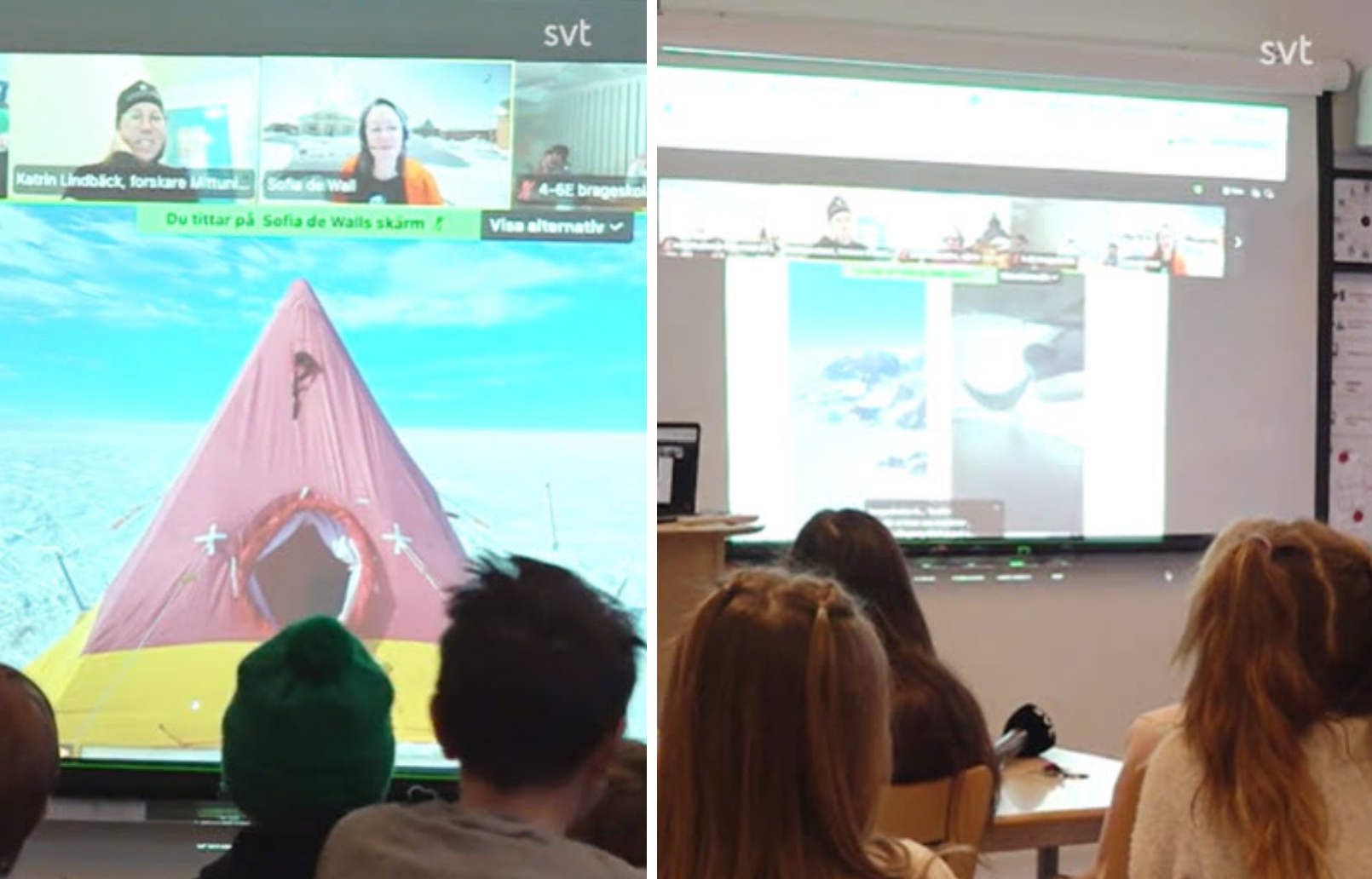
Image Credits: Marie Selander/SVT
Find Out More!
To learn more about Katrin and the iQ2300 team, view the website hosted on Stockholm University.
Links
Mar 17 | Ruth Mottram’s Antarctic Journey
Finding Purpose at the End of the World
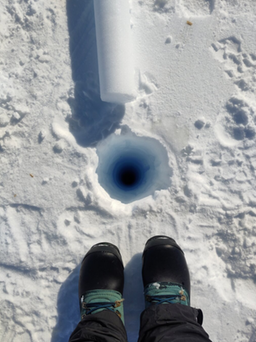
Drilled ice core hole. Photo: Ruth Mottram
When Ruth Mottram stepped onto the Antarctic ice, she wasn’t just entering a frozen landscape, she was stepping into a dream built on curiosity and courage. Thousands of miles from home, Ruth ventured into the frozen landscape of Antarctica as part of the globally-impactful iQ2300 project. As a member of Work Package (WP) 8, Ruth’s goal was to gather data and analyze ice samples in the field using a complex, sophisticated field laboratory called LISA.
Ruth applied her background knowledge and skills while working with LISA, the portable “laboratory in a box,” to study the contents of glacial ice in the field. Instead of waiting until she returned home to analyze ice core samples, Ruth was able to study the contents of the ice right there in the field. The near on-demand results LISA afforded Ruth and her team meant that they could see data almost immediately. This helped Ruth and her team make decisions about where and what to study next. Every day brought the excitement of discovery, but the work was not easy. It required patience, careful thinking, determination, application of Ruth’s honed skills as she and her team faced freezing temperatures, inhospitable terrain, and long hours. Ruth readily embraced the challenge, showing her drive to pursue science and push forward even when things were challenging.
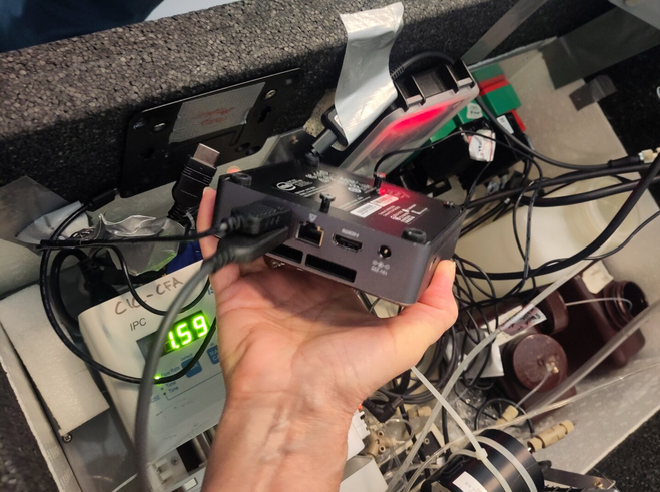
Internal image of LISA. Photo: Ruth Mottram
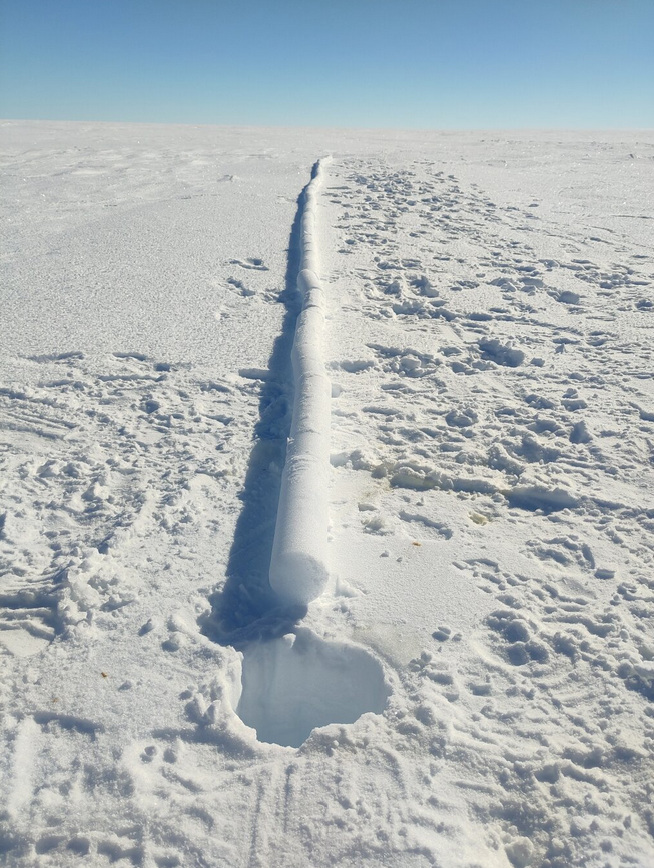
Drilled ice core. Photo: Ruth Mottram
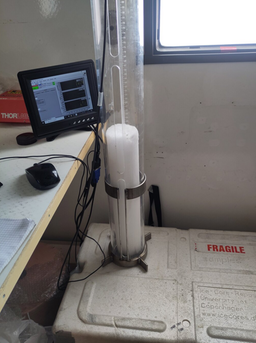
Ice core analysis with LISA. Photo: Ruth Mottram
Some of Ruth’s most meaningful experiences came not just from data collection with LISA, but from the people around her. After long days working outside, Ruth returned to base where teammates shared warm meals, stories, and encouragement. These moments and interactions were important. They turned a remote research station into a community, where scientists from different countries built strong bonds. These global researchers, including some of Ruth’s colleagues at the Danish National Center for Climate Research, worked side by side, helping each other solve problems and stay motivated. Together, they faced challenges such as extreme cold, complex equipment, and unpredictable weather. Even routine tasks like maintaining instruments or traveling across the ice required cooperation and trust. These shared experiences helped everyone stay motivated and focused on their scientific goals.
Ruth’s time in Antarctica gave her the opportunity to reflect on her work and its global importance. Ruth shared her experiences on social media and her website through blog posts and images. These experiences helped people from around the world connect with Ruth and learn about her critical Antarctic research. Ruth’s research also connects Antarctica to other icy regions, like Greenland, helping scientists understand how ice sheets respond to climate change. Through these updates, Ruth gave the public a glimpse into daily life as a polar scientist. She showed that science is not just about data. Science is about curiosity, teamwork, and perseverance.
Ruth’s story is about more than research; it’s about believing in your path. Her journey shows that big dreams often begin with small steps like asking questions, staying curious, and not giving up when things are challenging. Ruth’s journey to Antarctica reveals the human side of climate research. She reminded others that science is something real people do, and that these scientific explorers feel excitement, exhaustion, and wonder. From operating LISA, a lab in a box, to building friendships in isolation, Ruth’s experiences highlight both the challenges and excitement of studying Earth’s most remote environments. Ruth’s story reminds us that science can take you anywhere, and that every discovery begins with people willing to explore the unknown. Studying ice in places like Antarctica and Greenland helps scientists understand climate change and its impact on our planet’s future. Ruth’s experience offers a powerful message: your passion can carry you farther than you ever imagined, even to the end of the world.
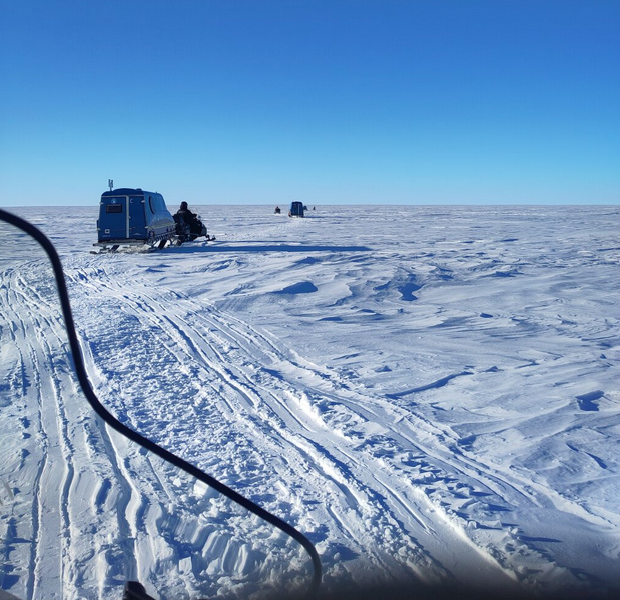
Snowmobiles pulling ARCs (mobile housing for researchers) after field work. Photo: Ruth Mottram.
Mar 10 | Bram Vermeulen
Antarctic research continues to reveal how much remains unknown about Earth’s coldest continent and why scientists are so dedicated to exploring it. As part of the iQ2300 research initiative, Work Package (WP) 14, correspondent and documentarian Bram Vermeulen experienced the icy climate and the researchers who brave its conditions first-hand. During the 2025–26 iQ2300 expedition to Dronning Maud Land in East Antarctica, Bram met with researchers from Sweden, Germany, Denmark, and Norway. The iQ2300 research team is exploring layers of snow and ice on the inhospitable continent to collect detailed measurements. These data will help scientists understand how the East Antarctic Ice Sheet contributes to sea level changes around the world. The work is not quick or simple. Instead, it is challenging, involving meticulous, repeated sampling in harsh conditions, a process the field lead Ninis Rosqvist compared to “collecting evidence for a trial.” Every piece of data adds to the story about the planet’s past and future.
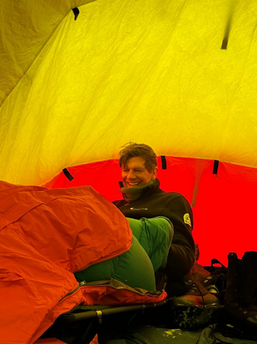
Photo: private
Bram and his fellow WP 14 members were able to experience Antarctic discoveries along with the researchers first-hand. One of the most exciting outcomes of recent Antarctic science is the discovery of ice up to six million years old in East Antarctica’s Allan Hills. Tiny air bubbles trapped in this ancient ice provide direct records of Earth’s ancient atmosphere and climate, offering a window into a time when the planet was much warmer and sea levels were significantly higher than they are today. Bram notes that the ice cores recovered by the research team act like time machines, letting scientists reconstruct past temperatures and greenhouse gas concentrations. These critical clues help scientists understand long-term climate trends and predict future changes. Bram’s posts from the field show how findings like these not only push the boundaries of climate science but also show the value of patience and precision in gathering evidence that fills major gaps in our climate history.
For students thinking about a career in science, Antarctic research provides a powerful example of how field work and data collection shape our understanding of global climate change. Bram showcases the challenges of working in extreme cold, the slow pace of gathering data, and the long timelines before results are fully understood. Each of these aspects teach an important lesson: real-world science often advances incrementally, building a foundation of facts that future decisions can rely on. Bram reminds us that the iQ2300 field work being done today forms the cornerstone of climate knowledge for decades, or even centuries, to come. The team will continue to document melting ice, ancient climates, and subtle environmental shifts throughout the coming year, so stay tuned for more information.
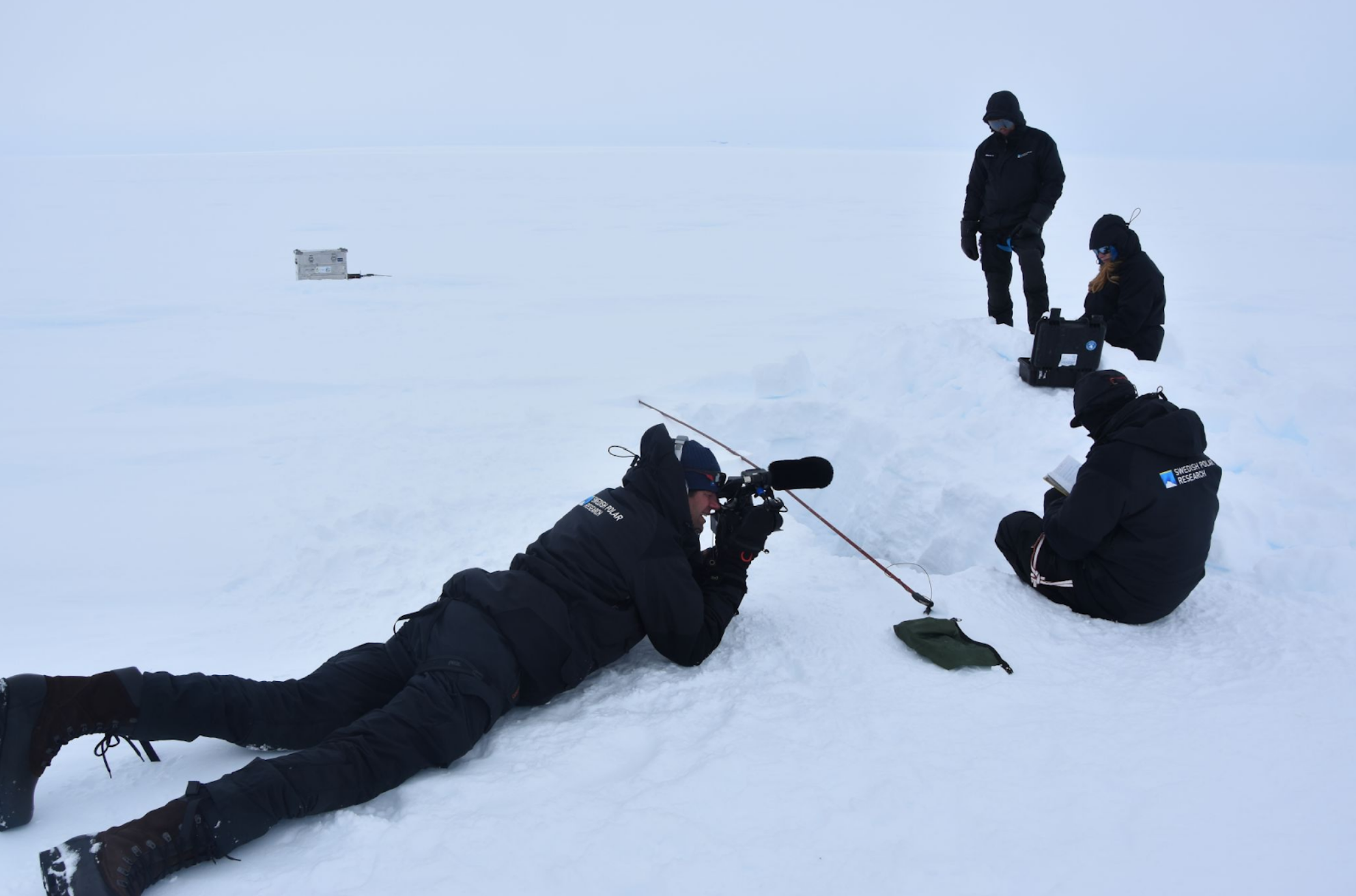
Photo: private
To learn more about Bram and his upcoming documentary about his experiences with climate researchers in Antarctica, check out his LinkedIn page!
Other links:
Bram Vermeulens Post in LinkedIn
Bram Vermeulens Post in LinkedIn
Mar 3 | Kadir van Lohuizen
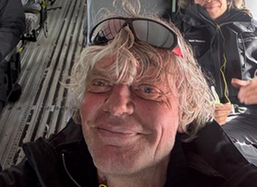%20Kadir%20van%20Lohuizen_1.png)
Photo: Kadir van Lohuizen
Polar research in Antarctica isn’t just about data collection, it is also about communicating what that data means to broader audiences.
Photographer and visual journalist Kadir van Lohuizen recently joined scientists and the Swedish Polar Research Secretariat as part of the iQ2300 research initiative.
In his posts from the field, Kadir highlights an important dimension of this work: the collaboration between scientists, journalists, and artists. In one post, Kadir describes traveling from Cape Town to Antarctica with his fellow Work Package (WP) 14 members, children’s book author Marit Tornqvist and journalist Bram Vermeulen.
The group is excited as they enter the field to document the data collection processes of the iQ2300 research team. They aim to create multiple stories, articles, and media pieces to convey scientific insights to wider audiences. These interdisciplinary efforts remind students that modern science is not confined to academic papers. Effective science communication can inspire public understanding and engagement with urgent issues like climate change when shown in other forms.
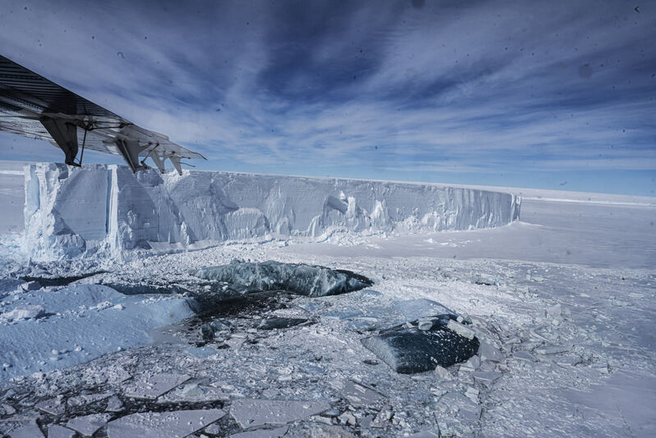
Photo: Kadir van Lohuizen
As part of WP 14, Kadir embarked on this expedition to eastern Antarctica to document research focused on the Riiser-Larsen Ice Shelf. This ice shelf is enormous, roughly the size of the Netherlands, and plays a role in understanding how Antarctic ice contributes to global sea-level rise. Kadir’s early posts from the field depict both the scientific goals and the challenges of working in one of the most remote and unpredictable places on Earth. Kadir mentions surviving in sudden blizzards and extreme weather conditions that halt fieldwork at any moment.
Kadir’s valuable firsthand accounts connect complex climate science to tangible observations shown in images to those of us at home. His preliminary posts note that the iQ2300 team is studying how and when large portions of the Antarctic ice may become unstable. Although complete melting of East Antarctica would raise sea levels by many meters, a scenario scientists don’t expect in the near future, even smaller changes would have serious consequences for coastal regions worldwide. By flying over the ice shelf and documenting the recently calved icebergs and research processes, Kadir hopes to help people around the world visualize what climate research looks like in real life.
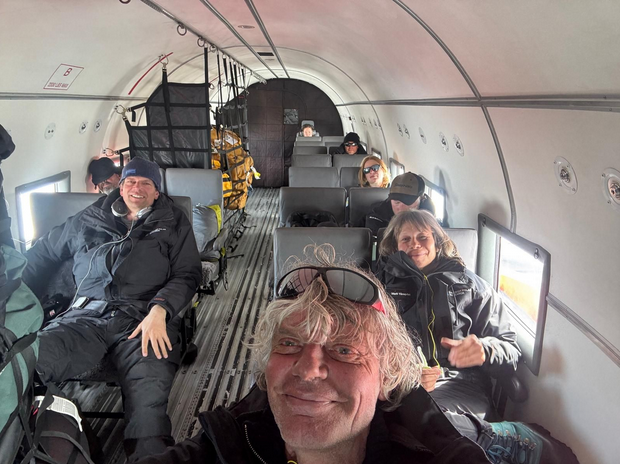
Photo: Kadir van Lohuizen
Feb 23 | Marit Törnqvist
Renowned children’s author Marit Törnqvist recently ventured to Antarctica as a member of Work Package (WP) 14 in iQ2300. Marit’s goal was to experience the realities of living and researching on the continent of ice and share this experience with children and people around the world. Marit’s time in Antarctica offers children and adults a rare, behind-the-scenes look at how polar research actually unfolds. The journey began with the team’s arrival on the continent, where months of preparation meet the reality of extreme cold, vast ice landscapes, and tight logistics. Even simple tasks required careful planning and coordination. Things like unloading equipment, traveling between stations, or setting up instruments require extra attention and planning as compared to other research locations around the world. Marit’s messages from the field highlight an important lesson for those of us at home: science in remote environments is not just about experiments and data, but also about teamwork, adaptability, and problem-solving under tough conditions.
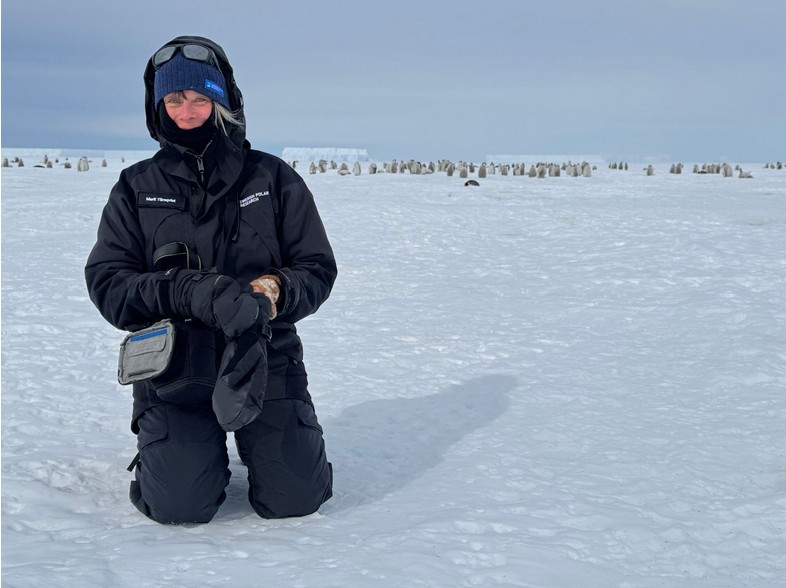
Marit Tornqvist poses with penguins in Antarctica. Photo: private
As the expedition progressed inland, Marit’s focus shifted to the scientific goals driving the work and capturing the details of the data collection process. Marit worked side-by-side with researchers studying the Antarctic ice sheet, capturing their experiences and the work they do in these extreme conditions so she can share it with others. The work the researchers do plays a critical role in Earth’s climate system and global sea level. One striking point emphasized in the updates is that even small changes, described as just a “few percent,” can have major consequences when applied to something as massive as an ice sheet. For children and adults around the world, this underscores why precision matters in climate science and why field measurements are essential for improving models that predict future environmental change.
Marit’s messages from the field describe how unpredictable weather, including powerful storms, can abruptly disrupt plans. High winds and poor visibility can force teams to pause work and prioritize safety, reminding us all that nature often sets the schedule in polar research. Despite these challenges, Marit’s posts articulate both a strong sense of purpose and resilience among the scientists. For students considering careers in science, these real-world experiences show that research is rarely smooth or linear, but it is deeply rewarding. Marit highlights how research that contributes to understanding key questions about our planet’s climate and future is essential, impactful, and not for the faint of heart. Learn more about Marit and her field experiences by visiting her LinkedIn page, and stay tuned for updates on her upcoming children’s book!
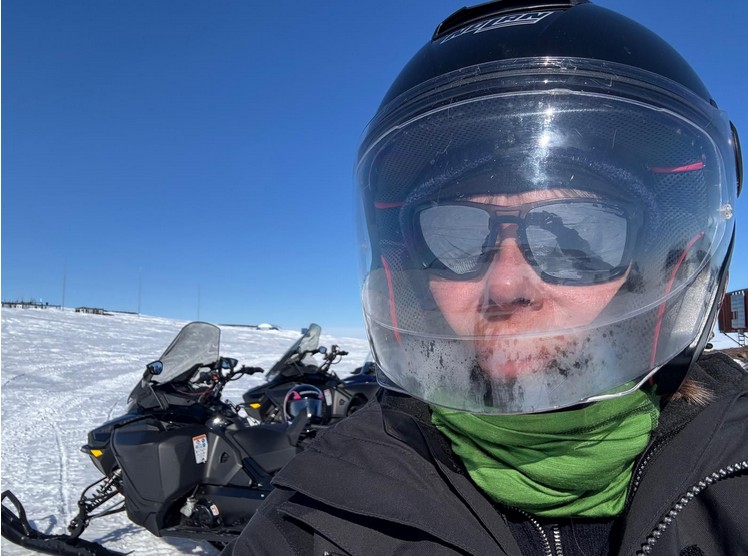
Marit Tornqvist operates snowmobiles in Antarctica. Photo: private
Feb 16 | Explorers on the Antarctic Ice
%20WP14_blogpost_Explorers%20on%20the%20Antarctic%20Ice_2.jpg)
Updates from iQ2300’s Work Package 14 offer a behind-the-scenes look at what Antarctic research is really like. The media team, author Marit Törnqvist, photographer Kadir van Lohuizen, and journalist Bram Vermeulen documents the realities of working in one of the most extreme environments on Earth. After arriving in Antarctica, the team spent time at Neumayer Station waiting for safe weather conditions. Those early days were dedicated to logistics, safety briefings, and coordinating with international research partners. Before any scientific data can be collected, teams must adjust to the cold, plan long transport routes, and make sure both equipment and people can operate safely in such a remote setting. The WP 14 updates make it clear that polar science depends as much on preparation, patience, and teamwork as it does on research itself.
A recurring theme in the WP 14 messages is the sheer scale of Antarctica and the importance of collecting data directly in the field. Researchers travel thousands of kilometers across ice shelves and inland regions to gather measurements that satellites alone cannot provide. These on-the-ground observations help scientists study ice structure, snow accumulation, and surface features that affect how ice sheets move and melt. Photos and videos shared by the team highlight fractures in the ice, vast frozen landscapes, and changing surface conditions, all of which are closely tied to ice loss and rising sea levels. Together, these observations show why firsthand field data remains essential for improving climate models and understanding future environmental change.
The team’s updates also capture daily life on the ice, from leaving Neumayer Station and moving between research sites to documenting wildlife, such as penguins, and the demanding living conditions researchers face. Progress depends heavily on weather windows, aircraft availability, and seasonal light, meaning plans often change with little notice. By sharing these experiences publicly, WP 14 helps make complex topics like ice dynamics, climate feedback, and international scientific collaboration more accessible to a wider audience. For students and non-scientists alike, these updates provide a clear picture of how Antarctic research is conducted and why fieldwork remains critical to understanding global climate change. More updates from this media-focused project are expected, and readers can follow along through posts shared on LinkedIn by the WP 14 team.
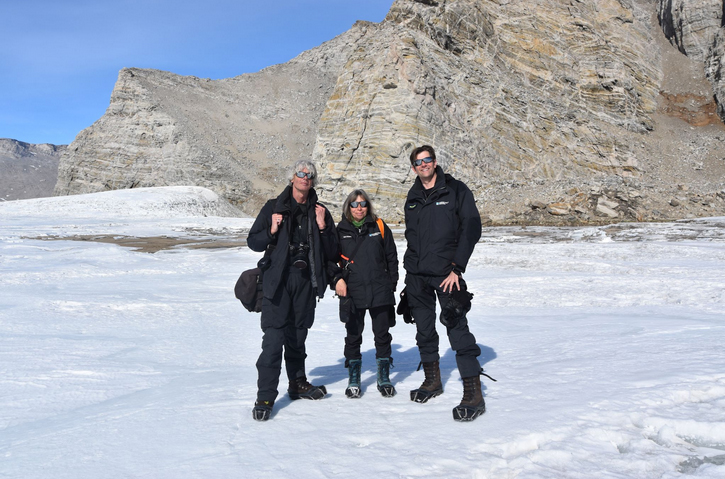
From left to right: Kadir Van Lohuizen, Marit Tornqvist, and Bram Vermeulen explore the Antarctic.
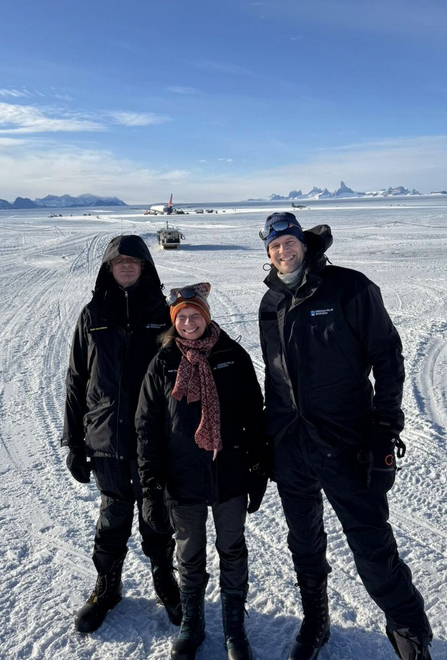
From left to right: Kadir Van Lohuizen, Marit Tornqvist, and Bram Vermeulen explore the Antarctic.
Last updated: 2026-09-02
Source: Department of Geological Sciences