


The Reading and Writing group of Speculative Fiction
This reading group will explore the places where environmental humanities, archaeology and speculative fiction overlap.
I found, at last, the town I had been hunting for. After digging in several wrong places for over a year and persisting in several blockhead opinions - that it must be walled, with one gate, for instance - I was studying yet once more the contours of my map of the region, when it dawned as slowly and certainly as the sun itself on me that the town was there, between the creeks, under my feet the whole time.
Extract from “Towards an Archaeology of the Future” from Always Coming Home by Ursula K. Le Guin.
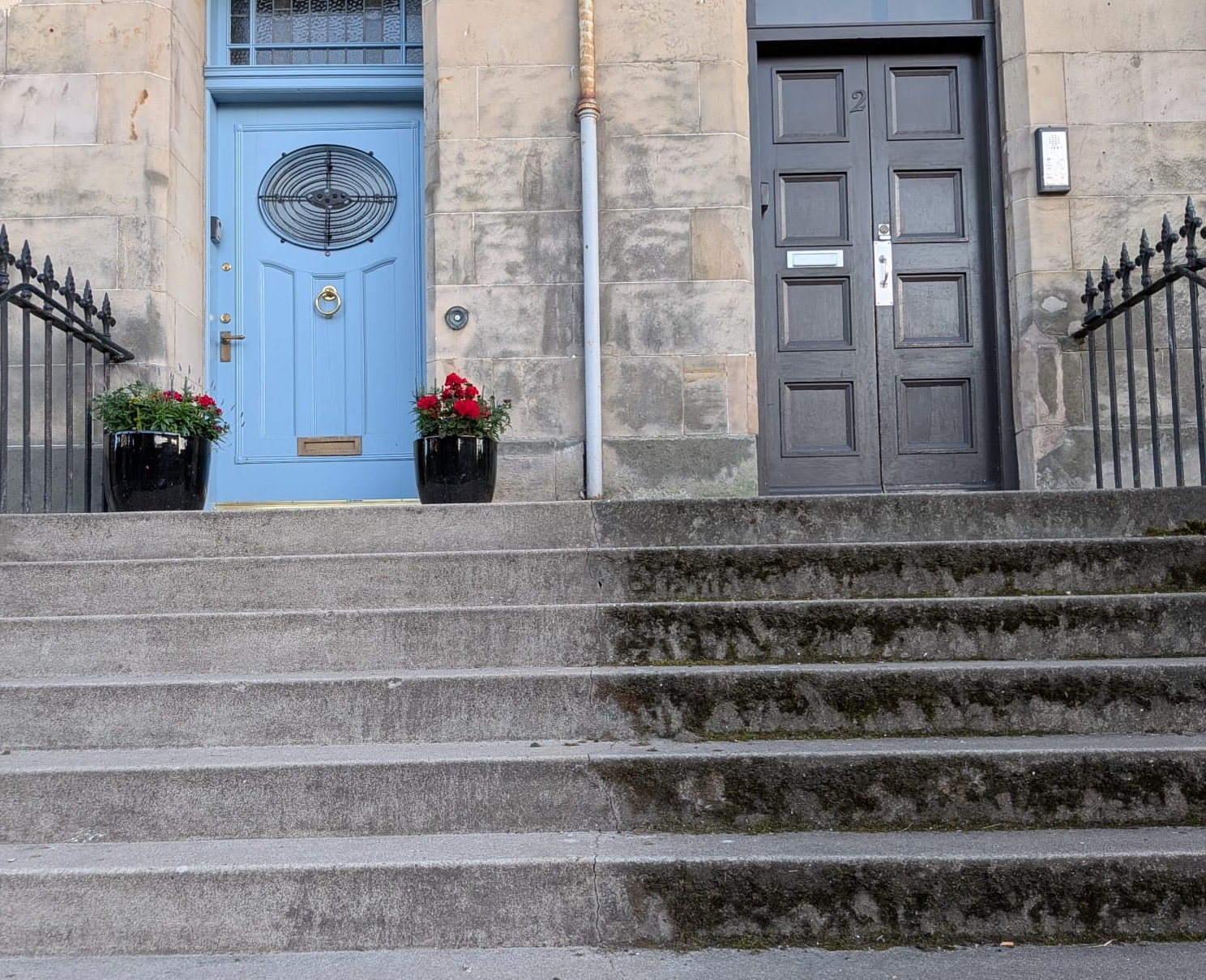
Photo: Elisa Viteri Marquez
Fall 2026
The group will come back together in September. Please, write to elisa.viterimarquez@su.se if you want to receive updates about our meetings. We will work during the summer on an individual writing exercise. Write to the organizers if you want to join us.
The preliminary dates for the fall semester are:
Thursday 3 September, 16:00 – Hybrid Meeting Zoom & SU Campus (F610, Södra Huset, F, 6th floor)
Please, write to the host if you want to participate in the meeting, either online or on campus. You will also get access to the group’s Google Drive folder with all the readings.
Going away for the summer, or staying close to what we call home, we present you with a writing exercise that aims to expand writing into the landscape, and hopefully underground or beyond.
The exercise can be made in two steps.
- Noticing. Use the walkingdrawingwriting method propose by Hannah (Sackett, 2025) wherever you are.
- Get hold on a crack, crevice, fissure, gap, cleft, rift or fracture. We do not give any definition of what you might find or where, real or imaginary, concrete or abstract.
- Once you notice the crack, you are invited to use the following prompt to fictionalize your art of noticing.
Prompt:
- An entity (yourself or who/whatever you want) is going to enter the crack or fissure. There, you find something you cannot comprehend. Describe it and interact with it. What happens?
Further steps:
- Once you have written a piece, please share with us in the folder dedicated to this in our Google Drive.
- We will be reading our pieces for the first meeting of the group, planned for September 3rd.
Suggested Fiction:
- The Tombs of Atuan (1971), Ursula K. Le Guin. Link: https://archive.org/details/isbn_9780553101324/page/n3/mode/2up
- At the Mountains of Madness — H. P. Lovecraft.
- The City & the City (2009), China Miéville.
- 1Q84 (2011), Haruki Murakami.
- The Man Whom the Trees Loved, Algernon Blackwood. Link: https://www.gutenberg.org/cache/epub/11377/pg11377-images.html
Suggested reading:
- Macfarlane, Robert (2019). Underland: A Deep Time Journey. Penguin Books. Excerpts in Google Drive.
- Mathews, Andrew. 2017. “Ghostly Forms and Forest Histories.” In Arts of Living on a Damaged Planet: Ghosts and Monsters of the Anthropocene, edited by Anna Tsing, Heather Swanson, Elaine Gan, and Nils Bubandt, 145–156. Minneapolis: University of Minnesota Press. In Google Drive.
- Hannah Sackett (01 Oct 2025): Other durations, other rhythms: walkingdrawing-writing with Bergson’s concept of intuition, Environmental Education Research, DOI:10.1080/13504622.2025.2564733. In Google Drive.
- Guttorm, H. E. (2021). Becoming Earth: Rethinking and (Re-)Connecting with the Earth, Sámi Lands, and Relations. In R.-H. Andersson, B. Cothran, & S. Kekki (Eds.), Bridging Cultural Concepts of Nature: Indigenous People and Protected Spaces of Nature (pp. 229–258). Helsinki University Press. http://www.jstor.org/stable/j.ctv26qjj3b.14. In Google Drive.
- Karen J. Warren (1990), The Power and Promise of Ecological Feminism. Environmental Ethics, 12(2), 125-146. In Google Drive. In Google Drive.
Previous meetings:
Spring 2026
Thursday 28 May, 2026, 16:00
Please contact the host for access details to the venue, Zoom link, and the link to the group’s Google Drive folder at elisa.viterimarquez@su.se.
Welcome to the last meeting of the semester. In it, we will read some of our own texts that we produced during the last session. You can find them in our Google Drive folder.
If anyone wants to write a piece, you can follow the following writing prompt. Then you can upload it (or not, as you wish) in the folder above:
- You find yourself alone in your summer cottage. Think about your academic discipline; now, from it, some kind of monster emerges. It can be human or non-human, animal, plant, an event, a piece of furniture or an idea. Don't think too much. Describe it. The monster is knocking on your door. Describe how the monster looks like as it opens the door and comes inside. How does this creature presents itself to you? Is it threatening or friendly? What does it say to you? And how do you meet it? Remember: don't explain; describe.
In dialogue with the group’s texts, we propose the following readings:
- Bastian, M. (2012). Fatally Confused: Telling the Time in the Midst of Ecological Crises. Environmental Philosophy, 9(1), 23–48. http://www.jstor.org/stable/26169394
- Ursula K. Le Guin (1973). Direction of the Road.
- Bessai, R., Bendor, R., & Balkenende, R. (2024). Designing with More-than-human Temporalities. Paper presented at DRS 2024, Boston, Massachusetts, United States. https://doi.org/10.21606/drs.2024.438
During the meeting, we will propose a writing exercise for the summer. If you cannot make it, don’t worry. We will send the exercise to everyone at the beginning of June.
Looking forward to seeing you there!
If you want to be part of the group’s mailing list, please feel free an email to elisa.viterimarquez@su.se.
Thursday 16th April, 2026, 16:00
Venue: Please contact the host for access details to the venue, Zoom link, and the link to the group’s Google Drive folder at elisa.viterimarquez@su.se.
In this meeting, we are going to meet monsters and explore our encounters in writing. As in the last meetings, Miguel Tofiño-Vian will provide a prompt for a common writing exercise. All the readings are in the group Google folder.
We suggest as fictional readings:
- Frankenstein, by Mary Shelley (1818). Excerpt (pp. 145-8).
- Frankenstein in Baghdad, by Ahmed Saadawi (2008). Chapters 2 and 3 (pp. 21-35).
- The Unclean, by Nuzo Onoh (2016). In Dominion, edited by Zelda Knight and Ekpeki Oghenechovwe Donald.
As articles:
- Orning, S. (2021). Collective Voices and the Materialisation of Ideas: The Monster as Methods. In C. Nirta & A. Pavoni (Eds), Monstrous Ontologies: Politics Ethics Materiality. Vernon Press.
- McCormack, D. (2018). Queer Disability, Postcolonial Feminism and the Monsters of Evolution. In C. Åsberg & R. Braidotti (Eds), A Feminist Companion to the Posthumanities. Springer International Publishing.
If you want to be part of the group’s mailing list, please feel free an email to elisa.viterimarquez@su.se.
Wednesday, 11 mars 2026, 16:00
Venue: In campus: room 439 at the Archaeology Department and Zoom. Please contact the host at elisa.viterimarquez@su.se for the Zoom link if you are not part of the mailing list. You will also get access to the group’s Google Drive Folder.
In this hybrid meeting, we will continue exploring the more-than-human with a writing exercise that will take as inspiration some poetic texts:
Dynamic Positioning, by Juliana Sparh. Available online: https://www.poetryfoundation.org/poems/58498/dynamic-positioning
Age of Plastic, by Craig Santos Perez. In Habitat Threshold, p. 11. Available in the Google Drive folder.
Decomposition, by Zulfikar Ghose. Available online: https://www.josieholford.com/decomposition/
We highly recommend the following article:
Zollinger, R. ., Thomas, M. O. ., Moore, H., & Bryson, K. (2022). Lichenizing Pedagogy: Art Explorations in More-than-Human Performance and Practice. Research in Arts and Education, 2022(1), 23-33. https://doi.org/10.54916/rae.116995. Available in the Google Drive folder.
Thursday, 5th February 2026, 16:00
Venue: Zoom. Please contact the host at elisa.viterimarquez@su.se for the Zoom link if you are not part of the mailing list. You will also get access to the group’s Google Drive Folder.
During the session on January 22nd, the attendants wrote collaboratively in the same document at the same time for 15 minutes. Here is the prompt, based on Borges’ reading:
The more-than-human library of Babel: You (or an entity of your choosing) find yourself in a section of the library of Babel that is relevant to your research field. Walk (or float, or move in some way) around it and describe it. What do you see? What do you feel? Use all your senses. Remember: don't explain, describe.
For this second session, we will read the writing exercise from the previous session:
The more-than-human Library of Babel. Available at the groups’s Google Drive.
If you could not attend the previous meeting but want to give the exercise a try, you are free to write on the common document or in a separate document.
We have as well a short fiction story and an article:
“Muradhan and Selvihan or The Tale of the Crystal Kiosk” by Murathan Murgan. In: The Art of the Story: An International Anthology of Contemporary Short Stories.
Collectors, Rhymesters, and Drummers. In: The wave in the mind, by Ursula K. Le Guin.
In the second half of the session, we will continue on the exercise that we started in January. If you could not attend this session, you have nothing to worry about. Just come, and we will solve it.
Write to elisa.viterimarquez@su.se in case you need more information.
Thursday, 22nd January 2026, 16:00 h – Zoom only
Venue: Zoom. Please contact the host at elisa.viterimarquez@su.se for the Zoom link if you are not part of the mailing list. You will also get access to the group’s Google Drive Folder.
Welcome into the new year with the company of EH, speculative fiction and community making. Last session was well spent in talking about the texts we produced as part of the Uncannify writing exercise of November 2025. Therefore, we will maintain the same readings than in December, which are the following (very) short texts:
- Borges, Jorge Luis. The Library of Babel. Available in the Google Drive Folder.
- Cortázar, Julio. Instructions on how to Climb a Staircase. In: Cronopios and famas (pp. 21-22). Available in the Google Drive Folder.
- Antoun, Sinan. The Book of Collateral Damage (pp. 48-52). Available in the Google Drive Folder.
Other suggested readings are:
- De la Bellacasa, M. P. (2017). introduction: The Disruptive Thought of Care. In Matters of Care: Speculative Ethics in More than Human Worlds (pp. 1–24). University of Minnesota Press.
We will dedicate most of the time of the January meeting to hosting a collaborative writing exercise based on our readings and discussions by the hand of Miguel Tofiño-Vian, creative writer himself and member of this group. The exercise will be presented at the session. If you cannot attend, you will receive the instructions after the session so you can give it a go at home if you wish.
Looking forward having you there!
Fall 2025
Thursday, 11 December 2025, 16:00 - Zoom only
Venue: Zoom. Please contact the host at elisa.viterimarquez@su.se for Zoom link if you are not part of the mailing list. Thanks to the participants of the last meeting. We gave it a try with a writing exercise that we would like to share with the whole group, based on the readings from last week.
- Uncannify. Think about your field of research. Choose a non-human entity. Make it scary and threatening, maybe extremely angry or vengeful. Don't explain: describe.
You are welcome to share your text in the groups Google Drive folder. Please contact the host at elisa.viterimarquez@su.se if you do not have access to it yet.
For the December session, we propose several (very) short texts:
- Our ‘Uncannify’ texts. Presentation by the author & brief discussion.
- Borges, Jorge Luis. The Library of Babel. Available in Box.
- Cortázar, Julio. Instructions on how to Climb a Staircase. In: Cronopios and famas (pp. 21-22). Available in Box.
- Antoun, Sinan. The Book of Collateral Damage (pp. 48-52). Available in Box.
Other suggested readings are:
- De la Bellacasa, M. P. (2017). introduction: The Disruptive Thought of Care. In Matters of Care: Speculative Ethics in More than Human Worlds (pp. 1–24). University of Minnesota Press. Available in Box.
As we did last time, we will use some of the time for the meeting to do a collaborative writing exercise based on our readings and discussions by the hand of Miguel Tofiño Vian, creative writer himself and member of this group. The exercise will be presented at the session. If you cannot attend, you will receive the instructions after the session so you can give it a go at home if you wish.
If anyone would like to contribute with readings or activities for the writing group, please feel free to write me an email.
Thursday, 13th November 2025, 16:00 – Zoom meeting
Third meeting: Thursday, 13th November 2025, 16:00 h – Only Zoom
Venue: Zoom. Please contact the host at elisa.viterimarquez@su.se for Zoom link if you are not part of the mailing list.
We continue to explore the more-than-human, this time with two classics of fantastic literature that take us to the uncanny.
Through the Gates of the Silver Key, by H. P. Lovecraft and E. Hoffmann Price. Available at: https://www.hplovecraft.com/writings/texts/fiction/tgsk.aspx
The Willows, by Algernon Blackwood. Available as pdf in Box.
We go deeper into companion species and the more-than-human as a concept.
As key (academic) readings we have:
Abram, D. (1997). The Spell of the Sensuous: Perception and Language in a More‑Than‑Human World (1st Vintage Books edition). Vintage. Chapter 1.
As suggested readings we offer the following:
Anna Tsing; Unruly Edges: Mushrooms as Companion Species: For Donna Haraway. Environmental Humanities 1 May 2012; 1 (1): 141–154. doi:https://doi.org/10.1215/22011919-3610012
Sandford et al. (2023). Green encounters: critically creative inter/actions with-and-in ecologies of crisis. Available online:https://www.tandfonline.com/doi/full/10.1080/14790726.2023.2223188?scroll=top&needAccess=true#abstract
We will use some of the time for the meeting to do a brief writing exercise based on our readings and discussions by the hand of Miguel Tofiño Vian, creative writer himself and member of this group. The exercise will be presented at the session. If you cannot attend, you will receive the instructions after the session so you can give it a go at home if you wish.
If anyone would like to contribute with readings or activities for the writing group, please feel free to write an email to elisa.viterimarquez@su.se
Thursday, 9th October 2025, 16:00 – Hybrid meeting
Venue: SU campus (Gulla Villan) and Zoom. Please contact the host at elisa.viterimarquez@su.se for Zoom link and venue details if you are not part of the mailing list.
After our first session where we presented and commented on each other's speculative texts written under the summer, we propose to continue exploring the issue of speculative fiction as a method for interdisciplinary research in Environmental Humanities. We will do this through fungi and mycelial connections..
Anna Tsing and Justin McGuirk (2025) ‘Noticing is my way of opposing’. In:Justin McGuirk (Ed.), More than Human. Making with the Living World. Available in Box (pdf).
Ursula K. LeGuin (1971), Vaster than Empires and More Slow. Available in Box (pdf).
European Comission. From mushrooms to new architecture: the rise of living, self-healing buildings. Available online: https://projects.research-and-innovation.ec.europa.eu/en/horizon-magazine/mushrooms-new-architecture-rise-living-self-healing-buildings
We will also present and talk about a potential project to use speculative fiction and speculation as a research method in interdisciplinary settings (such as this one). We can draw our contributions from the previous written exercise, but this is not a prerequisite. We can all depart from our disciplines. Questions that could be on the table are:
How is speculation used in my discipline?
What forms might speculation take?
What does it mean to speculate well?
As always, all the readings are also in this Google Drive folder. You are all always welcome to join, as you are.
Write to elisa.viterimarquez@su.se in case you need more information. You can also be part of our mailing list.
Looking forward to it.
Thursday, 11 September 2025, 16:00 – Hybrid meeting
Venue: SU campus (Gulla Villan) and Zoom. Please contact the host at elisa.viterimarquez@su.se for Zoom link and venue details if you are not part of the mailing list:
Welcome back to the world of fictional possibilities and possible realities!
In our first meeting, we will discuss the texts that we have produced over the summer. If you want to participate, here you have the instructions (also in this pdf document in Box):
● The piece of speculative fiction should be no longer than 500 words. It can be an entire short story or a fragment of a story (e.g. a description of a location, an interior monologue, a
conversation).
● The subject for the piece of speculative fiction is “The City”. It is up to you to decide what
constitutes a city in your future/alternative/speculative world.
● The piece of speculative fiction should draw on your academic specialism in some way.
● While writing the piece of speculative fiction, pay attention to the knowledge needed to write the story/story fragment. Keep a list of all the articles, stories, websites, resources, etc. that inform the writing of the story.
● After finishing the piece, consider the process of writing. Did writing fiction prompt the
asking of new or different questions? Did the needs of the story push you into new areas of
research or literature? Did the act of writing bring you into relation with any aspect of the
world in a new way? How might this process benefit your academic research or your
teaching practice? Might it provide a methodology for interdisciplinary collaboration and
problem solving/designing/imagining better futures?
We also suggest some articles for your writing and reflection. It is up to you if you want to read them before, after, or not at all:
Chambers, B. 2018. Record of a Spaceborn Few. Hodder & Stoughton.
Hamraie, A. 2020. Alterlivability: Speculative Design Fiction and the Urban Good Life in Starhawk’s Fifth Sacred Thing and City of Refuge. Environmental Humanities 12 (2): 407–430. doi: https://doi.org/10.1215/22011919-8623197
Le Guin, U. K. 2016. Always Coming Home. Gollancz.
Nango, J. and Are Bongo, K. 2022. Post-Capitalist Architecture-TV, episode 6: On the ravines. https://www.youtube.com/watch?v=d20imtGiyJE
Taboada, M., and Turner, J. 2024. 'Crossing Abyssal Lines: Telling Stories to Understand Decolonial Perspectives for More-than-Human Futures', in Heitlinger, S. Foth, M. and Clarke, R. (eds), Designing More-than-Human Smart Cities: Beyond Sustainability, Towards Cohabitation. Oxford: OUP. https://doi.org/10.1093/9780191980060.003.0006
If you want to share your text with the group, you can upload it in this Google Drive folder. You can even come to the meeting if you did not write, or did not share, just come as you are.
Write to elisa.viterimarquez@su.se in case you need more information. You can also be part of our mailing list.
Looking forward to it.
Spring 2025
Thursday 5 June 2025, 15:00 at SU and Zoom
Please register at: https://stockholmuniversity.zoom.us/meeting/register/BMoxMcV5Riec57jrckDKMA
This will be our last meeting before the summer break!
We will examine an academic project that combines different disciplines into speculative stories about the future of the ocean, the project Radical Ocean Futures, which combines scientific papers, speculative fiction narrations, graphic art and music. We call for a slow and attentive exploration as the project, both as an academic/scientific endeavour and an aesthetic experience. We will also discuss speculative fiction as a potential research method, and everyone interested will be invited to write a short piece during the summer.
Material:
- Radical ocean futures: https://radicaloceanfutures.earth/
- Sackett, Hannah. EH Speculative Fiction reading group experiment. Available in pdf format in Box.
- Andrew Merrie, Patrick Keys, Marc Metian, Henrik Österblom (2018). Radical ocean futures-scenario development using science fiction prototyping, Futures, Volume 95, pp. 22-32. Available online.
Read at your convenience and talk to you soon! Looking forward to it.
Thursday 15 May 2025, 16:00 at SU and Zoom
Please register at: https://stockholmuniversity.zoom.us/meeting/register/chUsnZyJQk-O4dYCaHRPEA
This time, we are mixing places, origins and themes in water, with some academic papers.
Speculative short stories:
- Nana Afadua Ofori-Atta (2023). The Strange Folk, Omenana, Issue 25 (March). Available at: https://omenana.com/2023/03/31/the-strange-folk-nana-afadua-ofori-atta/
- Emmi Itäranta (2015). Memory of water. London : Harper Voyager. Chapters 1-3. Available in pfd format in Box.
- Tang Fei (2016). Call Girl. In: Liu, K. (Ed.), Invisible planets. Head of Zeus. Available in pfd format in Box. Also as an e-book at SU’s library.
Academic papers:
- Astrida Neimanis (2018). Posthuman Phenomenologies for Planetary Bodies of Water. In: C. Åsberg, R. Braidotti (eds.), A Feminist Companion to the Posthumanities, Springer International Publishing. Available in pfd format in Box.
- Melody Jue (2020). Wild Blue Media. Duke University Press. Only the Introduction. Available in pfd format in Box.
In this meeting, we will wonder around the concepts, representation, embodiments and lives experiences of water and bodies of water, around three short fictional texts and two academic articles around these themes. You are welcome to come with comments, questions or reflections.
Read at your convenience and talk to you soon! Looking forward to it.'
Thursday 3 April 2025, 15:15 at SU and Zoom
Place: Room 439 at the Archaeology and Classical Studies building (Lilla Frescati) and Zoom.
Register in Zoom to attend the meeting here: https://stockholmuniversity.zoom.us/meeting/register/LttEffZTTzacZGjR37McFw
We continue with Afrofuturism and Africanfuturism, with some EH readings.
Speculative short stories (suggested order for discussion):
- Dare Segun Falowo. We are born. In: Fantasy and Science Fiction (September/October 2017). Available in Box.
- Mazi Nwonwu (2020). The Rainmaker. In: Wole Talabi (Ed.), Africanfuturism: An Anthology. Brittle Paper. Available in Box and SU library.
- Vaage, N. S. (2024). Soiling the Anthropocene. In S. Rollig & V. Gamper (Eds.), Angelika Loderer. Soil Fictions (Exhibition catalogue) (pp. 56 – 92). Verlag der Buchhandlung Walther und Franz König. (English text from page 85). Available in Box.
- Christina Fredengren (23 Nov 2024): Thinking with soil in heritage matters, Landscape Research, DOI: 10.1080/01426397.2024.2424601. Available in Box.
This time we will focus of soil, soiling, materials on the ground.
Thursday 6 March 2025, 15:15 at SU and Zoom
Place: Room 439 at the Archaeology and Classical Studies building (Lilla Frescati) and Zoom.
Afrofuturism and Africanfuturism
Speculative short stories (suggested order for discussion):
- Talabi, Wole (2019). Parse. Error. Reset. In: Incomplete solutions. Available as a pdf in Box.
- Okorafor, Nnedi. (2011). Spider the Artist. Lightspeed, Science Fiction and Fantasy Magazine. Available at: https://www.lightspeedmagazine.com/fiction/spider-the-artist/
- Butler, Octavia E. (1996). Bloodchild. In: Bloodchild and other stories. Seven Stories Press. Text available as a pdf in Box.
Reflections:
- Okorafor, Nnedi. (2019, October 19). Africanfuturism Defined. Available at: http://nnedi.blogspot.com/2019/10/africanfuturism-defined.html
- Akomolafe, Bayo (2023, September 13). Anthropy / Entropy. Available at: https://www.bayoakomolafe.net/post/anthropy-entropy
This time we link the readings from last session into new horizons of existance and reproduction. Possible avenues for discussion are:
- Location and spatiality: does it matter where the speculation is coming from? How do we define spaces and location inside and outside the story?
- Death, transcendence and materiality: has our conception of death and transcendence changed? How does speculative fiction point at different ways of understanding life, death and its aftermath?
- Reproduction and injustices.
Thursday 6 February 2025, 15:00 at SU and Zoom
Place: Room 439 at the Archaeology and Classical Studies building (Lilla Frescati) and Zoom.
Please register here for final access details and the Zoom link:
https://stockholmuniversity.zoom.us/meeting/register/J4fXyN7TQZ-QDE8po11ikA
We start this reading group with two short pieces:
In Le Guin, U. K. (2017). Tsing, A. L., Bubandt, N., Gan, E., & Swanson, H. A. (Eds.). Arts of living on a damaged planet. University of Minnesota Press. The book is available online at SU library. This short text is available in Box as a pdf file.
Haddad, S. (2019). Song of the Birds. In: Ghalayini, Basma (Ed.). Palestine +100. Manchester: Comma Press. The text is available in Box as a pdf file.
During the session, we will be able to share our impressions over the suggested readings. There is not much to prepare. For those who would like to have a guide, we can primarily suggest the following issues:
- Technology and biopolitics for colonization and control.
- Violence, war and insecurity in our relationship with the environment, how do we feel disconformt through certain narrative techniques?
- What can home mean to different beings at different places, even dimensions?
- Le Guin (2017, p. M16) writes: ”Science describes accurately from outside; poetry describes accurately from inside.” Any thoughts about that?
Contact
Elisa Andrea Viteri Marquez
PhD student
elisa.viterimarquez@su.se
08-16 13 40
See profile page for Elisa Andrea Viteri Marquez
Andrew Jones
Professor
andrew.jones@ark.su.se
See profile page for Andrew Jones
Senast uppdaterad: 2026-08-26
Sidansvarig: Institutionen för Asien- och Mellanösternstudier