


Large grant to strengthen crisis preparedness
Researchers at the Department of Computer and Systems Sciences and the Stockholm Resilience Centre are part of a transdisciplinary European collaboration to advance crisis preparedness by training a new generation of scholars. The project has received a grant of 4.8 million euros from the Marie Skłodowska-Curie Actions programme.

We live in a world where crises are becoming more frequent and interconnected. Pandemics, floods, and wildfires are just three examples of situations that test society’s ability to act. How can we become better prepared for the next crisis?
The Department of Computer and Systems Sciences (DSV) coordinates a new project that has received funding through the Marie Skłodowska-Curie Actions. Nanda Wijermans, researcher at the Stockholm Resilience Centre and an associate professor at DSV, is the principal investigator and coordinator.
Together with Professor Harko Verhagen, DSV, she will spend the next four years deep-diving into crisis preparedness and how it can be strengthened. We had a brief chat with Harko Verhagen.
Congratulations on the grant – please tell us what it is about!
“Thank you! The Marie Skłodowska-Curie Actions Doctoral Networks are research training programs that span both universities and other organisations, primarily within Europe but sometimes also outside Europe. It’s a high-quality education for doctoral candidates that stimulates creativity, innovation capability, and long-term employability by uniting different disciplines within the program,” explains Harko Verhagen.
“Our project – Acting in Crisis: Understanding Social Complexity to Improve Crisis Preparedness (SoCRISP) – combines both social science and behavioural science insights, as well as experiences from various stakeholders through agent-based social simulation. The aim is to improve our crisis preparedness.”
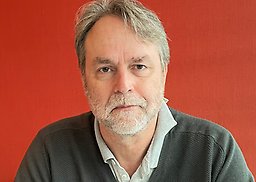
Harko Verhagen.

Nanda Wijermans.
Who is involved in the collaboration?
“In total, there are 16 partners, 15 doctoral candidates, and 4.8 million euros in funding for the project, which will run for 4 years. From Stockholm University, Nanda and I participate and coordinate the entire project. DSV will receive approximately 650,000 euros, and we will hire two new PhD students.”
What kind of issues will you be working on?
“The project addresses different types of crises, such as earthquakes, epidemics, avalanches, and the effects of climate change in urban environments. Considering how we prepare for crisis situations, how we behave, and how different stakeholders interact during crises are important components. We want to prepare the population, policymakers, and aid personnel for different behaviours in crisis situations. By developing simulations of behaviour in crises, the consequences of different policies and decisions can be explored, and training for aid personnel can be improved,” says Verhagen.
“We have a comprehensive approach that incorporates experiences from all stakeholders, various types of crises, and multiple scientific disciplines. This will provide the doctoral candidates in the project with a very solid foundation to support better crisis preparedness.”
Finally, Harko – what are you most looking forward to in this project?
“I’m looking forward to a lot of things! I’m excited to work with a large network of several new colleagues from different countries and backgrounds. I’m also looking forward to having a large group of doctoral candidates that reflect the diversity of the project. And I really like that the project is closely connected to practice and various stakeholders,” says Harko Verhagen.
More about SoCRISP
Acting in Crisis: Understanding Social Complexity to Improve Crisis Preparedness (SoCRISP) is one of three projects from Stockholm University that received Marie Skłodowska-Curie Actions funding in 2026.
Read about all three projects (article in Swedish)
Two of the projects are linked to the Department of Computer and Systems Sciences (DSV). Professor Harko Verhagen and Associate Professor Nanda Wijermans make up the core team for SoCRISP, which will be conducted from 2026 to 2030.
Professor Rahim Rahmani is involved in the project Bio-based, Intelligent and Regenerative Systems for a Sustainable and Resilient Agriculture (BIO-ACTIVE), which focuses on sustainable agriculture. The project is coordinated by the University of Novi Sad in Serbia.
Read about BIO-ACTIVE
SoCRISP’s network spans 11 European countries.
The project’s PhD candidates will be based at one of the following partner organisations (which will also receive EU funding):
- Stockholm University
- University of Groningen, Netherlands
- University College London, UK
- Université Grenoble Alpes, France
- UiT The Arctic University of Norway, Norway
- Disaster Competence Network Austria, Austria
- University College Dublin, Ireland
- Volonteurope, Belgium
The PhD candidates will be able to do internships at the following organisations:
- Agenzia regionale di Protezione Civile, Italy
- Centre for Policy Modelling, UK
- Public Health Agency of Sweden
- Imago Mundi, Romania
- Limerick City & County Council, Ireland
- PARN Pôle Alpin Risques Naturels, France
- University of the Bundeswehr Munich, Germany
- University of Innsbruck, Austria
The EU program Marie Skłodowska-Curie Actions aims to develop both research talents and research in general. Doctoral networks are part of this.
Read more about Marie Skłodowska-Curie Actions
Contact Harko Verhagen
Last updated: 2026-05-11
Source: Department of Computer and Systems Sciences