


Sustainable agriculture in focus of new EU initiative
How can we create healthier, smarter, and more resilient agriculture? Expertise from different disciplines in nine countries comes together in a new project. From Sweden, professor Rahim Rahmani contributes insights from computer and systems sciences.
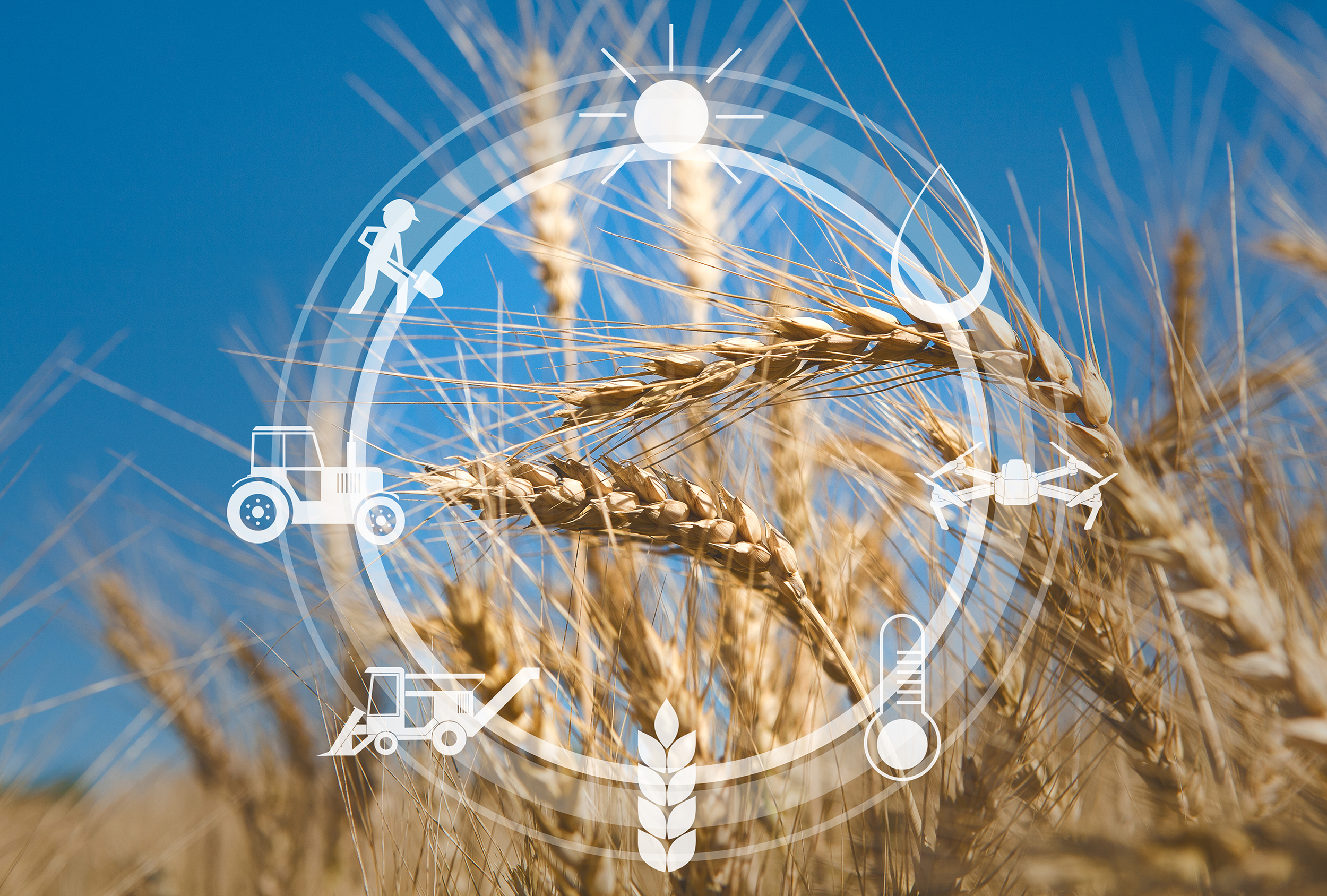
We sat down with Rahim Rahmani who works at the Department of Computer and Systems Sciences at Stockholm University. He is a partner in the project Bio-based, Intelligent and Regenerative Systems for a Sustainable and Resilient Agriculture (BIO-ACTIVE).
The project has received funding for the period 2026–2030 as an MSCA Doctoral Network, where MSCA stands for Marie Skłodowska-Curie Actions.
Congratulations, Rahim! What exactly is an MSCA Doctoral Network?
“Thank you! MSCA Doctoral Networks is the EU’s flagship programme for training the next generation of researchers. The aim is to build networks between universities and companies in order to provide doctoral candidates with cutting-edge skills through international mobility,” says Rahim Rahmani.
Rahim Rahmani.
Tell us about your project!
“Our project, BIO-ACTIVE, has been granted funding to train 12 doctoral candidates over four years. The total budget for a network of this size is usually around 4 million euros. We will create a cross-disciplinary platform that brings together biotechnology, AI, and sensor technology to make agriculture more sustainable and resilient to climate change.”
“The strength of the project lies in its cross-disciplinary framework. Today, technological solutions are often fragmented: biochemists work in isolation, and so do AI experts. By combining expertise from materials science, energy harvesting, biotechnology, and AI, we can develop systems that actually ‘understand’ biological processes. Contributions from different disciplines are crucial to bridging the gap between laboratory research and practical agriculture,” he continues.
What will you be studying?
“The project addresses a critical problem: more than 60 per cent of EU soils are currently classified as ‘unhealthy’. We will investigate how agriculture can transition from conventional practices to regenerative agriculture. ‘Regenerative’ means farming methods that actively restore soil health rather than depleting it.”
Rahim Rahmani explains that the project’s results may have concrete benefits in several areas:
- Intelligent sensors. The project will develop solar-powered sensors that monitor soil health in real time without the need for battery replacement.
- Reduced use of chemicals. AI-driven decision-making can optimise irrigation and fertilisation, saving both resources and the environment.
- Digital twins. The project will create digital replicas of farming systems that can predict yields and carbon sequestration, helping farmers make climate-smart decisions.
What is your and DSV’s contribution to the project?
“Our focus is on the intelligent ‘brain’ of the system. We contribute expertise in AI and machine learning, so-called Edge AI and TinyML. This involves designing smart models that run directly on small, solar-powered sensors deployed in the fields. The challenge is to make the AI extremely energy efficient, so the sensor knows when to save power and when to take measurements.”
“We also contribute knowledge about digital twins in agriculture. We build advanced AI architectures that integrate data from IoT sensors, satellite imagery, and biological samples. The goal is to develop ‘self-learning models’ that can predict soil health and crop growth. We also ensure that these systems comply with the EU’s new AI legislation—the EU AI Act—by making the models explainable and secure,” says Rahmani.
The challenge is to make the AI extremely energy efficient
Now he is anxious to get to work.
“What I look forward to most is seeing how our theoretical AI models create real value in the physical world – going from code to soil, so to speak. Supervising talented doctoral candidates in an environment where they can spend time at both universities and industrial companies in different countries is incredibly inspiring. Above all, it feels meaningful to work with technology that directly contributes to the EU Green Deal and a more sustainable food system for the future,” says Rahim Rahmani.
More about BIO-ACTIVE
Bio-based, Intelligent and Regenerative Systems for a Sustainable and Resilient Agriculture (BIO-ACTIVE) is one of three projects from Stockholm University that have received Marie Skłodowska-Curie Actions funding for 2026–2030.
Read about all three projects (article in Swedish)
Two of the projects are linked to the Department of Computer and Systems Sciences (DSV). Professor Rahim Rahmani participates in BIO-ACTIVE, which focuses on sustainable agriculture and is coordinated by the University of Novi Sad, Serbia. The other project is SoCRISP, where DSV colleagues Harko Verhagen and Nanda Wijermans form the core team.
Read about SoCRISP
BIO-ACTIVE partners (11 organisations in 9 countries):
- Stockholm University
- University of Novi Sad, Serbia
- NOVA University Lisbon, Portugal
- University of the Basque Country, Spain
- The Agricultural Institute of Slovenia, Slovenia
- Sense4med, Italy
- Institute of Experimental and Technological Biology (iBET), Portugal
- Apolo Sustainability Group LTD, United Kingdom
- Company for Trade and Services in Agriculture, Serbia
- Printed Electronic Devices of Things IKE, Greece
- Innocell ApS, Denmark
The EU programme Marie Skłodowska-Curie Actions aims to develop both research talent and research excellence. Doctoral networks are a key component of this programme.
Last updated: 2026-04-22
Source: Department of Computer and Systems Sciences