


Samurai, Souls, and Seals: The History of Early Modern Japanese Foreign Relations, c. 1600-1830
The course provides knowledge about how Japanese society during the early modern period was integrated into international trade, culture, and politics. The course examines how Japan's relations with the outside world are reflected in historiography and, more broadly, in popular perceptions both within Japan and in the international community.
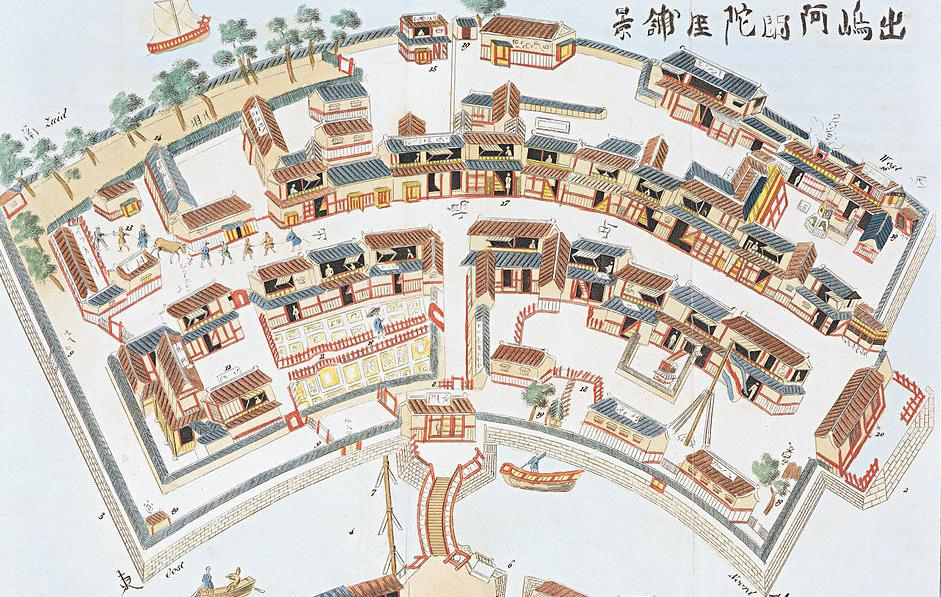%20960px-Plattegrond_van_Deshima.jpg)
Ground-plan of the Dutch trade-post on the island Dejima at Nagasaki (1824–1825). Isaac Titsingh (1745–1812). Wikimedia Commons/Public domain.
The Edo period in Japan (1600-1854) is usually associated with a period of withdrawal from the international scene ("sakoku"). However, contrary to this widespread view of the era, foreign relations were both varied and significant for the emerging Japanese state and its economy.
This course examines various aspects of Japan's contacts with the outside world. It introduces different actors, patterns, and institutions in foreign relations and discusses different approaches from diplomatic and maritime history, as well as missionary studies.
The course examines the economic, social, and cultural aspects of Japan's foreign relations at various scales, encompassing local, regional, and global perspectives.
Teaching Format
The course consists in seminars. Attendance is mandatory.
Assessment
The course is examined through two written assignments, peer feedback, and an oral examination.


