


Well-attended career seminar on strategic academic publishing
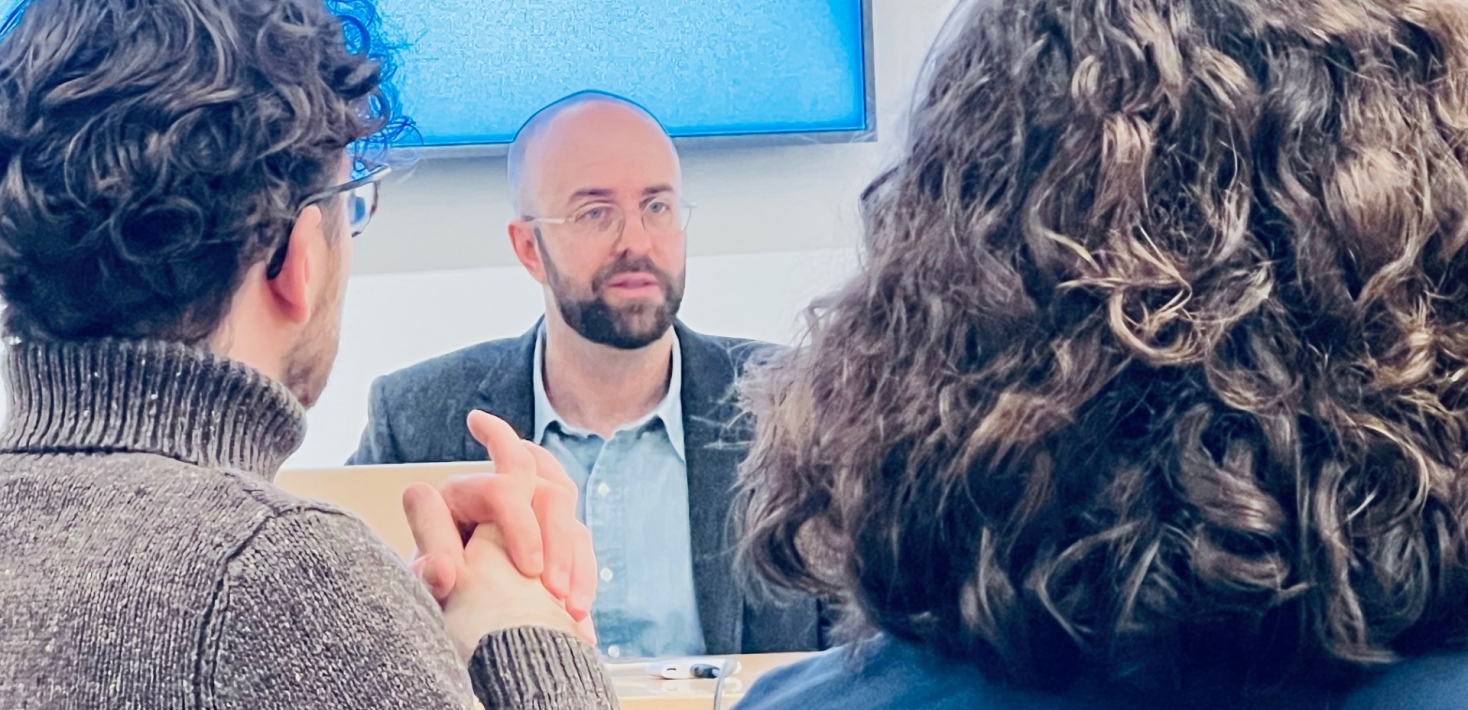
At a packed and highly appreciated career seminar organized by the Forum for Doctoral Students, Professor Linus Salö shared invaluable insights into achieving success in academic publishing.
Audience design and portfolio thinking
The seminar, titled ”Strategizing academic publishing”, provided doctoral students with perspectives and practical advice for navigating the complex publication process. Professor Linus Salö, research leader and director of studies at the Centre for Research on Bilingualism, underscored the importance of audience design and portfolio thinking. This is why having a well-thought-out publication strategy is essential.
One of the participants, Andrés Hurtado, took from Salö’s presentation the possibility of conceiving oneself as an author, and to adopt a strategy to communicate ideas to different publics.
Strategies for publishing
Linus Salö divides his publication strategies into two categories: big and small strategies. The big strategies involve producing knowledge that has significance and reaching the right audience. The small strategies are more concrete and cover aspects such as understanding and navigating journal processes, including peer review.
"The foundation of my strategy has been the realization that science has many stakeholders – the public, policymakers, students, and research colleagues. It matters to whom you communicate and to reach out, you need to think in terms of audience design. Therefore, research needs to be communicated in different ways, in various genres, and in multiple languages," explained Salö.
Increase your chances
Salö encouraged doctoral students to view each idea as an opportunity for multiple publications, tailoring each piece to fit the intended journal. He highlighted the importance of choosing the right journal and carefully adapting manuscripts to align with its requirements.
“Not everything we produce is equally good or equally interesting. Save your best work for the most reputable journals,” advised Salö. “And remember, never submit a manuscript to more than one journal at a time.”
He also encourages doctoral students to try reviewing manuscripts themselves to better understand the process from the reviewers’ perspective. Professor Salö further highlighted the importance of collaboration and co-authorship. Collaborations can be both temporary and long-term, creating opportunities for new networks and increased publishing activity.
“Strive for balance. Keep a mix of single-authored and co-authors publications. Make sure to have transparency and frankness to avoid conflicts, especially regarding author order.”
The seminar concluded with enthusiastic applause, as participants left inspired and better equipped to publishing their own texts. Some of them are now going to apply to the Forum for doctoral studies mentorship program.
How to succeed with your publication – A step-by-step guide
Here is a guide for those who want to publish strategically and successfully, based on advice from Professor Linus Salö. Good luck!
Step 1: Clarify your ideas
Much is gained if, early on, you can give concreteness and direction to your ideas. What do you want to achieve with your publication? What is its main purpose or argument? Once you have a reasonable idea of what you wish to convey and accomplish, the foundation is laid. Put it in writing – at the beginning, it doesn’t matter how.
Step 2: Identify your audience
Consider who you want to reach with your publication – well-informed colleagues, researchers in other fields, students, policymakers, practitioners, or the general public. This will help you choose the right forum and adjust the tone and language of your text.
Step 3: Choose the right journal
Journal articles are often a good format for scholarly exchanges. If so, take time to choose the right journal. Where are the discussions you want to contribute to taking place? Where have the works you cite been published? Review previous issues to understand the focus, format, and typical timeline. Save your best manuscripts for the most reputable journals.
Step 4: If you experience writer’s block
If you get stuck in your writing, leave the text for a while. Move the thought forward in other ways. Build a PowerPoint or visualize your points in other ways. Return to the benchmarks you initially set for your text.
Step 5: Write and structure your manuscript
When writing your manuscript, study how others structure their texts in the same journal and learn from experienced colleagues. Practice and aim at your level. Skill comes with time.
Step 6: Work towards a review-ready version
Use your network of colleagues and supervisors to gather constructive feedback on your manuscript. Take the comments seriously – if several people find the prose too unclear, it likely is. The goal is to submit a version that is “review ready” – neither premature nor overworked.
Step 7: Submit a prepared manuscript
Prepare the manuscript carefully according to the journal’s guidelines. Then submit it according to the journal's instructions, and only to one journal at a time. A well-prepared manuscript gives a professional impression and increases the chances of progressing in the process.
Step 8: Handle feedback and revise thoroughly
When feedback comes back from reviewers and editors, it is essential to take the comments seriously and revise the manuscript accordingly. Show the editor that you have considered the feedback. Respond clearly to each comment in a revision summary. The adjustments should demonstrate that you value the time and effort they have invested.
Step 9: If necessary – adapt for a new journal
If your manuscript is rejected, don’t feel disheartened. Scholars get rejected. Evaluate the situation, ideally with the help of colleagues and supervisors. Consider how to adapt the manuscript to fit another journal. Revise and resubmit. Remember that the process can take time, and a rejection does not mean that the work lacks value.
Professor Linus Salö
Professor Linus Salö's webpage
Forum for Doctoral Students
The purpose of the project Forum for Doctoral Students is to provide additional guidance so that more PhD students finish on time and feel good a long the way.
Communicate your research
If you, as a researcher, need help with disseminating your work internally and externally, support is available on the staff website.
Researchers’ Friday
Researchers’ Friday is a national event where researchers demonstrate what science is, how research is conducted, and how fun, exciting, and relatable research can be.
Last updated: 2026-05-22
Source: Offices of Human Science and Science